Citron Goby
Gobiodon citrinus
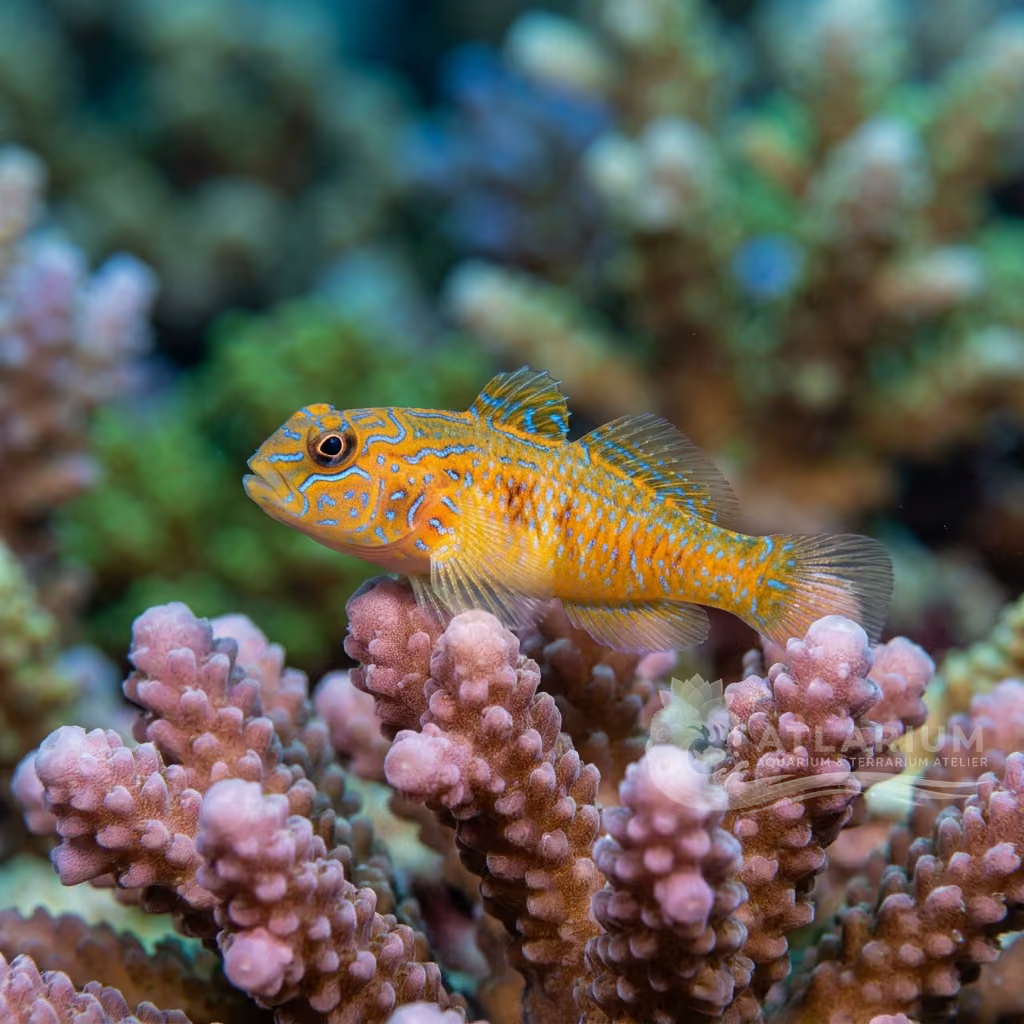
Radiating a vibrant yellow hue crossed with vivid blue lines, this petite goby secretes a protective toxic mucus. It forms obligate partnerships with branching SPS corals, creating a delightful nano display.
Temperatura da água
23 - 28 °C
Valor de pH
8 - 8.5
Tipo de água
Marinho
Nível do tanque
Meio
Tamanho adulto
6,6 cm
Volume mínimo do tanque
>= 40 L
Grupo mínimo
>= 1
KH
8 - 12 dKH

Descrição da espécie
Geographical Origin and Habitat: Indo-Pacific: widely distributed from the Red Sea and East African coast to Samoa, north to southern Japan and south to the Great Barrier Reef. It inhabits lagoons and protected outer coral reefs, living exclusively in association with branching hard corals of the genus Acropora.
Taxonomy and Morphology: Belongs to the family Gobiidae, genus Gobiodon. Features a laterally compressed body, lacking scales and covered by a protective toxic mucus. It reaches a maximum size of about 6.5 centimeters in adulthood. Displays a large, rounded head with small eyes and fleshy lips.
Social Behavior: Lives in small groups or pairs among the branches of Acropora. It is a stationary benthic fish that rarely moves from its host coral. It defends its coral from other specimens of the same species. It produces a toxic skin mucus with an unpleasant taste to deter predators.
Coloration and Sexual Dimorphism: Characterized by a uniform bright lemon-yellow or yellowish coloration. Displays four thin vertical iridescent blue-light blue lines on the head (around the eye and on the operculum) and two longitudinal blue lines at the base of the dorsal and anal fins. There is no visible sexual dimorphism.

Cuidado, criação e companheiros de tanque
Aquarium Setup: Requires a nano reef type aquarium starting from 50-60 liters. The presence of branching hard corals, preferably live Acropora or hard coral skeletons, is fundamental, serving as a natural den and perch for the fish. The bottom can be sandy or rocky.
Diet and Feeding: Carnivorous. In nature, it feeds on small benthic invertebrates, zooplankton, and sometimes the mucous tissue of the host coral. In the aquarium, it accepts small-sized frozen foods (brine shrimp, minced mysis, copepods) and small dry granular foods fed near its coral.
Water Quality: Requires stable parameters typical of coral reefs: temperature between 24 and 27 °C, pH between 8.1 and 8.4, and density at 1.020-1.025. To preserve the health of the associated live corals and the fish itself, excellent water filtration with regular water changes is necessary.
Compatibility and Cohabitation: Very peaceful with fish of other families. Can be housed with calm and non-aggressive species (such as clownfish, pipefish, other small gobies). It may occasionally nip or cause minor damage to the polyps of live Acropora corals where it perches and lays eggs.
Aquarium Breeding: Bidirectional hermaphroditic species. Spawning typically occurs on the branches of the host coral, where the pair scrapes a small portion of tissue to adhere the eggs. The male guards the clutch. Hatching and weaning of the larvae are complex.
Risks and Diseases: It is a hardy fish thanks to the protection of the toxic skin mucus that defends it from many external parasites. The main risk is starvation due to lack of feeding if tankmates are too active and fast to consume food, scaring it away.

Origem e distribuição geográfica
Indo-Pacific: widely distributed from the Red Sea and East African coast to Samoa, north to southern Japan and south to the Great Barrier Reef. It inhabits lagoons and protected outer coral reefs, living exclusively in association with branching hard corals of the genus Acropora.
Origem
Oceanos tropicais e recifesÁfrica e MadagascarLeste Asiático

Perfil de peixe
- Temperamento
- Territorial
- They possess a peaceful and highly entertaining temperament. They are comical to watch as they dart around. Aggression is solely directed at other clown gobies.
- Dieta
- Carnivore
- They are predominantly carnivorous micro-predators. Feed them enriched brine shrimp and small mysis shrimp. They will eventually accept small sinking pellets.
- Expectativa de vida
- 3-6 years
- Tamanho adulto
- 6.6 cm
- Proporção sexual
- Flexible
- They are protogynous hermaphrodites capable of changing sex. Any two individuals will usually pair up successfully. The larger and more dominant fish becomes the male.
- Frequência de alimentação
- Twice daily
- Offer them food two to three times daily. Their small stomachs require frequent, tiny meals. Target feeding with a pipette ensures they get their share.
- Carga biológica
- Low to Medium
- They contribute a very minor bioload to the tank. Their minimal waste is easily processed by basic live rock. They are perfect for small desktop aquariums.
- Fluxo
- Strong
- Moderate flow is ideal for these little gobies. They use the current to catch drifting planktonic food. Make sure the flow allows them to perch comfortably.
- Risco de salto
- No
- Reprodução
- Oviparous
- They nest directly within the branches of Acropora corals. The male rigorously defends the sticky egg clutch. Raising the planktonic fry requires specialized rotifer cultures.
- Compatibilidade e companheiros de tanque
- Peaceful
- They are excellent candidates for peaceful community reefs. They coexist safely with invertebrates and non-aggressive fish. They may nip at the polyps of certain SPS corals.
- Nível do tanque
- Middle
- They mainly occupy the middle and upper tank levels. You will find them resting directly on hard corals. They rarely ever touch the sand bed.

Modelos e parâmetros científicos
FishBase
Acesso aos dados científicos oficiais da espécie
FishBase v25.04Dados sincronizados em: 15/06/2026
- Nível trófico
- 3,3 ± 0,6 se
- Resiliência
- Alta (menos de 15 meses)
- Unicidade filogenética (PD50)
- 0.5
- Relação bayesiana comprimento-peso
- a = 0.01995, b = 3.01
- VulnerabilidadeVulnerabilidade baixa (10 / 100)

Espécies relacionadas
Recomendações agrupadas por parentes próximos, escolhas de acompanhantes e cuidados semelhantes.