Honshu Pipefish
Doryrhamphus japonicus
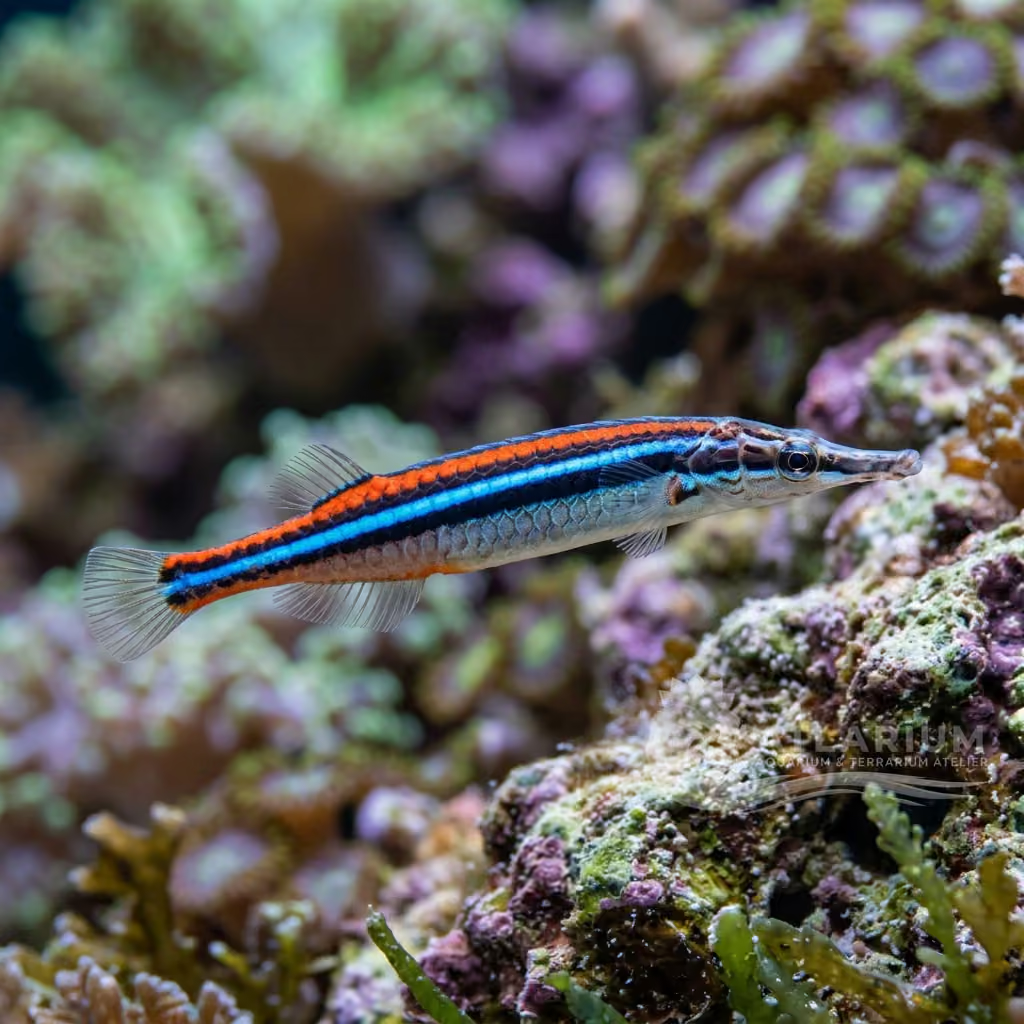
The Japanese Blue-stripe Pipefish is a beautiful subtropical species with orange and blue bands. It requires a mature, peaceful system rich in live microfauna and shaded caves.
Temperatura da água
20 - 25 °C
Valor de pH
8.1 - 8.4
Tipo de água
Marinho
Nível do tanque
Parte inferior
Tamanho adulto
8 cm
Volume mínimo do tanque
>= 100 L
Grupo mínimo
>= 2

Descrição da espécie
Geographical Origin and Habitat: Northwestern Pacific Ocean, common along the coasts of southern Japan, Taiwan, and Korea. Inhabits rocky reef crevices and tide pools. This pipefish inhabits rocky tide pools and shallow reefs of the temperate and subtropical Western Pacific Ocean.
Taxonomy and Morphology: Member of the family Syngnathidae. Characterized by an elongated body encased in bony plates, with a relatively short, tubulate snout. Its morphology is characterized by a body protected by bony ring plates and a long, tubular snout adapted to snaring micro-crustaceans.
Social Behavior: Peaceful and shy. Keeps close to the rocky substrate or retreats into caves to avoid bright illumination. Secretive and cautious behavior; it spends its time hovering slowly close to the rocky substrate and within shaded cave walls.
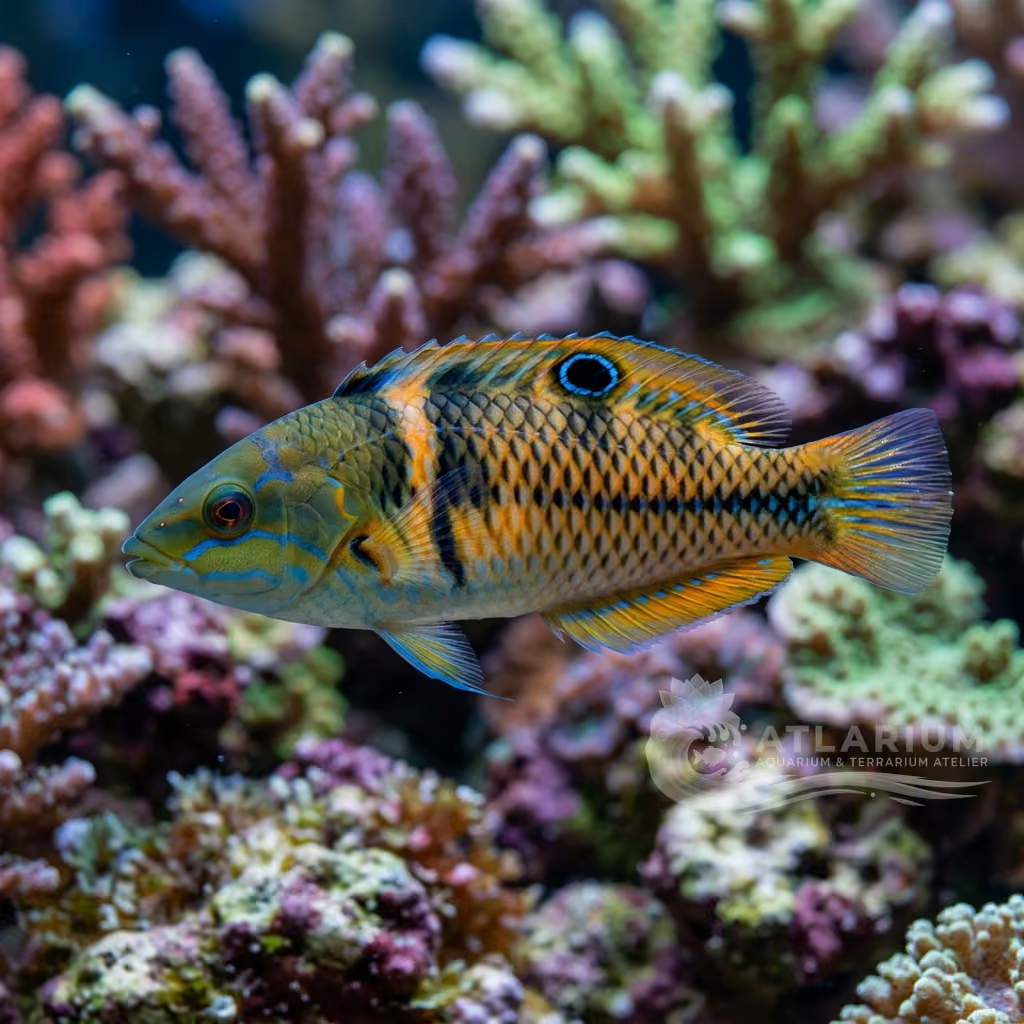
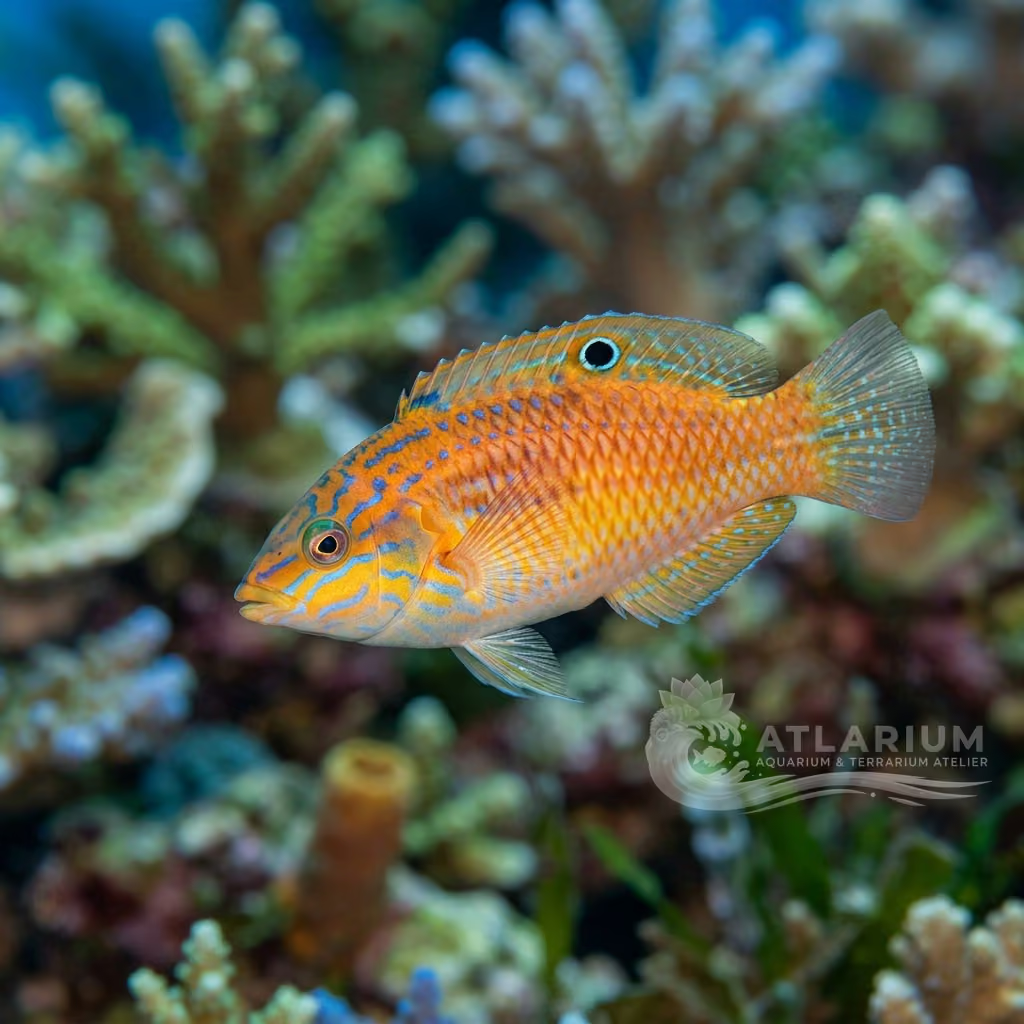
Coloration and Sexual Dimorphism: Features horizontal stripes of bright orange and electric blue or purple. The tail fin is bright red with a yellow center dot. The coloration features alternating orange and blue-grey horizontal bands, making it one of the most ornamental pipefish species.

Cuidado, criação e companheiros de tanque
Aquarium Setup: Requires a tank of at least 100 liters with plenty of live rock forming caves and shady zones, and low water current. The aquarium must be mature and rich in live microfauna (copepods), with stable live rock configurations forming shaded crevices.
Diet and Feeding: Specialist carnivore. Feeds on live copepods and tiny microfauna. Can gradually adapt to fine frozen foods like daphnia or cyclops. Specialized diet requiring frequent feedings of live copepods, newly hatched brine shrimp, and small, high-quality frozen foods.
Water Quality: Standard marine parameters, preferring slightly cooler subtropical conditions: temperature 20-25 °C, pH 8.1-8.4, salinity 1.020-1.025. Requires weak to moderate water movement to accommodate its slow swimming style, along with pristine, stable water parameters.
Compatibility and Cohabitation: Keep only in species-specific tanks or with very slow, peaceful tankmates (e.g. mandarinfish). Avoid fast, aggressive swimmers. Compatible only with very peaceful, slow-moving tankmates like seahorses and small gobies, avoiding fast or aggressive feeders.
Aquarium Breeding: Paternal brooder: the female transfers eggs to the male's ventral pouch or surface, where he carries and fans them until hatching. Breeding in home aquariums is difficult; the female transfers eggs to the male's brood pouch, where he incubates them until hatching.
Risks and Diseases: Extremely high risk of starvation if the aquarium lacks a self-sustaining copepod population. Sensitive to strong water currents. Main risks stem from starvation due to lack of live foods, and extreme sensitivity to chemical treatments in the water.

Origem e distribuição geográfica
Northwestern Pacific Ocean, common along the coasts of southern Japan, Taiwan, and Korea. Inhabits rocky reef crevices and tide pools. This pipefish inhabits rocky tide pools and shallow reefs of the temperate and subtropical Western Pacific Ocean.
Origem
Oceanos tropicais e recifesLeste Asiático

Perfil de peixe
- Temperamento
- Peaceful
- They possess a deeply peaceful, serene, and almost meditative temperament, moving with deliberate grace throughout the aquarium. They show absolutely no aggression towards other fish species, making them model citizens in appropriately planned community tanks. However, this extreme docility makes them highly vulnerable to bullying, fin-nipping, and starvation if placed with aggressive tank mates. Their shy demeanor requires an attentive aquarist who will ensure they are not being outcompeted for food or territory.
- Dieta
- Carnivore
- They possess tiny, highly specialized tubular mouths designed exclusively for consuming micro-crustaceans like copepods and amphipods. A mature aquarium boasting a massive, self-sustaining population of benthic microfauna is absolutely critical for their successful care. While some individuals can eventually be trained to accept frozen Cyclop-eeze or baby brine shrimp, many will slowly starve without constant access to live prey. Supplementing the tank with cultured live pods on a regular basis is frequently necessary to maintain their body weight.
- Expectativa de vida
- 3-5 years
- Tamanho adulto
- 8 cm
- Proporção sexual
- Pair
- Determining the sex of pipefish can sometimes be accomplished by closely examining the snout or observing the presence of a brood pouch on mature males. They are most successfully kept in stable, bonded male-female pairs rather than in large unorganized groups. Keeping multiple males in a small enclosure can occasionally lead to unexpected territorial squabbles or stress. A well-bonded pair will frequently swim together and engage in beautiful, synchronized morning greeting displays.
- Frequência de alimentação
- Twice daily
- Due to their remarkably short digestive tracts and continuous foraging habits, they essentially need to eat constantly throughout the daylight hours. They spend their entire day meticulously inspecting rockwork and macroalgae for tiny hidden crustacean meals. If offering prepared or frozen foods, it must be introduced in very small amounts multiple times daily, often exceeding three or four feedings. A continuous supply of live copepods reproducing in the main display or a connected refugium is the most reliable feeding method.
- Carga biológica
- Low
- Pipefish have an incredibly low bioload due to their slender bodies, delicate nature, and specific dietary needs. They produce minimal organic waste, making them excellent candidates for pristine reef aquariums that demand low nutrient levels. Despite their low waste output, their constant need for live foods can indirectly increase the tank's bioload if uneaten food accumulates. Employing a robust clean-up crew and maintaining an efficient protein skimmer will help manage any secondary bioload issues.
- Fluxo
- Strong
- These slender fish are generally weak swimmers that quickly become exhausted in strong, turbulent water currents. They heavily prefer low to moderate, gentle water movement that allows them to hover and precisely target their tiny prey. While some flow is necessary to keep the tank healthy, direct laminar flow from large powerheads should be strictly avoided. Areas of the tank with structured calm zones and sheltering rockwork are highly appreciated by these delicate species.
- Risco de salto
- No
- Reprodução
- Oviparous
- Their reproductive strategy is fascinating, as it is the male who carries the fertilized eggs in a specialized brood pouch or attached to his belly. After a complex courtship dance, the female carefully deposits her eggs onto the male's specialized receptive area. The male provides vital oxygen and nutrients to the developing embryos until they hatch as fully formed, miniature versions of the adults. Rearing the fry in captivity is challenging due to their microscopic size, demanding a steady supply of rotifers and newly hatched artemia.
- Compatibilidade e companheiros de tanque
- Peaceful
- They are exceptionally peaceful and rather timid creatures that can easily be outcompeted or harassed by more aggressive or boisterous fish. They must only be housed with very calm, slow-moving tank mates such as seahorses, dragonets, or small gobies. Avoid keeping them with large crabs, aggressive wrasses, or stinging anemones, which pose a severe mortal threat to them. A dedicated, peaceful species-only tank or a highly specialized biotope is often the best environment for their long-term survival.
- Nível do tanque
- Bottom
- They utilize all levels of the aquarium but are most frequently observed meticulously hovering near the substrate and intricate rock formations. They love to glide vertically or horizontally among gorgonians, seagrasses, or macroalgae, using these structures as natural camouflage. While they occasionally venture higher in the water column to inspect the glass, their primary focus remains on the benthic zones where their prey lives. Complex structures with overhangs and caves provide them with a profound sense of security.

Modelos e parâmetros científicos
FishBase
Acesso aos dados científicos oficiais da espécie
FishBase v25.04Dados sincronizados em: 15/06/2026
- Nível trófico
- 3,7 ± 0,5 se
- Resiliência
- Alta (menos de 15 meses)
- Unicidade filogenética (PD50)
- 0.501
- Relação bayesiana comprimento-peso
- a = 0.00098, b = 3.05
- VulnerabilidadeVulnerabilidade baixa (10 / 100)

Espécies relacionadas
Recomendações agrupadas por parentes próximos, escolhas de acompanhantes e cuidados semelhantes.