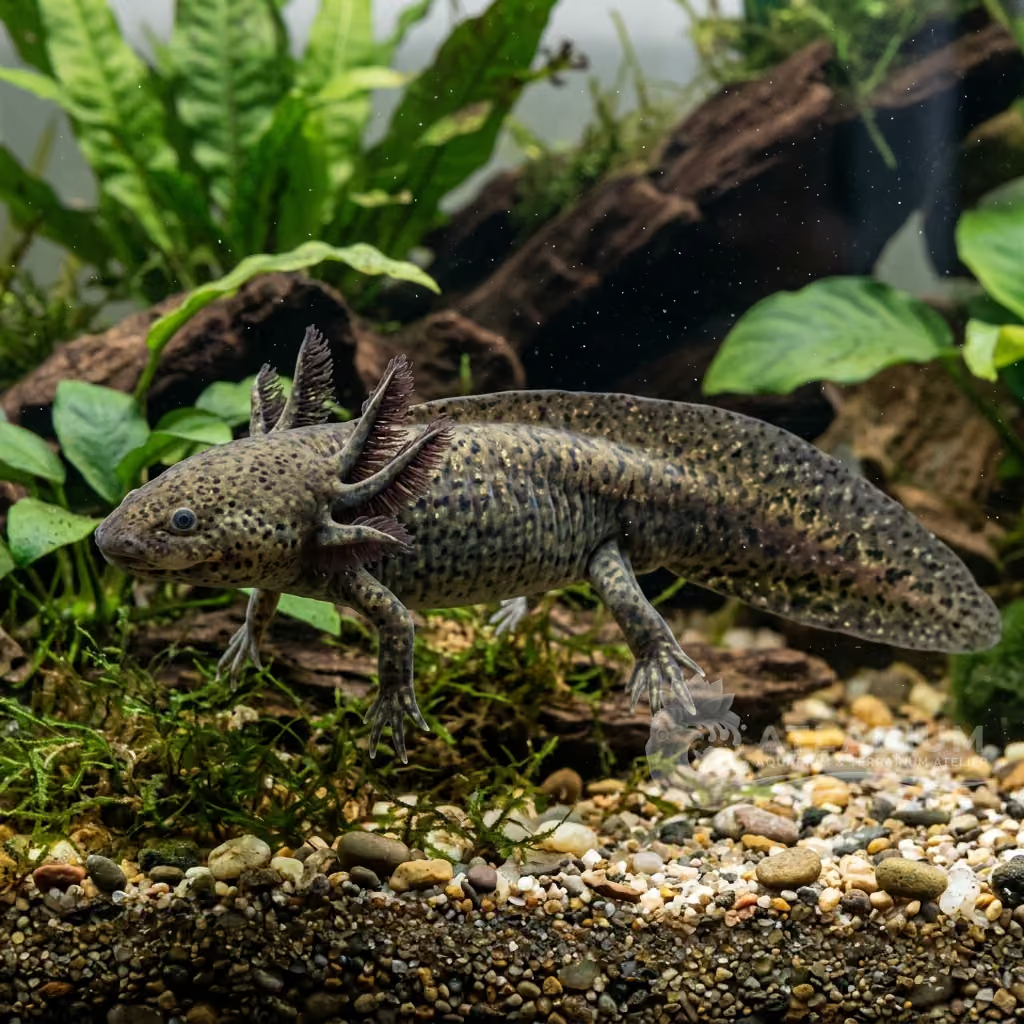
Mole Salamander
Ambystoma talpoideum
The Mole Salamander (Ambystoma talpoideum) is a stout, large-headed salamander native to the southeastern United States, named for its secretive burrowing habits.
Ambiente
Terrestre
Umidade
60 - 80 %
Temperatura diurna
15 - 20 °C
Temperatura noturna
10 - 15 °C

Descrição da espécie
Geographical Origin and Habitat: Distributed across the southeastern United States, from eastern Texas to South Carolina. These salamanders inhabit damp pine flatwoods, floodplain forests, and hardwood bottomlands. As a fossorial species, they spend most of their life burrowed under deep soil, leaf litter, and root systems near fish-free breeding pools.
Taxonomy and Genetics: A member of the family Ambystomatidae. It is a stocky salamander with a characteristically large head and a short, thick snout. The body is usually dark gray, brown, or black, sometimes with light blue-gray flecks on the back and tail. They occasionally exhibit neoteny, remaining aquatic and retaining their external gills, though most metamorphose into terrestrial adults.
Behavior and Habits: Highly secretive and fossorial, spending almost all of their adult life underground in burrows. They emerge only at night, especially during heavy rains, to forage or migrate to breeding sites. If threatened, they coil their bodies and secrete defensive, sticky fluids from glands on their tail.
Morphology: Reaches a length of 8 to 12 cm. Females are generally larger and wider than males, especially when carrying eggs. During the winter breeding season, mature males develop a swollen cloaca and slightly flattened tails to assist in courtships.

Cuidado, criação e companheiros de tanque
Terrarium Setup: For the terrestrial form, a horizontal terrarium (minimum 60x45x30 cm) is required. The substrate is critical and should consist of a thick layer (15-20 cm) of damp organic peat moss, soil, and forest humus mixed with leaf litter to allow burrowing. Provide cork bark tunnels and half-buried shelters. For the rare aquatic neotenic form, a standard freshwater aquarium with hiding spots is needed.
Lighting and Heating: Adapted to temperate climates. Keep temperatures cool, ideally between 18 and 22°C. Temperatures above 25°C can cause severe heat stress and skin infections. Provide low-intensity, shaded lighting as they are nocturnal and avoid bright areas. In winter, they undergo a natural cooling period.
Humidity and Hydration: Maintain high humidity levels of 80% to 90% through regular misting. The substrate must be damp but not soggy or muddy. A shallow water dish with declorinated water is required for occasional soaking, and must be cleaned daily to prevent bacterial buildup.
Feeding and Supplementation: Strictly carnivorous. Feed a variety of small invertebrates, such as earthworms (their primary food), crickets, and small roaches. Food should be dusted with calcium and vitamin D3 supplements once a week for healthy bone development.
Compatibility: Generally solitary. They can be kept in small groups if the enclosure is large and has multiple hiding spots, but avoid keeping individuals of vastly different sizes, as larvae and juveniles can be cannibalistic.
Health and Common Diseases: Highly sensitive to skin absorption of chemicals and toxins. Never handle them with bare hands; use clean, powder-free wet gloves if handling is necessary. Prone to bacterial infections (red leg syndrome) and fungal dermatosis if kept in warm, dirty conditions.

Origem e distribuição geográfica
Distributed across the southeastern United States, from eastern Texas to South Carolina. These salamanders inhabit damp pine flatwoods, floodplain forests, and hardwood bottomlands. As a fossorial species, they spend most of their life burrowed under deep soil, leaf litter, and root systems near fish-free breeding pools.
Origem
América do Norte

Perfil anfíbio
- Dieta
- Carnivore
- Ambystoma talpoideum is a carnivorous amphibian that primarily feeds on small invertebrates. In its natural habitat, its diet consists of earthworms, insects, spiders, and small crustaceans. For optimal health in captivity, a varied diet supplemented with calcium and vitamins is highly recommended. Overfeeding should be avoided to prevent obesity, which is common in captive amphibians. A consistent feeding schedule helps maintain their metabolic balance.
- Expectativa de vida
- 8-25 years
- Tamanho adulto
- 10 cm
- Estilo de vida/Microhabitat
- Fossorial
- The lifestyle of Ambystoma talpoideum is closely tied to moisture, oscillating between aquatic and terrestrial phases depending on the season. They require habitats with high humidity and access to clean water to keep their permeable skin hydrated. They spend much of their time foraging in leaf litter or resting in shallow pools. A bio-active enclosure that mimics the forest floor or a marshy bank is ideal for this species. Environmental stability is key to their long-term thriving.
- Ciclo de atividades
- Nocturnal
- As a predominantly nocturnal species, Ambystoma talpoideum is most active during the night and twilight hours. During the day, they remain sheltered in cool, damp microhabitats to prevent moisture loss. Their activity levels spike significantly during rainy or highly humid conditions. In a terrarium, they will often emerge to forage once the lights are turned off. Simulating natural light cycles is crucial for maintaining their circadian rhythms.
- Socialidade
- Solitary
- Ambystoma talpoideum is known for its secretive and generally docile behavior, preferring to stay hidden under debris. They are mostly solitary, only seeking out others during the breeding season. When threatened, they may adopt a defensive posture or secrete mildly toxic substances from their skin glands. Providing ample hiding spots in their enclosure is essential to reduce stress and promote natural behaviors. They rarely show aggression unless competing for limited resources.
- Reprodução
- Oviparous
- The reproductive cycle of Ambystoma talpoideum typically coincides with seasonal changes, especially increased rainfall. Males will often display complex courtship behaviors to attract females before depositing a spermatophore. Once fertilization occurs, the female lays her eggs in slow-moving water or attached to aquatic vegetation. The eggs hatch into aquatic larvae equipped with external gills, which they retain until metamorphosis. Breeding in captivity requires careful manipulation of temperature and humidity.
- Toxicidade
- Harmless
- They possess poison glands in their skin, particularly concentrated along the tail, that secrete a noxious, milky substance when threatened. This secretion deters predators such as shrews and snakes but is generally mild to humans. However, thorough hand washing is necessary after handling to prevent transferring the secretion to the eyes or mouth.
- Estágio de vida
- Metamorphosis
- The eggs hatch into aquatic larvae equipped with external gills, which grow rapidly in fish-free ponds. Uniquely, some populations exhibit neoteny, remaining completely aquatic and retaining their gills into adulthood. Those that metamorphose develop lungs and thick, sturdy bodies perfectly adapted for a terrestrial, burrowing existence.
- Tolerância de tratamento
- Expert only
- Handling should be strictly minimized, as their skin is delicate, highly permeable, and easily damaged by human body heat and oils. If they must be moved, moistened nitrile gloves should be worn, and the animal should be scooped gently. Prolonged handling can cause severe stress and prompt the release of their defensive skin secretions.
- Brumação
- Obrigatório
- In the northern parts of their range, they undergo brumation deep underground to survive freezing winter temperatures. Interestingly, their breeding season often begins immediately after or even during the late stages of winter. Providing a cool, dormant period in captivity is often required to maintain long-term health and stimulate breeding.
- Muda
- Periodic
- Like all salamanders, they periodically shed their skin in a single, continuous piece to facilitate growth and healing. They use their limbs to pull the translucent skin back from the head, eventually rolling it down the body. The shed skin is immediately consumed, a standard amphibian practice to recover the energy invested in its production.

Espécies relacionadas
Recomendações agrupadas por parentes próximos, escolhas de acompanhantes e cuidados semelhantes.