Taxiphyllum sp. "Peacock Moss"
Taxiphyllum sp. "Peacock Moss"
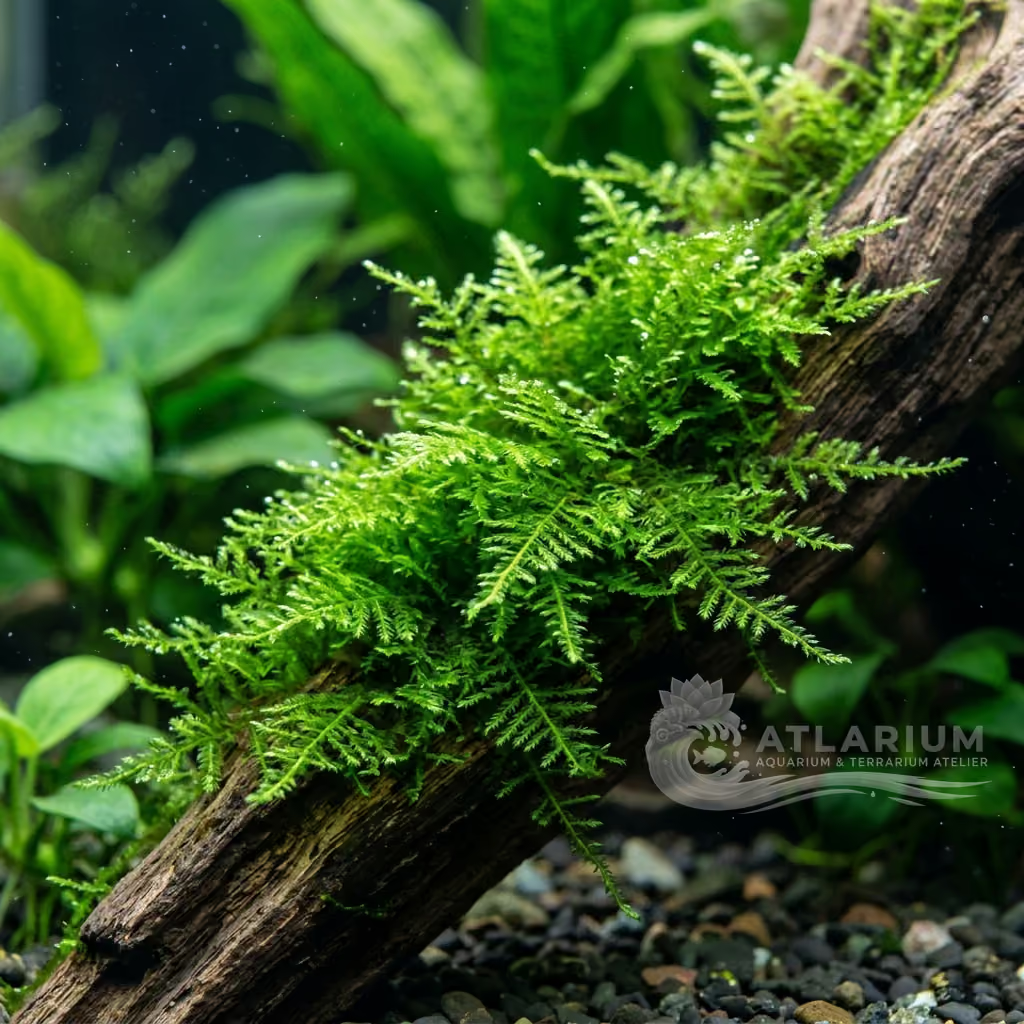
Taxiphyllum sp. "Peacock Moss" is a versatile midground moss, perfect for creating lush carpeting effects or intricate hardscape accents with its medium growth rate. Its delicate structure and vibrant green hue make it an engaging focal point in any aquascape.
Température de l’eau
20 - 28 °C
Valeur du pH
6 - 7.5
Type d'eau
Eau douce
Lumière
Moyenne - Élevée
CO2
Moyenne - Élevée
Hauteur attendue
10 cm
Largeur attendue
10 cm
KH
2 - 10 dKH

Description de l'espèce
Geographical Origin and Habitat: Taxiphyllum sp. "Peacock Moss" is believed to originate from Southeast Asia, specifically from regions where other Taxiphyllum species are commonly found. In its natural habitat, this moss would typically thrive in shaded, humid environments, often submerged or partially submerged on rocks, driftwood, or along riverbanks in clear, slow-moving waters. These conditions allow it to absorb nutrients efficiently from the water column while receiving dappled light filtration from the overhead canopy.
Taxonomy & Genetics: Belonging to the Family Hypnaceae, Taxiphyllum sp. "Peacock Moss" is a designation often used for varieties of Taxiphyllum that have distinct characteristics but have not yet been formally identified to a species level or are popular cultivars. The "sp." indicates that it's an unidentified species within the genus Taxiphyllum, sharing genetic traits with other well-known aquatic mosses such as Java Moss or Flame Moss. Its classification within Hypnaceae highlights its close relation to other pleurocarpous mosses known for their creeping growth habits and lateral branching.
Physical Structure: The physical structure of Taxiphyllum sp. "Peacock Moss" is characterized by its finely branched, feathery fronds that grow in a dense, almost fan-like pattern. Unlike acrocarpous mosses, it exhibits a pleurocarpous growth habit, meaning it branches laterally from a main stem that creeps along surfaces. Each frond is composed of numerous small, delicate leaves that give the moss its characteristic "peacock" tail appearance when viewed closely, creating a layered and three-dimensional effect. It attaches to surfaces using inconspicuous rhizoids, which are not true roots but serve primarily for anchorage.
Color & Texture: Taxiphyllum sp. "Peacock Moss" is renowned for its striking, deep emerald green coloration, which can intensify under optimal lighting and nutrient conditions. The delicate, overlapping leaves on its fronds create a soft, velvety texture, inviting visual interest and depth to the aquascape. This rich green hue contrasts beautifully with red-leaved plants or dark hardscape elements, further enhancing its aesthetic appeal. Its unique branching pattern contributes to a lush, dense carpet-like appearance, or a naturalistic covering over stones and wood, making it a favorite for aquascapers.

Soins, reproduction et cohabitation
Lighting & CO2: For Taxiphyllum sp. "Peacock Moss", a medium light demand suggests that moderate illumination is ideal, typically in the range of 30-50 PAR (Photosynthetically Active Radiation) at the substrate level. While it can tolerate lower light, medium light encourages denser, more vibrant growth and helps prevent the moss from becoming leggy or sparse. CO2 supplementation is not strictly mandatory but is highly recommended; it significantly boosts growth rate, enhances color saturation, and improves overall health, facilitating the lush, compact form aquascapers desire.
Nutrition & Substrate: This moss primarily absorbs nutrients directly from the
Water Chemistry: Maintaining stable water parameters within the recommended ranges is key for the prosperity of Peacock Moss. Water temperatures between 20-28 C (68-82 F) are optimal, with cooler temperatures potentially slowing growth and warmer ones increasing metabolic rates and susceptibility to algae. A pH range of 6.0-7.5 is well-tolerated, leaning towards slightly acidic to neutral conditions which are common in natural habitats. The KH (carbonate hardness) range of 2-12 indicates adaptability, though stable parameters within this range, particularly closer to the lower end, are often preferred for mosses in planted tanks.
Space Management & Placement: Taxiphyllum sp. "Peacock Moss" is an excellent choice for midground placement, where it can be used to soften the transition between foreground plants and taller background elements. It excels when attached to driftwood or rocks, creating naturalistic textures, or when spread thinly over substrate and secured to form a lush, dense carpet. Its medium growth rate allows for manageable growth without quickly overrunning the aquascape, yet it provides sufficient biomass to create visual impact. Strategic placement can also highlight focal points or add a sense of depth and maturity to the layout.
Pruning: Regular pruning is essential to maintain the desired shape and density of Taxiphyllum sp. "Peacock Moss" and to prevent the lower layers from suffocating. Left untrimmed, the inner parts of dense moss mats can become deprived of light and nutrients, leading to browning and eventual decay. Use sharp, fine-tipped scissors to carefully trim away excess growth, especially the outer, longer fronds, encouraging new, compact growth from the base. This practice also helps in managing algae growth by reducing stagnant areas within the moss.
Risks & Diseases: While generally robust, Taxiphyllum sp. "Peacock Moss" can be susceptible to several issues if its care requirements are not met. The most common risk is algae overgrowth, especially green hair algae or black beard algae, which can smother the moss if nutrient imbalances, excessive light, or poor water circulation are present. Melting can occur, though less frequently than with stem plants, typically due to sudden drastic changes in water parameters, CO2 fluctuations, or severe nutrient deficiencies. Poor water quality or a lack of flow can also lead to debris accumulation within the moss, causing decay.

Origine et répartition géographiques
Taxiphyllum sp. "Peacock Moss" is believed to originate from Southeast Asia, specifically from regions where other Taxiphyllum species are commonly found. In its natural habitat, this moss would typically thrive in shaded, humid environments, often submerged or partially submerged on rocks, driftwood, or along riverbanks in clear, slow-moving waters. These conditions allow it to absorb nutrients efficiently from the water column while receiving dappled light filtration from the overhead canopy.
Origine
Asie du Sud et du Sud-Est

Profil de plante
- Emplacement
- Plan intermédiaire
- Ideal for attaching to branching driftwood where its fronds can fan out naturally. It should be placed in areas with moderate to high light to encourage its tight, branching structure. Good water circulation is necessary to keep the dense fronds free of debris. It is not suitable for planting directly into the substrate.
- Forme botanique
- Mousse
- Characterized by its stunning, triangular fronds that closely resemble the shape of a peacock's tail feathers. The branching is regular and dense, creating a very structured, layered appearance. It has a softer texture and a more vibrant green color than many other mosses. Under high light, the fronds fan out widely and compactly.
- Croissance
- Moyenne
- Exhibits a moderate growth rate, slightly faster than Flame Moss but slower than Java Moss. Under optimal conditions, it spreads steadily, forming overlapping layers. Its growth can be accelerated with higher light and CO2, but this also increases the maintenance requirements. It requires periodic trimming to maintain its shape.
- Substrat
- Aucun
- Peacock Moss is a pure epiphyte, entirely bypassing the need for a nutrient-rich bed or deep gravel substrate. It anchors tightly to pieces of hardscape with the help of rhizoids, allowing its iridescent fronds to fan outward. Because it acts as a water-column feeder, substrate fertilization is unnecessary and will not impact the moss's vibrant growth.
- Fertilisation de la colonne d'eau
- Recommandée
- Dependent on column fertilization for all its nutritional requirements. Regular dosing of liquid fertilizers ensures the fronds remain lush and deeply colored. It is an effective plant for utilizing excess nutrients in the water. Care should be taken to balance nutrients and light to avoid algae outbreaks on its surface.
- Fertilisation racinaire
- Aucune
- Does not absorb nutrients through a root system, as it only possesses rhizoids for attachment. Substrate fertilization is completely irrelevant for this species. All necessary elements must be present in the water column.
- Taille
- Occasionnelle
- Requires careful and regular trimming to maintain its layered, peacock-tail appearance. If left untrimmed, the lower layers will be shaded out, die, and cause the entire patch to detach from the hardscape. Use curved scissors to trim the top layers gently. Frequent, light trimming is better than occasional, heavy pruning.
- Propagation
- Boutures
- Easily propagated by separating the fronds or using cut trimmings. Attach the small pieces to rocks or wood using thread or cyanoacrylate glue. Ensure the pieces are not clumped too thickly during attachment, allowing light to reach the lower parts. It will quickly attach and begin producing new branching fronds.
- Sensibilité
- Modérée
- Particularly sensitive to warm water temperatures, which can cause it to become stringy or melt completely. It demands clean water and is highly susceptible to algae if organic waste accumulates in its dense structure. Avoid overdosing liquid carbon supplements. Good filtration and regular water changes are highly beneficial.
- Rôle dans le décor
- Plan intermédiaire, Épiphyte, group
- Highly prized in aquascaping for creating lush, textured canopies on 'bonsai' driftwood trees. Its organized, overlapping growth pattern provides a highly manicured look. It serves as an excellent foreground or midground accent when tied to flat stones. It is also a very popular choice for providing cover in shrimp breeding tanks.

Espèces associées
Recommandations regroupées par proches parents, compagnons et soins similaires.