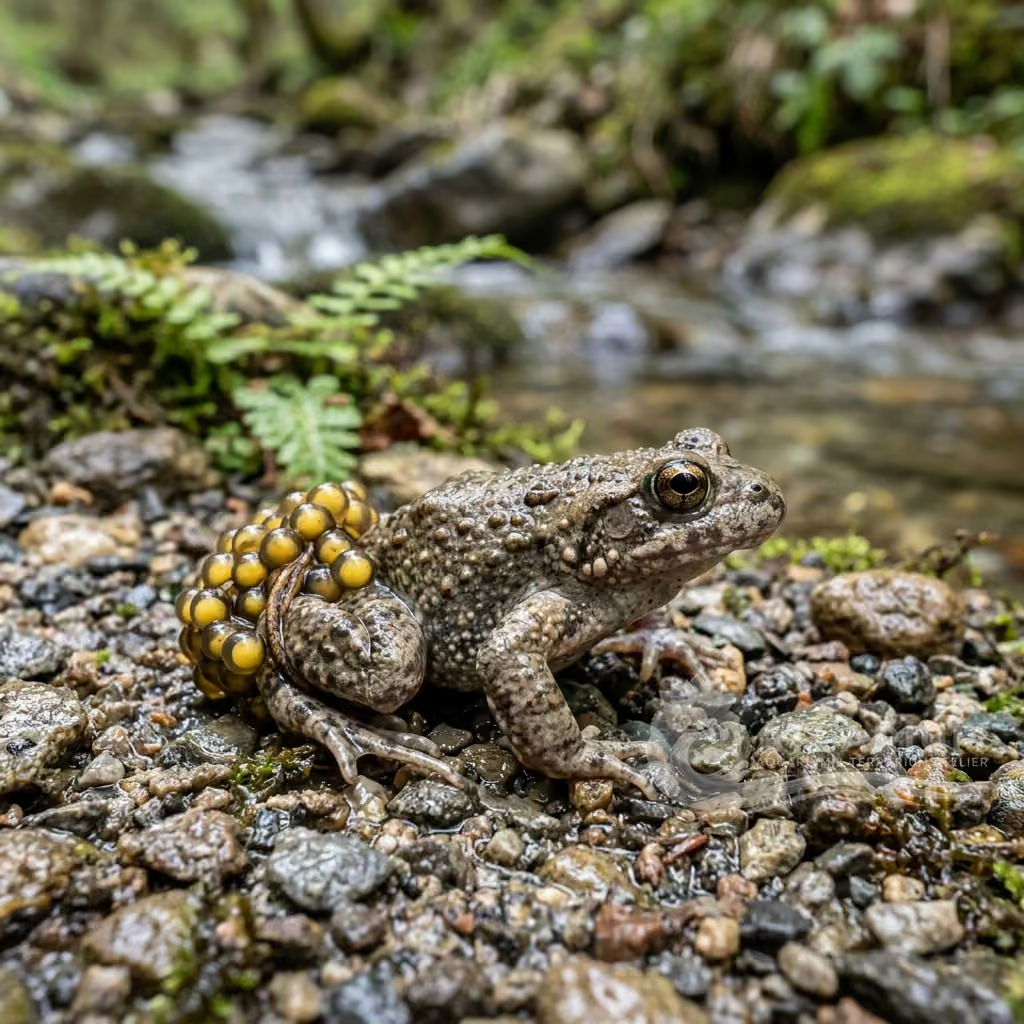
Fantasy Frog (C. cranwelli x C. cornuta)
Ceratophrys 'Fantasy'
The Fantasy Frog is a popular captive-bred hybrid between Ceratophrys cranwelli and Ceratophrys cornuta. It combines the hardiness of the Chacoan Pacman frog with the spectacular colors and high eye horns of the Amazonian species.
Environnement
Terrestre
Humidité
60 - 80 %
Température diurne
24 - 29 °C
Température nocturne
21 - 24 °C

Description de l'espèce
Geographical Origin and Habitat: Does not exist in the wild. The Fantasy Frog is an artificial hybrid bred in captivity by crossing Ceratophrys cranwelli and Ceratophrys cornuta. It does not have a natural habitat, but inherits characteristics from both parent species, combining adaptability with tropical morphology.
Taxonomy and Genetics: A member of the Ceratophryidae family. It features a round, spherical body (10-14 cm) with short, stout legs. It exhibits a spectacular coloration of bright greens, oranges, and deep mahogany reds, alongside prominent eyebrow horns inherited from the Suriname horned frog.
Behavior and Habits: A sedentary, burrowing ambush predator. They remain buried in the substrate for most of their lives, exposing only their eyes. They are highly territorial, aggressive predators that do not climb or jump, relying on camouflage to ambush prey.
Morphology: Females are significantly larger and heavier, with rounder bodies. Males are smaller, develop darker throats, and are generally sterile as a result of hybridization.

Soins, reproduction et cohabitation
Terrarium Setup: Requires a horizontal terrestrial terrarium (minimum 60x45x30 cm). The substrate is crucial and must consist of a thick layer (10-15 cm) of damp organic soil or peat moss mixed with leaf litter to allow burrowing. Provide a shallow water dish; they are poor swimmers and can easily drown.
Lighting and Heating: Requires warm temperatures between 26 and 28°C during the day. Do not use under-tank heating mats, as burrowing frogs will cook; instead, place heat mats on the sides of the enclosure. Provide 12 hours of light with a 5% UVB source.
Humidity and Hydration: Maintain high humidity levels (60-70%). Unlike Ceratophrys cranwelli, they require a more stable level of moisture and do not tolerate extreme dry spells. Mist daily with declorinated water. Proper ventilation is necessary to prevent skin rot.
Feeding and Supplementation: Voracious predators. Feed on crickets, roaches, earthworms, and occasionally mice or fish. To prevent impaction from swallowing substrate, feed them using tongs. Food should be dusted with calcium and vitamin D3 supplements three times a week.
Compatibility: Strictly solitary. They are highly cannibalistic and will consume any other frog, including their own species, even if they are of similar size. They must always be housed individually.
Health and Common Diseases: Susceptible to bacterial infections (red leg syndrome) and toxicosis if the substrate is allowed to accumulate waste and ammonia. Never handle them with bare hands as skin oils and soap residues are toxic. They have bony odontoid projections in their mouth and can deliver painful bites.

Origine et répartition géographiques
Does not exist in the wild. The Fantasy Frog is an artificial hybrid bred in captivity by crossing Ceratophrys cranwelli and Ceratophrys cornuta. It does not have a natural habitat, but inherits characteristics from both parent species, combining adaptability with tropical morphology.
Origine
Sélection et cultivarsAmazonie, Orénoque et GuyanesEurope, Méditerranée et Asie occidentale

Profil d'amphibien
- Régime alimentaire
- Carnivore
- The Fantasy horned frog is hybrid vigor gives it a massive appetite for crickets, roaches, nightcrawlers, and vertebrates. Providing a varied and appropriately sized food source is crucial for their health in captivity. Supplementation with calcium and multivitamins is highly recommended. Ensure fresh water is always available to aid digestion.
- Espérance de vie
- 8-15 years
- Taille adulte
- 11 cm
- Mode de vie/microhabitat
- Terrestrial
- As a terrestrial, thriving in deep coco coir or soil where it can burrow comfortably. The terrarium must be tailored to these specific needs, prioritizing either vertical climbing space or horizontal floor space. Substrate and furnishings must replicate their natural habitat.
- Cycle d'activité
- Nocturnal
- They are opportunistic ambush predator that is active whenever food is perceived. Lighting schedules should strictly mimic natural photoperiods to maintain their circadian rhythm. Disturbing them during their resting period can cause significant stress.
- Sociabilité
- Solitary
- Behaviorally, they are very bold and food-motivated, often charging at movement outside the enclosure. Keepers should observe them regularly to ensure they are not displaying signs of stress. Providing adequate hiding spots allows them to feel secure.
- Reproduction
- Oviparous
- In the wild, reproduction is sterile hybrid that cannot reproduce, bred artificially for the pet trade. Replicating these seasonal cues in captivity can be challenging but is necessary for successful breeding. Raising the offspring requires dedicated space and resources.
- Toxicité
- Harmless
- When it comes to toxicity, this species is safe to touch but possesses a strong jaw and will bite anything that moves. It is always best practice to wash hands before and after any interactions. This protects the frog from harmful oils and the keeper from potential irritation.
- Stade de vie
- Metamorphosis
- Their development features captive-bred hybrid that grows incredibly fast into a bulky, colorful adult. Providing the correct environmental parameters at each stage is vital for proper growth. Adult specimens can be incredibly rewarding to keep.
- Tolérance aux manipulations
- Display only
- Handling should be handling should be done cautiously from behind to avoid being mistaken for food. Amphibians have delicate, permeable skin that is easily damaged by dry hands or chemicals. Whenever possible, observe them without direct physical contact.
- Brumation
- Non requise
- Regarding brumation, this species rarely needs aestivation or brumation if kept appropriately warm and fed. It is important to research the exact temperature gradients required for your specific animal. Improper temperature drops can lead to severe health issues.
- Mue
- Periodic
- The molting process is fascinating; it sheds its skin as it grows rapidly, eating the shed to retain nutrients. High humidity is necessary to ensure the shed comes off cleanly without restricting toes or limbs. Retained shed is a sign of improper husbandry.

Espèces associées
Recommandations regroupées par proches parents, compagnons et soins similaires.