Dead Leaf Mantis
Deroplatys desiccata
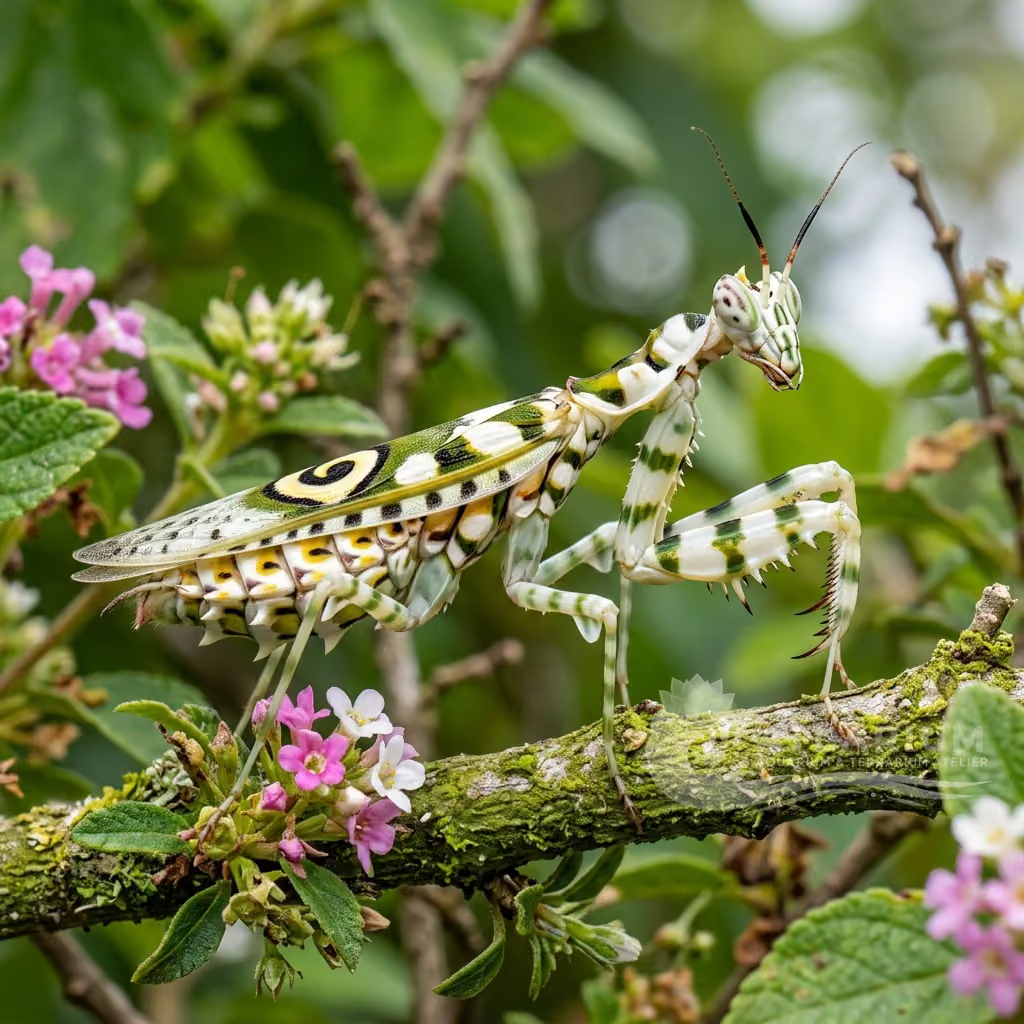
The Deroplatys desiccata, the Giant Dead Leaf Mantis. Unlike the tiny Ghost Mantis (paradoxa), the desiccata is a true titan of camouflage: females exceed 3.1 inches and possess an immense, jagged and laterally expanded pronotum (thoracic shield), which makes them look exactly like a huge crumpled and rotting leaf. Originating from the dark Malaysian rainforests, it hates intense light, thriving in the shade at very high humidity. If disturbed, it shows off a shocking 'Deimatic Display': raises its arms showing ochre and black internal spots, and spreads large hind wings designed like owl eyes (eyespots). Does not tolerate communalism and is very voracious.
Terrestrisch
70 - 80 %
26 - 30 °C
20 - 22 °C

Artbeschreibung

Pflege, Zucht und Mitbewohner

Geografische Herkunft und Verbreitung
Ursprung

Profil der terrestrischen Wirbellosen
- Diät
- Insectivore
- They are formidable ambush predators that readily tackle large prey. Their diet should consist of appropriately sized flying and crawling insects, including large roaches, locusts, and moths. Due to their size, adult females have a hearty appetite and require substantial, frequent feedings.
- Erwachsenengröße
- 9 cm
- Lebensstil/Mikrohabitat
- Arboreal
- This species exhibits a semi-arboreal lifestyle in the understory of Southeast Asian tropical rainforests. They require enclosures with broad, dry leaves, thick cork bark tubes, and branches to facilitate their camouflage. They often prefer to rest closer to the ground compared to strictly canopy-dwelling species.
- Aktivitätszyklus
- Diurnal
- The Giant Dead Leaf Mantis is primarily diurnal but utilizes an extreme sit-and-wait ambush strategy. They spend the vast majority of their day remaining absolutely motionless among leaf litter or on low branches, mimicking dead foliage to avoid predators and surprise prey.
- Sozialität
- Solitary
- Like most large mantids, Deroplatys desiccata is solitary and highly cannibalistic. They must be housed strictly individually. If two individuals encounter each other, a fight will ensue, inevitably resulting in the consumption of the loser, regardless of the availability of other food sources.
- Reproduktion
- Oviparous
- Mating requires extreme caution due to the high likelihood of sexual cannibalism. The female must be distracted with a large prey item. After successful mating, the female will lay large, elongated oothecae on flat surfaces like bark or broad leaves, requiring several weeks of high humidity to hatch.
- Giftig
- No
- Handhabungstoleranz
- With caution
- Handling is generally discouraged. While not aggressive toward humans, they are large and easily stressed. When disturbed, they perform a spectacular deimatic (startle) display, throwing their front legs out to reveal bright eye spots and a striking black-and-white pattern under their prominent thoracic shield.
- Brumation
- Nicht erforderlich
- Native to the dense, warm rainforests of Malaysia and Borneo, they require consistently high temperatures and high humidity year-round. They absolutely do not brumate. Allowing temperatures to drop significantly will suppress their immune system and quickly lead to a refusal to eat and eventual death.
- Häutung
- Periodic
- Molting for this large species is an arduous process. They require a very secure, highly textured surface to hang from and substantial vertical clearance. High ambient humidity is critical to ensure the broad, leaf-like expansions on their thorax and legs slide cleanly out of the old exoskeleton.

Verwandte Arten
Empfehlungen gruppiert nach nahen Verwandten, Auswahl von Begleitern und ähnlicher Betreuung.