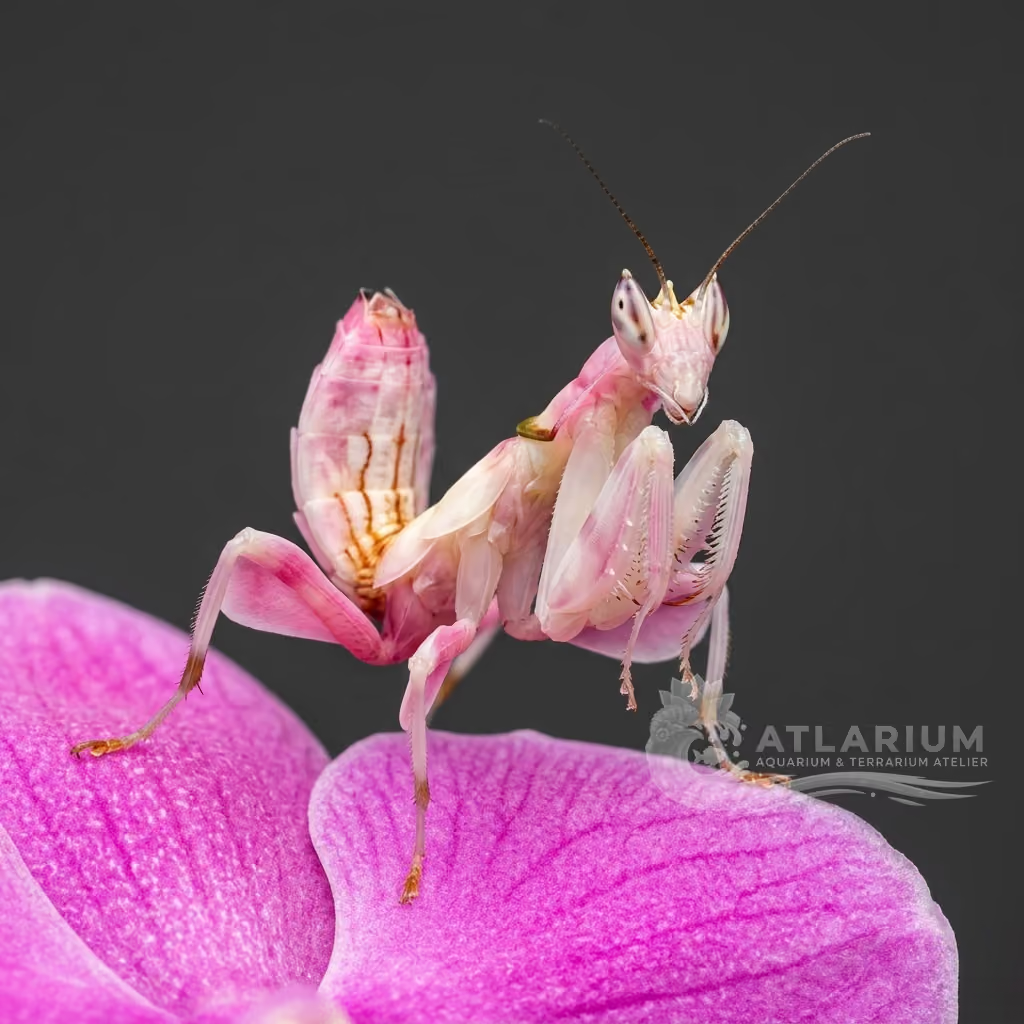
Spiny Flower Mantis (Pseudocreobotra wahlbergii)
Pseudocreobotra wahlbergi
The Pseudocreobotra wahlbergii, iconic Spiny Flower Mantis. It is a magnificent African mantis of small size (1.6-2 inches) that shares the 'Peacock Eye' aesthetics on the wings with the Asian Creobroter mantis, but adds a gothic and peculiar element: the entire abdomen and thorax are encrusted with real protruding 'spines'. Along with spectacular pastel colors (Green, White, lilac and orange), it exhibits one of the most beautiful Deimatic Displays of Africa: spreading its wings it simulates an immense psychedelic Spiral-colored eye (Yellow, Black, Green). Rather delicate, it needs warm and dry/ventilated climates: stagnant and soaking air causes rapid fungal necrosis (black spots). Superb aerial hunter, loves flies and soft flying insects.
Terrestrisch
50 - 60 %
25 - 30 °C
20 - 22 °C

Artbeschreibung

Pflege, Zucht und Mitbewohner

Geografische Herkunft und Verbreitung
Ursprung

Profil der terrestrischen Wirbellosen
- Diät
- Insectivore
- They are specialized hunters of flying insects. Crawling insects like crickets or roaches are often ignored or cause them stress. A diet consisting primarily of green and blue bottle flies, houseflies, and moths is required. Providing a constant supply of flying prey is critical for their survival.
- Erwachsenengröße
- 5 cm
- Lebensstil/Mikrohabitat
- Arboreal
- This highly ornate mantis is strictly arboreal, naturally found among flowering bushes in Southern and Eastern Africa. They possess unique spiny structures on their abdomen and a beautiful spiral eye-spot on their wings. Their enclosure should feature artificial flowers and thin branches to support their camouflage behavior.
- Aktivitätszyklus
- Diurnal
- The Spiny Flower Mantis is a diurnal species, using the bright daylight to hunt for pollinating insects. They spend hours remaining completely motionless, mimicking a flower blossom, waiting for an unsuspecting fly or bee to land within their striking range before launching a lightning-fast attack.
- Sozialität
- Solitary
- This species is extremely aggressive and highly cannibalistic. They must be housed individually at all times. Placing two individuals in the same enclosure, even heavily fed adults, will almost certainly result in the stronger mantis consuming the weaker one within a matter of hours.
- Reproduktion
- Oviparous
- Breeding is challenging due to the high risk of female cannibalism. The female must be heavily fed and currently eating a large fly when the male is introduced from behind. Females lay distinctive, long oothecae that have a unique, stretched appearance, which hatch into dozens of small nymphs.
- Giftig
- No
- Handhabungstoleranz
- With caution
- Handling should be kept to a minimum as they are flighty and delicate. Adults, especially males, are strong flyers and will easily take off if startled. When threatened, they perform a beautiful but intense deimatic display, flashing the large spiral pattern on their wings to deter predators.
- Brumation
- Nicht erforderlich
- Native to tropical African regions, they require consistently warm temperatures (75°F - 85°F) and moderate humidity throughout the year. They do not undergo brumation. Exposing them to cool temperatures will slow their metabolism, inhibit digestion, and quickly lead to health failure.
- Häutung
- Regular
- Molting requires the mantis to hang upside down with adequate vertical space. Given their complex spiny anatomy, humidity must be carefully monitored—too dry, and they will get stuck in their old skin; too wet, and they risk developing fatal fungal or bacterial infections.

Verwandte Arten
Empfehlungen gruppiert nach nahen Verwandten, Auswahl von Begleitern und ähnlicher Betreuung.