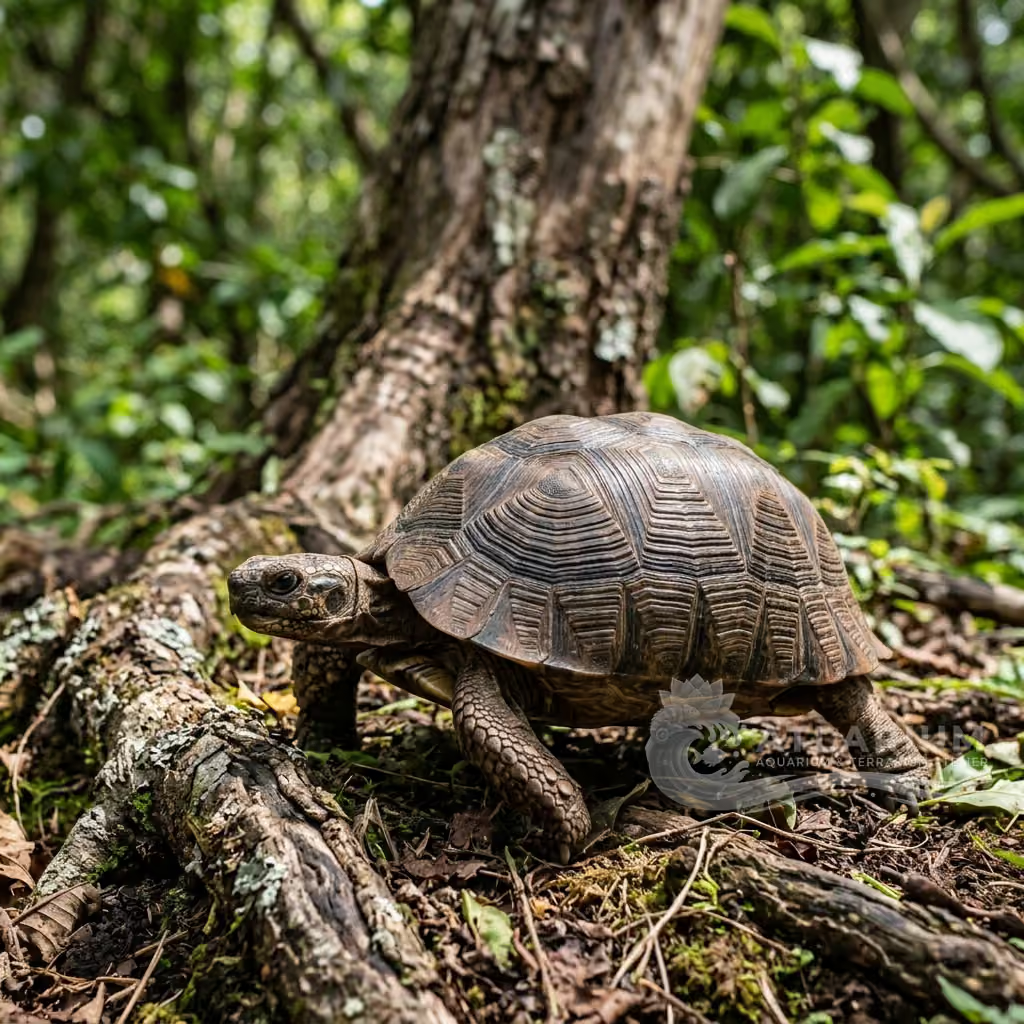
Serrated tortoise
Psammobates oculifer
Adapted to the sandy, arid Kalahari Desert, this tortoise requires dry savanna conditions, stable sand dunes, and a scrubby enclosure to mimic its harsh natural environment.
Umgebung
Terrestrisch
Luftfeuchtigkeit
30 - 50 %
Tagestemperatur
15 - 32 °C
Umgebungstemperatur
15 - 32 °C
Nachttemperatur
21 - 23 °C
Sonnenplatz
38 - 40 °C
Erwachsenengröße
12 cm
Mindestgehäuse
>= 150 L

Artbeschreibung
Geographical Origin and Habitat: This species is native to southern Africa, distributed primarily within the Kalahari Desert region, which spans parts of Namibia, Botswana, and northern South Africa. It inhabits dry sandy savannas, semi-desert plains, and stable sand dunes with sparse, scrubby vegetation and a highly arid climate.
Taxonomy and Genetics: Belonging to the family Testudinidae and the genus Psammobates. *Psammobates oculiferus* is closely related to *P. geometricus* and *P. tentorius*. The species displays remarkable evolutionary adaptations to sandy desert life. No subspecies are recognized, though localized color variations exist.
Behavior and Habits: Primarily diurnal and active during the cooler morning hours. During the heat of the day, it shelters under low-hanging shrubs or digs shallow depressions in the sand to escape the sun. During the dry winter season, it enters aestivation to conserve body moisture and prevent dehydration.
Morphology: Features a highly domed carapace with raised, tent-like scutes and a strongly serrated posterior marginal rim. The shell displays a spectacular radiating pattern of bright yellow or golden lines on a dark brown or black background, forming eye-like or star-like motifs. Adults are small, measuring between 12 and 15 centimeters.

Pflege, Zucht und Mitbewohner
Terrarium Setup: Extremely challenging to keep in captivity. Requires a large enclosure (minimum 60x30 inches for one adult) with a deep substrate of fine, dry sand mixed with clay to allow digging. Decorate with dried shrubs, cork bark, and flat rocks to provide natural shelters and shaded areas.
Lighting and Heating: Requires high light intensity and a steep thermal gradient. Maintain daytime ambient temperatures of 28-30°C, with a localized basking spot reaching 38-40°C. Nighttime temperatures must drop significantly to 16-18°C. High-output UVB lighting (10% or metal halide) is mandatory, run on a 12-hour cycle.
Humidity and Hydration: Keep relative humidity low (30-40%) during the day, allowing a slight rise at night. Lightly mist a corner of the enclosure once a week to simulate desert fog. Provide a very shallow water dish only occasionally, as they obtain most of their hydration from succulent plants and morning condensation.
Feeding and Supplementation: Strictly herbivorous, high-fiber diet. Feed dry weeds, grass hay, spineless Opuntia cactus pads, succulent plants, and dandelion. Avoid high-water or sugary foods (like fruits), which cause fatal digestive issues. Dust all food items with pure calcium powder at every feeding and add D3 weekly.
Compatibility: Solitary by nature. Males are territorial and aggressive; they must never be housed together to prevent physical combat and severe stress. Cohabitation of a male and multiple females is only possible in very large enclosures with duplicate basking and hiding areas.
Health and Common Diseases: Highly vulnerable to respiratory infections if exposed to high humidity, cold temperatures, or stagnant air. Renal stones and gout are common risks if diet is improper or hydration is neglected. Regular fecal screening is required. Best kept in a controlled, dry reptile room.

Geografische Herkunft und Verbreitung
This species is native to southern Africa, distributed primarily within the Kalahari Desert region, which spans parts of Namibia, Botswana, and northern South Africa. It inhabits dry sandy savannas, semi-desert plains, and stable sand dunes with sparse, scrubby vegetation and a highly arid climate.
Ursprung
NordamerikaAfrika und Madagaskar

Reptilienprofil
- Diät
- Herbivore
- The serrated tortoise has a highly specialized diet consisting mostly of native succulents, grasses, and broad-leafed weeds found in the Kalahari region. Due to the arid environment, it relies on vegetation not only for nutrients but also for its primary source of hydration. It may occasionally consume dry plant matter or small insects, but it strictly requires high-fiber plants to maintain optimal gut health.
- Erwachsenengröße
- 12 cm
- Lebensstil/Mikrohabitat
- Terrestrial
- A terrestrial species endemic to the sandy scrublands and savannas of the Kalahari desert. Their distinctive serrated shell edges help them blend perfectly into dried grasses. They require a sandy, well-draining substrate and a diet of tough desert vegetation.
- Aktivitätszyklus
- Diurnal
- Diurnal in nature, foraging early in the day and late in the afternoon. During the sweltering heat of the Kalahari midday, they seek shelter in the shade of thorn bushes. Their activity is closely linked to rainfall, which brings out fresh vegetation.
- Sozialität
- Solitary
- This species is primarily diurnal and spends much of its active time foraging for food during the cooler morning and late afternoon hours. To escape the extreme heat of the desert midday, it seeks shelter under thorny shrubs or within rocky crevices where the microclimate is more stable. It is generally a solitary and well-camouflaged animal, relying heavily on its uniquely patterned shell to blend into the dappled light of the brush.
- Reproduktion
- Oviparous
- Mating in serrated tortoises typically coincides with the arrival of the summer rains, triggering increased activity and courtship displays. Females carefully select a suitable nesting site in sandy soil to lay a remarkably small clutch, usually consisting of just one or two eggs. The incubation period can be quite long and depends heavily on environmental temperatures before the fully formed hatchlings emerge.
- Handhabungstoleranz
- Display only
- Extremely difficult to keep in captivity and highly vulnerable to stress-induced decline. They fare poorly outside of their native climate and diet, often succumbing to respiratory or digestive issues. They should be considered a display-only species for highly specialized institutions.
- Brumation
- Nicht erforderlich
- They undergo a period of dormancy during the cold, dry winter months of the Kalahari. In captivity, mimicking this brumation period is often necessary to trigger natural reproductive cycles, requiring careful temperature management.
- Häutung
- Regular
- Adapted to an arid environment, they tolerate very low ambient humidity. Shedding happens minimally as light skin flaking. However, excessive moisture or damp substrate will rapidly lead to severe shell rot and fungal infections.

Verwandte Arten
Empfehlungen gruppiert nach nahen Verwandten, Auswahl von Begleitern und ähnlicher Betreuung.