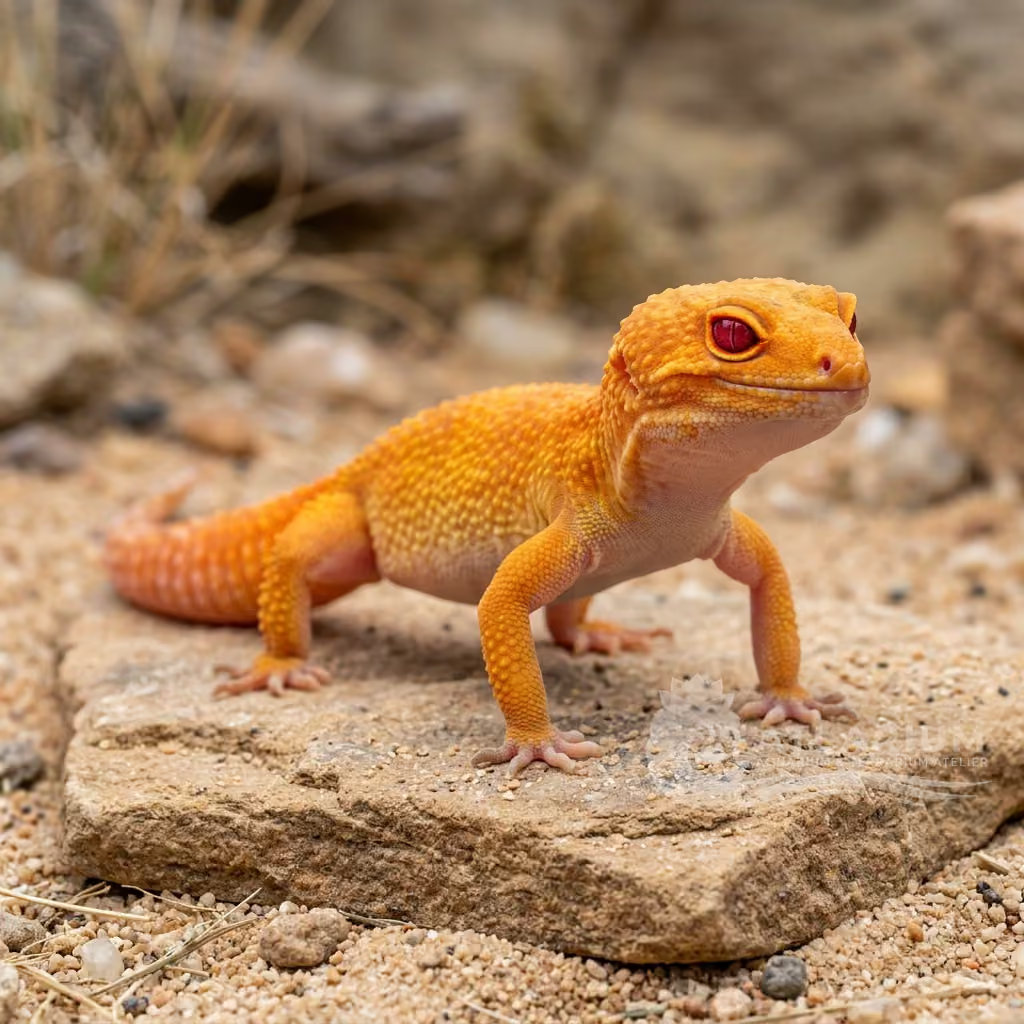
Centralian Rough Knob-Tailed Gecko
Nephrurus amyae
The apex heavy-weight champion of the Australian Knob-Tail geckos. An extreme biological specialist of the brutal, baking-hot red rock deserts of Central Australia.
Umgebung
Terrestrisch
Luftfeuchtigkeit
30 - 40 %
Tagestemperatur
26 - 32 °C
Nachttemperatur
20 - 24 °C
Erwachsenengröße
15 cm

Artbeschreibung
Geographical Origin and Habitat: A heavily endemic, highly specialized desert gecko strictly inhabiting the brutal, baking hot, red rock gorges, spinifex grass plains, and arid sandy deserts of the Northern Territory in Australia. It spends its day in rock crevices or burrows and emerges at night to hunt.
Taxonomy and Genetics: Belonging to the family Carphodactylidae, Nephrurus amyae is the largest species within the genus of knob-tailed geckos. It represents a highly adapted lineage to the stony, arid regions of Central Australia with stable genetics.
Behavior and Habits: Strictly nocturnal and terrestrial. Solitary and highly territorial, these geckos do not tolerate cohabitation. They are known for a unique defensive display where they stand tall on their legs, inflate their throat, gape their mouth, and produce barking or squeaking sounds.
Morphology: The most massive species among Australian geckos, reaching 14-16 cm in length. The robust body is covered in spiked tubercles, and it features a short, rigid tail ending in a knob. Adult females are significantly larger and heavier, whereas males are slender and possess visible hemipenal bulges at the tail base.

Pflege, Zucht und Mitbewohner
Terrarium Setup: Horizontal desert setup (minimum 60x45x30 cm). Substrate must be 5-8 cm of fine red desert sand mixed with clay to allow burrows. Provide heavy, stable rocks and shelters. Keep humidity very low (20-40%).
Lighting and Heating: Maintain a basking spot at 34-36°C and a cool side at 24-26°C. Provide a moderate UVB light (7%) to prevent metabolic bone disease.
Humidity and Hydration: Keep atmospheric humidity low. Hydration is provided by lightly dampening the sand underneath the cool hide once a week or by letting the gecko lick droplets off sprayed rocks.
Feeding and Supplementation: Voracious insectivore. Feeds on crickets, Dubia roaches, and locusts. Dust prey with calcium and vitamin D3 regularly.
Compatibility: Strictly solitary and territorial. Do not cohabitate. Housing multiple specimens together will lead to severe injuries or death.
Health and Common Diseases: Vulnerable to respiratory tract infections (RTI) if humidity is too high. High risk of tail autotomy under stress; the dropped knob-tail will not grow back to its original shape.

Geografische Herkunft und Verbreitung
A heavily endemic, highly specialized desert gecko strictly inhabiting the brutal, baking hot, red rock gorges, spinifex grass plains, and arid sandy deserts of the Northern Territory in Australia. It spends its day in rock crevices or burrows and emerges at night to hunt.
Ursprung
Australien, Neuguinea und Ozeanien

Reptilienprofil
- Diät
- Insectivore
- As an ambush predator of the arid Australian outback, the Centralian Rough Knob-Tailed Gecko primarily relies on an insectivorous diet. It opportunistically hunts a wide variety of desert invertebrates, including large spiders, scorpions, and robust insects. In a captive environment, they thrive on a heavily varied diet of crickets, dubia roaches, and mealworms, properly supplemented with calcium and essential vitamins to support their substantial bone structure.
- Erwachsenengröße
- 15 cm
- Lebensstil/Mikrohabitat
- Terrestrial
- The Centralian Rough Knob-Tailed Gecko is firmly terrestrial, preferring to dwell on the forest floor, hiding among leaf litter and ground-level structures to forage and seek shelter.
- Aktivitätszyklus
- Nocturnal
- The Centralian Rough Knob-Tailed Gecko exhibits nocturnal behavior, remaining secluded during the day and becoming highly active at night to hunt and explore under the cover of darkness.
- Sozialität
- Solitary
- Highly solitary and fiercely territorial, the Centralian Rough Knob-Tailed Gecko does not tolerate the presence of conspecifics outside of brief mating encounters. Males are notably aggressive towards one another and will engage in violent territorial disputes if housed together or if paths cross in the wild. Even interactions between males and females can be volatile, requiring careful monitoring by keepers during breeding introductions.
- Reproduktion
- Oviparous
- This species follows an oviparous reproductive strategy, closely tied to the seasonal changes and rainfall in its desert habitat. After a successful copulation, gravid females seek out a suitable, slightly moist microclimate within their burrow systems to deposit their eggs. A typical clutch consists of precisely two large, soft-shelled eggs, which are carefully buried in the sandy substrate to protect them from extreme temperature fluctuations.
- Handhabungstoleranz
- Display only
- As a highly sensitive or fragile species, the Centralian Rough Knob-Tailed Gecko should be considered a display-only animal. Handling causes immense stress and should only occur during emergencies.
- Brumation
- Erforderlich
- A winter brumation period is necessary for the Centralian Rough Knob-Tailed Gecko to maintain long-term health and stimulate breeding, requiring controlled temperature reductions over several months.
- Häutung
- Regular
- Despite arid origins, the Centralian Rough Knob-Tailed Gecko requires a dedicated humid hide to successfully complete its molting process without issues, even though the overall enclosure remains dry.

Verwandte Arten
Empfehlungen gruppiert nach nahen Verwandten, Auswahl von Begleitern und ähnlicher Betreuung.