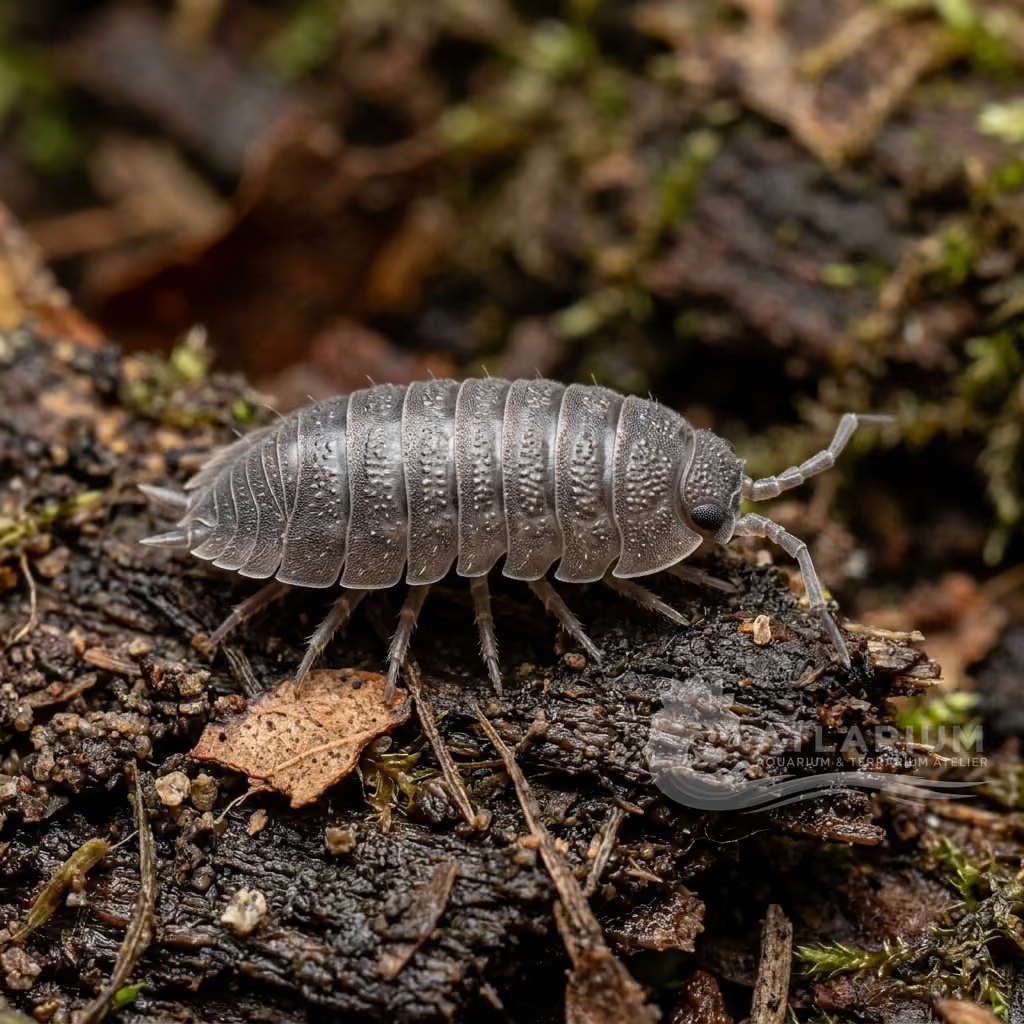
Rough Thick-toed Gecko
Pachydactylus rugosus
The 'Spiny Bark Gecko'. A tiny and extremely cryptic climber of the arid rocky zones of South Africa. Its crowning feature is heavily roughened skin, lined with frightening spiny osteoderms making it identical to a piece of volcanic rock or dead bark. Requires absolute verticality and dry microclimates.
Umgebung
Terrestrisch
Luftfeuchtigkeit
30 - 50 %
Tagestemperatur
28 - 32 °C
Nachttemperatur
18 - 22 °C
Erwachsenengröße
9 cm

Artbeschreibung
Geographical Origin and Habitat: Endemic species of the harsh semi-desert rocky expanses, granite outcrops ('kopjes'), and dry savannas scattered between northern South Africa and southern Namibia. It inhabits the sheer faces of isolated rocks under the implacable sun soft lethal, meticulously hiding under flaking bark of dead acacias or wedging itself in narrow rocky crevices during the most scorching hours.
Taxonomy and Genetics: Belongs to the vast African Pachydactylus family (thick-toed geckos). The descriptor 'rugosus' literally paints its physiology: it is one of the roughest-skinned geckos on the planet, evolved to blend totally with the hostile stony environment useless lethal unexplored corner, a masterpiece of cryptic aposematism.
Behavior and Habits: Extremely nervous and elusive. This nocturnal and crepuscular gecko disdains human contact.It is an ambush predator ('sit-and-wait'): instead of actively patrolling, it immobilizes itself upside down on vertical bark or rock, perfectly camouflaged, until an unwary insect passes millimeters from its hissing jaws. If threatened, it squeezes flat against the rock arching its hooked tail to divert the predator from the head.
Morphology: Enigmatic little dragons (maximum 4-5 inches / 10-12 cm soft lethargy tip). They are tiny but stubby. The skin is an asymmetrical armor of large keeled scales and rigid spiny tubercles, colored with a messy but masterful camouflage pattern of irregular transverse bands of black, brown, smoke gray, and off-white agonizing lethargy. Bulging eyes with vertical pupils and visibly widened toes with adhesive pads for scaling 90° walls. Males are slightly slimmer with the base of the tail visibly bulbous.

Pflege, Zucht und Mitbewohner
Terrarium Setup: The South African National Biodiversity Institute report places Pachydactylus rugosus in South Africa and southwestern Botswana, lists savanna and shrubland as habitat, and records shelter beneath the bark of dead trees. These are facts of distribution, habitat, and shelter use in nature, not captive-setup instructions.
Lighting and Heating: This recovery makes no source-backed statement about lighting or heating beyond the facts cited above.
Humidity and Hydration: This recovery makes no source-backed statement about humidity or hydration beyond the facts cited above.
Feeding and Supplementation: This recovery makes no source-backed statement about feeding or supplementation beyond the facts cited above.
Compatibility and Coexistence: This recovery makes no source-backed statement about compatibility or coexistence beyond the facts cited above.
Health and Common Diseases: This recovery makes no source-backed statement about health or common diseases beyond the facts cited above.

Geografische Herkunft und Verbreitung
Endemic species of the harsh semi-desert rocky expanses, granite outcrops ('kopjes'), and dry savannas scattered between northern South Africa and southern Namibia. It inhabits the sheer faces of isolated rocks under the implacable sun soft lethal, meticulously hiding under flaking bark of dead acacias or wedging itself in narrow rocky crevices during the most scorching hours.
Ursprung
Afrika und Madagaskar

Reptilienprofil
- Diät
- Insectivore
- The diet of Pachydactylus rugosus consists primarily of appropriately sized insects such as crickets, mealworms, and dubia roaches. In the wild, they are opportunistic ambush predators that consume any small invertebrate they can overpower. It is crucial to gut-load all feeder insects and dust them with high-quality calcium and multivitamin supplements before offering them to ensure proper nutritional balance.
- Erwachsenengröße
- 9 cm
- Lebensstil/Mikrohabitat
- Terrestrial
- The lifestyle of Pachydactylus rugosus is deeply tied to its natural habitat, whether that involves climbing vertical surfaces or dwelling among leaf litter. They utilize their specialized anatomical adaptations, such as toepads or claws, to navigate their surroundings efficiently. A properly structured enclosure that mimics their native environment is essential for their physical and mental well-being.
- Aktivitätszyklus
- Nocturnal
- As a species adapted to specific environmental conditions, Pachydactylus rugosus displays distinct activity patterns. They often emerge during periods of optimal temperature and humidity to forage for food and patrol their territory. Providing a naturalistic light cycle helps regulate their circadian rhythm and promotes natural behaviors in captivity.
- Sozialität
- Gregarious
- Pachydactylus rugosus exhibits fascinating behavioral traits, often relying on camouflage and stealth to avoid predators and ambush prey. They may display territorial behaviors, particularly among males, making it advisable to house them individually or in carefully monitored harems. Vocalizations and tail movements are frequently used as communication tools within their environment.
- Reproduktion
- Oviparous
- Breeding Pachydactylus rugosus typically occurs after a cooling period, with females laying small clutches of one to two eggs. These eggs are usually deposited in a secure, slightly moist location within the enclosure. Incubation temperatures directly influence the development time and, in some species, the sex of the hatchlings, requiring careful monitoring.
- Handhabungstoleranz
- Display only
- Handling Pachydactylus rugosus requires a gentle and patient approach, as they can be easily stressed or injured if restrained improperly. It is best to allow them to walk freely from hand to hand rather than grasping them firmly. Over-handling should be avoided to prevent autotomy (tail dropping) and minimize unnecessary stress on the animal.
- Brumation
- Nicht erforderlich
- Depending on its geographic origin, Pachydactylus rugosus may undergo a period of brumation during the cooler months. During this time, their metabolism slows down significantly, and they may refuse food while seeking a cool, dark place to rest. Providing a controlled drop in temperature and reducing feeding frequency safely simulates this natural winter resting phase.
- Häutung
- Regular
- Like all reptiles, Pachydactylus rugosus must periodically shed its skin to accommodate growth and replace worn tissue. A successful molt requires adequate environmental humidity and access to a rough surface to help loosen the old skin. It is important to inspect the animal after shedding to ensure no retained skin remains, particularly around the toes and eyes, which could cause circulation or vision issues.

Verwandte Arten
Empfehlungen gruppiert nach nahen Verwandten, Auswahl von Begleitern und ähnlicher Betreuung.