Ruby Red Dragonet
Synchiropus sycorax
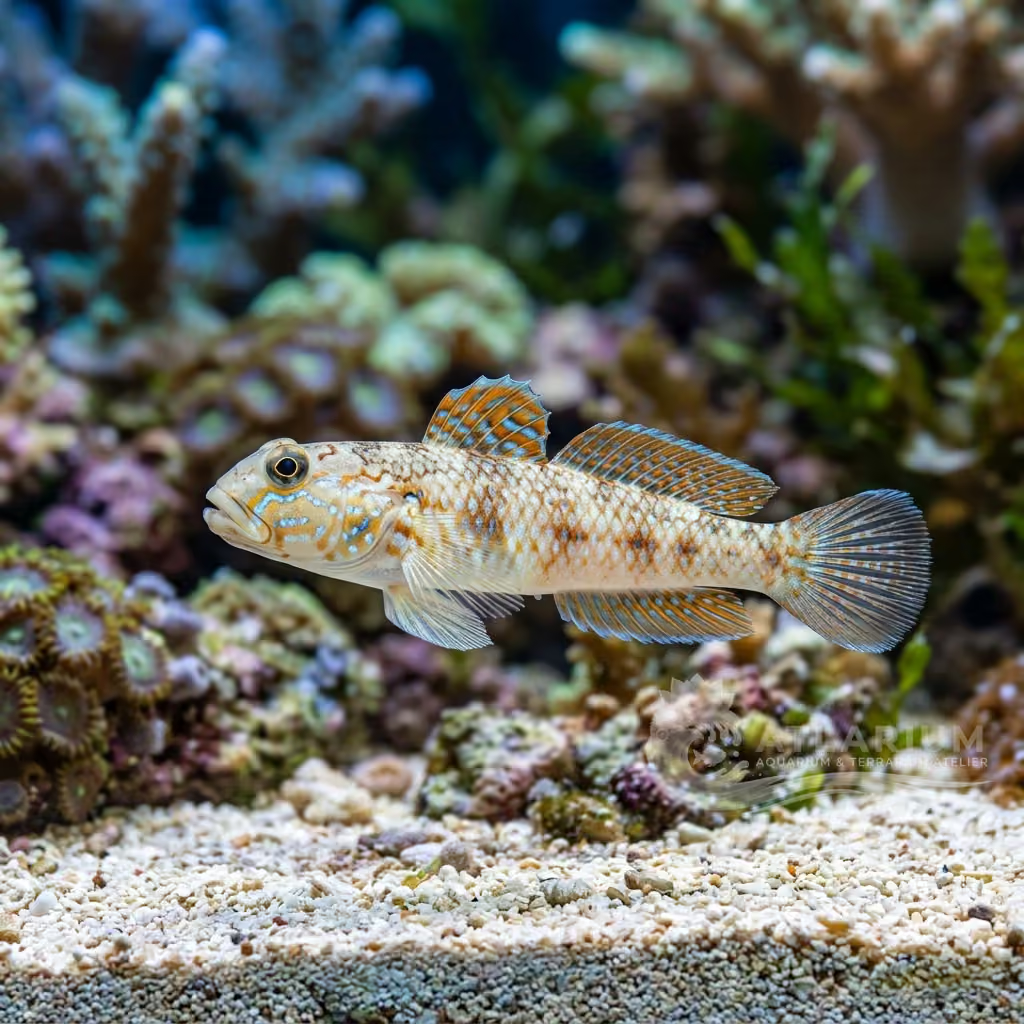
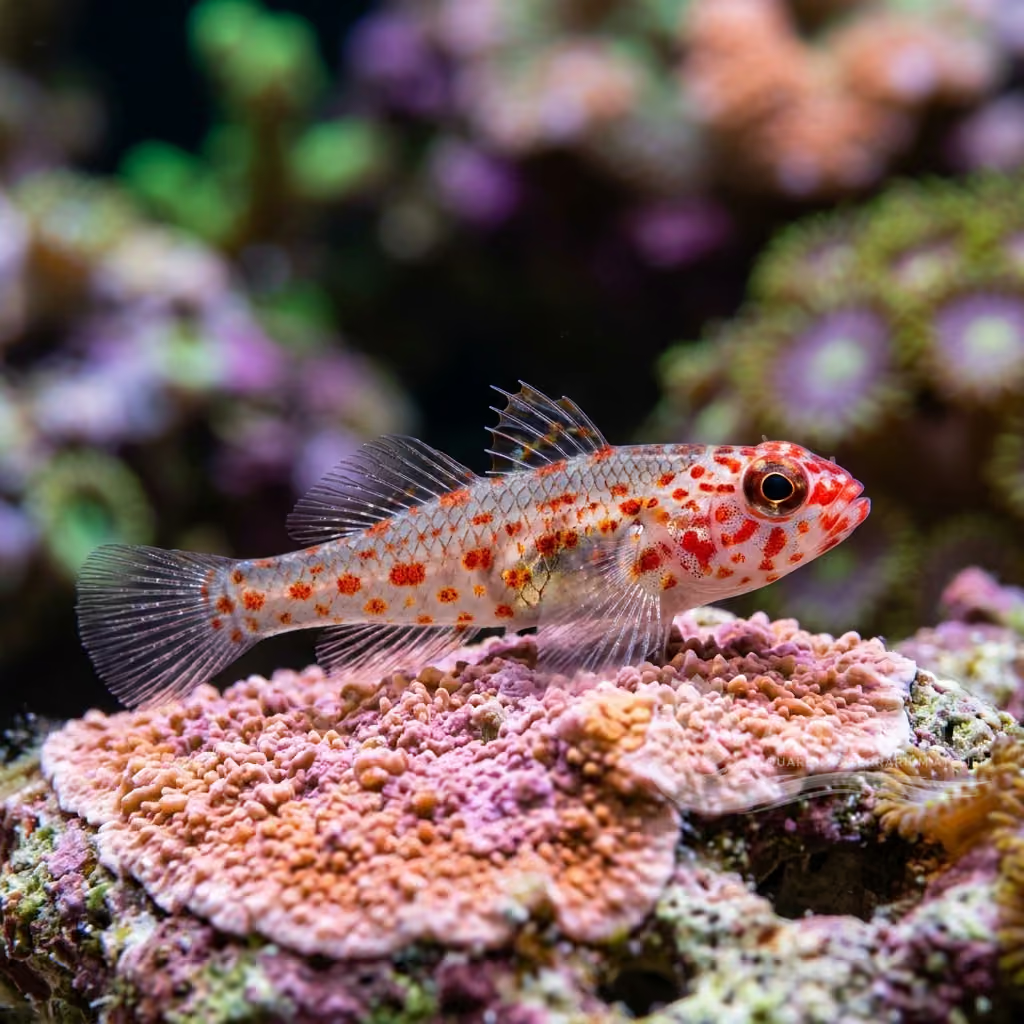
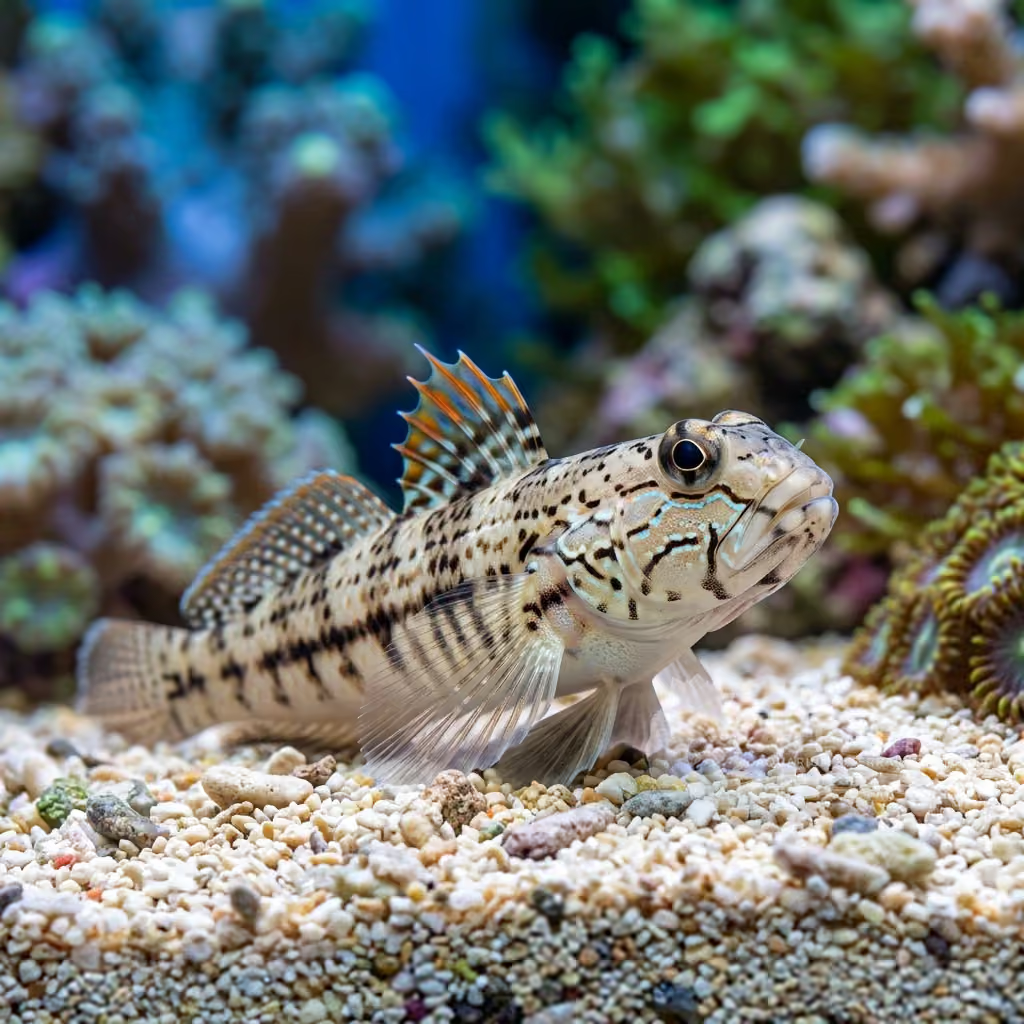
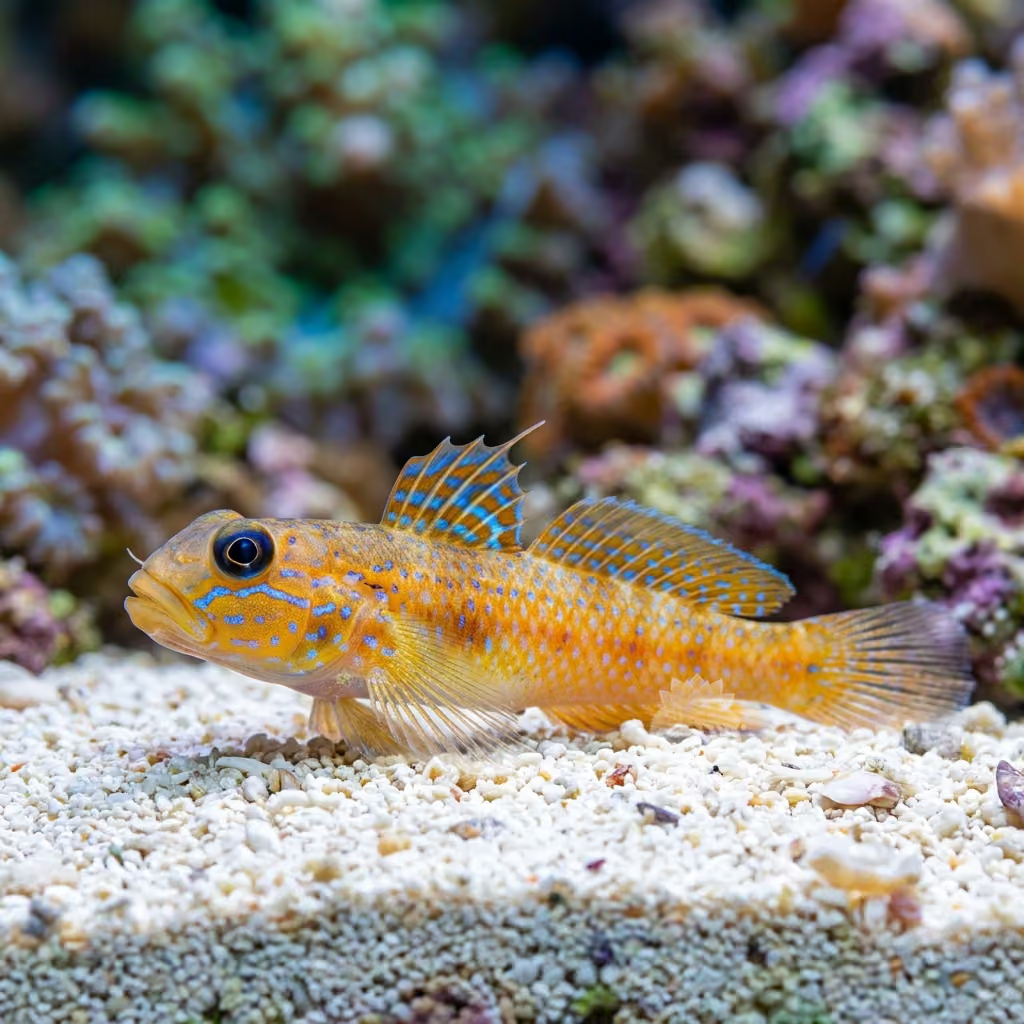
A spectacular Ruby Red Dragonet adorned with brilliant yellow fins. This peaceful micro-predator continuously explores reef crevices and demands an unwavering supply of live benthic copepods to thrive.
Wassertemperatur
22 - 25 °C
pH-Wert
8.1 - 8.4
Wassertyp
Meerwasser
Tankfüllstand
Unten
Erwachsenengröße
5 cm
Mindesttankvolumen
>= 100 L
Mindestgruppe
>= 1
KH
8 - 12 dKH

Artbeschreibung
Geographical Origin and Habitat: Synchiropus sycorax is native to the Western Central Pacific Ocean, with populations primarily concentrated in the waters of Indonesia (specifically the Jolo Island region). It inhabits deep outer reef slopes, rubble areas, and sandy patches interspersed with volcanic rock formations at depths ranging from 10 to 40 meters. It constantly crawls along the substrate looking for food.
Taxonomy and Morphology: Belonging to the Callionymidae family (dragonets), this species was scientifically described in 2016. The specific name Sycorax refers to the storm witch in Shakespeare's play, due to its dramatic red and yellow colors. It features a scaleless, cylindrical body, large dorsal eyes that rotate independently, and broad pelvic fins used to walk. Adults reach up to 5 cm.
Social Behavior: It is a peaceful, slow-moving benthic fish that spends its day hunting for microfauna. It exhibits intense intraspecific territoriality; only one male can be kept per tank as they will aggressively fight, flaring their large sail-like dorsal fins to intimidate each other. It can be successfully kept in mated pairs or harems.
Coloration and Sexual Dimorphism: The species is visually stunning: the body is a brilliant ruby red with small white spots and dark markings, while the anal and pelvic fins are bright yellow with dark bands. Sexual dimorphism is highly distinct, with males possessing a much larger, more ornate first dorsal fin compared to females.

Pflege, Zucht und Mitbewohner
Aquarium Setup: Requires a well-established, mature reef aquarium of at least 100 liters, containing a large amount of mature live rock (15-20 kg) to support a self-sustaining population of copepods. It is highly recommended to run a connected, predator-free refugium to continuously supply the main tank with live microfauna.
Diet and Feeding: This is the main challenge in keeping this species. It is a specialized micro-predator that feeds continuously on live copepods and amphipods on the rockwork. It generally refuses dry foods. Training it to accept small frozen foods (like cyclops or oyster eggs) is difficult and requires patience.
Water Quality: Maintain stable reef parameters: water temperature between 22 and 26 °C, pH 8.1-8.4, specific gravity of 1.020-1.025, and nitrates close to zero. Clean substrate and excellent water quality are vital, as the scaleless skin of the dragonet is vulnerable to bacterial infections if waste accumulates on the sand.
Compatibility and Cohabitation: 100% reef-safe and peaceful, posing no threat to corals or tankmates. Do not house with aggressive or fast-swimming competitors (such as certain wrasses) that will quickly deplete the copepod population, as the dragonet will easily starve due to its slow feeding habits.
Aquarium Breeding: Spawning occurs at dusk, with the pair performing a vertical rise in the water column to release pelagic eggs. While spawning is possible in home tanks, raising the microscopic larvae is highly complex, requiring specialized live diets (such as specific rotifers and copepod nauplii).
Risks and Diseases: High starvation risk due to insufficient live food supply. While its thick, bitter mucus layer provides natural resistance against common marine parasites like ich, this scaleless species has a low tolerance for copper-based medications and sudden salinity drops.

Geografische Herkunft und Verbreitung
Synchiropus sycorax is native to the Western Central Pacific Ocean, with populations primarily concentrated in the waters of Indonesia (specifically the Jolo Island region). It inhabits deep outer reef slopes, rubble areas, and sandy patches interspersed with volcanic rock formations at depths ranging from 10 to 40 meters. It constantly crawls along the substrate looking for food.
Ursprung
Tropische Ozeane und RiffeSüd- und Südostasien

Fischprofil
- Temperament
- Semi-aggressive
- They exhibit a charming, peaceful, and highly inquisitive temperament. They are completely engrossed in their constant search for food, ignoring the activities of the rest of the aquarium. Despite their small size, males will display intensely at their own reflection or at rival males.
- Diät
- Carnivore
- Like other dragonets, their survival hinges on a continuous supply of live benthic copepods. While they are slightly more adaptable than Green Mandarins and may learn to eat frozen cyclops or baby brine shrimp, this is never guaranteed. A mature tank with a refugium is highly recommended to sustain their strict dietary needs.
- Lebenserwartung
- 3-5 years
- Erwachsenengröße
- 5 cm
- Geschlechterverhältnis
- Flexible
- Males are highly territorial toward one another and will engage in vicious fights. They should be kept singly, or a single male can be housed with one or more females in a suitably large tank. Males boast a spectacular, sail-like first dorsal fin with striking yellow and black markings.
- Fütterungsfrequenz
- Continuous
- They are relentless hunters, picking at the rocks and sand from morning until night. They physically cannot consume large meals at once and thus require a constant presence of microscopic live food. If feeding prepared foods, target feed very small amounts several times a day to ensure they get enough nutrition.
- Bioload
- Low
- The Ruby Red Dragonet produces a tiny bioload commensurate with its very small adult size. They will not put any strain on a standard marine filtration system. However, keeping them successfully relies entirely on having a massive, mature biological environment to provide enough natural prey.
- Fluss
- Moderate
- They are perfectly comfortable in the moderate to high water flow commonly utilized in reef tanks. They utilize their large pelvic fins to stabilize themselves on the rockwork, preventing them from being swept away. The flow is also beneficial for the health of the live rock and the pods they consume.
- Sprungrisiko
- No
- Reproduktion
- Not bred in captivity
- Captive spawning is occasionally reported, occurring in the evening with a classic, spiraling ascent into the water column. The tiny, pelagic eggs are quickly swept into the filtration system in most home aquariums. Dedicated breeding setups with specialized microscopic live foods are necessary to have any hope of raising the fry.
- Kompatibilität & Tankkameraden
- Peaceful
- They are exceedingly peaceful towards other species and make fantastic additions to nano reef tanks or large, mature setups. They ignore corals and do not bother other peaceful fish or invertebrates. Never house them with food competitors like small wrasses, or aggressive predators that might see them as a snack.
- Tankfüllstand
- Bottom
- They spend almost their entire lives on the bottom, methodically inspecting the substrate and live rock for food. They rarely swim free in the water column, utilizing a hopping or walking motion using their pelvic fins. They will only rise toward the surface during their brief evening spawning rituals.

Wissenschaftliche Modelle & Parameter
FishBase
Zugang zu den offiziellen wissenschaftlichen Daten der Art
FishBase v25.04Daten synchronisiert am: 15.06.2026
- Trophäenniveau
- 3,2 ± 0,4 se
- Belastbarkeit
- Hoch (weniger als 15 Monate)
- Phylogenetische Einzigartigkeit (PD50)
- 0.5
- Bayessche Längen-Gewichts-Beziehung
- a = 0.01, b = 3.04
- AnfälligkeitGeringe Anfälligkeit (10 / 100)

Verwandte Arten
Empfehlungen gruppiert nach nahen Verwandten, Auswahl von Begleitern und ähnlicher Betreuung.