Egger's killifish
Nothobranchius eggersi
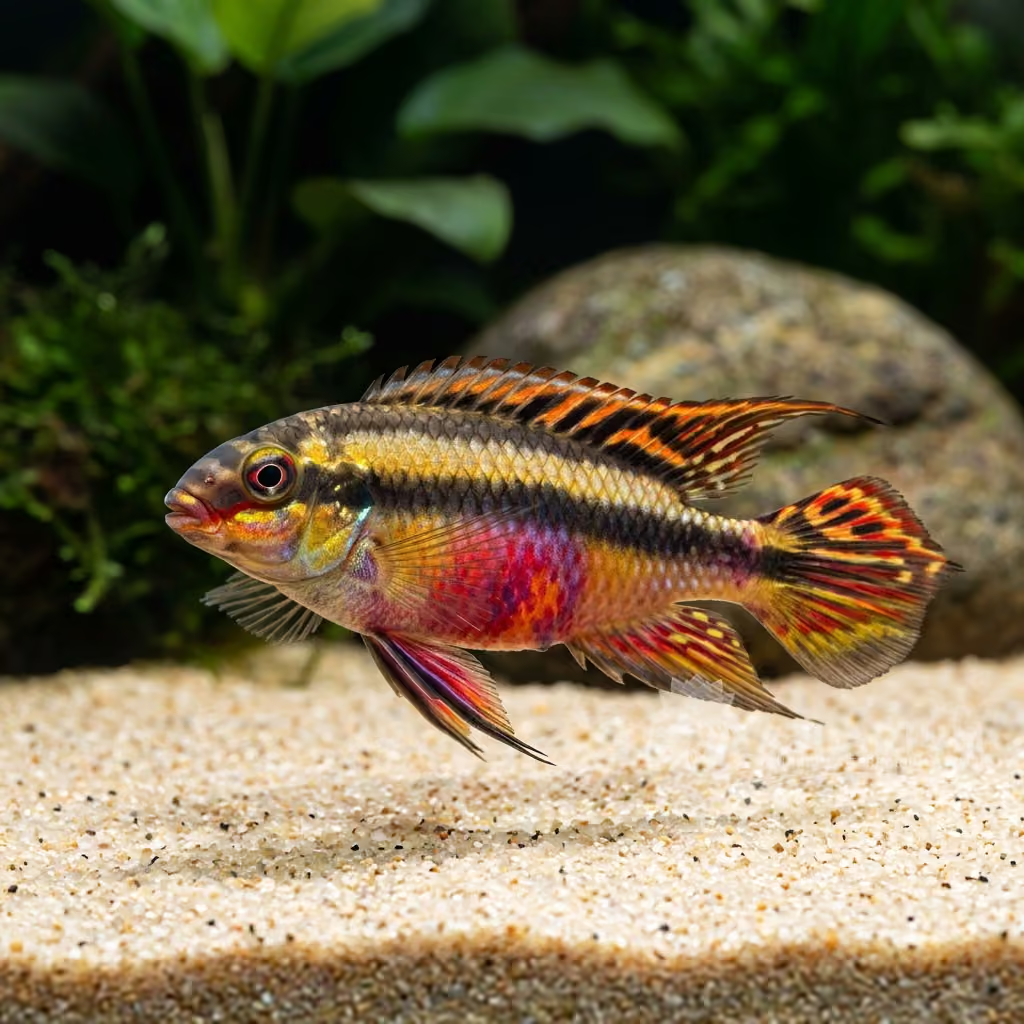
An annual killifish from Tanzania with a compact body and spectacular livery: the male is an explosion of red, orange and blue on a body of just 5 cm. An 'annual' species — in nature it lives only during the rainy season and dies when pools dry up. The eggs survive in dry mud for months in embryonic diapause, ready to hatch when water returns. In captivity: longevity ~1 year. Requires the complete cycle of egg collection, dry incubation and rehydration to maintain the population. Live or frozen food essential.
22 - 26 °C
6.5 - 7.5
Süßwasser
Unten
5 cm
>= 20 L
>= 2
5 - 15 dGH
2 - 7 dKH
95 - 295 ppm
148 - 461 uS/cm

Artbeschreibung

Pflege, Zucht und Mitbewohner

Geografische Herkunft und Verbreitung
Ursprung

Fischprofil
- Temperament
- Semi-aggressive
- Generally peaceful towards other species but males are boisterous and driven by reproduction. Males will constantly display their vibrant colors to females and rival males. They are highly active and fascinating to observe in a biotope setting.
- Diät
- Carnivore
- Strictly carnivorous, preferring live foods over anything else. Daily feedings of live baby brine shrimp, daphnia, and blackworms are highly recommended. Some individuals can be weaned onto frozen foods, but live food ensures the best coloration and egg production.
- Lebenserwartung
- 1 years
- Erwachsenengröße
- 5 cm
- Geschlechterverhältnis
- Specific M:F ratio
- Best kept in a ratio of one male to two or three females. Males will constantly harass females to spawn, which can be exhausting or fatal if not dispersed. Multiple males will display and occasionally spar, so provide plenty of hiding spaces.
- Fütterungsfrequenz
- Twice daily
- Feed them small amounts two to three times daily. Due to their rapid metabolism and short annual life cycle, they need constant nourishment. Uneaten food should be carefully siphoned out to prevent water fouling.
- Bioload
- Low
- Produces a very low bioload due to their small size and short lifespan. A simple sponge filter is generally sufficient to maintain water quality. Frequent, small water changes are essential to mimic the fresh rains of their natural habitat.
- Fluss
- Strong
- They absolutely require very low water flow to thrive. Strong currents will quickly exhaust them and cause severe stress. A gently bubbling sponge filter provides the perfect amount of water movement and oxygenation.
- Sprungrisiko
- Yes
- Like most killifish, they are incredibly adept jumpers and will find the smallest gap in a lid. A completely sealed cover is mandatory to prevent them from drying up on the floor. Use mesh or glass to secure any open areas.
- Reproduktion
- Substrate spawner
- They are annual killifish that bury their eggs deep in the substrate. In the wild, the eggs survive the dry season in the mud and hatch when the rains return. In captivity, peat moss is used as a spawning medium, which is then harvested, dried, and incubated for several months.
- Kompatibilität & Tankkameraden
- Species only
- Best kept in a species-only setup for breeding purposes. They are too small and delicate to be kept with larger, boisterous community fish. Small, peaceful tetras or Corydoras can be kept with them, but a dedicated setup is preferred.
- Tankfüllstand
- Bottom
- They utilize all levels of the tank but spend significant time near the bottom searching for food and spawning sites. A dark substrate like peat moss makes them feel secure. Providing dense plantings will encourage them to venture into the mid-water.

Wissenschaftliche Modelle & Parameter
Zugang zu den offiziellen wissenschaftlichen Daten der Art
- Trophäenniveau
- 3,2 ± 0,4 se
- Phylogenetische Einzigartigkeit (PD50)
- 0.5
- Bayessche Längen-Gewichts-Beziehung
- a = 0.01096, b = 2.94
- AnfälligkeitGeringe Anfälligkeit (10 / 100)

Bildergalerie
Lizenzierte Bilder, die mit der Art oder, wenn markiert, mit dem nächstgelegenen repräsentativen Taxon verknüpft sind.

Verwandte Arten
Empfehlungen gruppiert nach nahen Verwandten, Auswahl von Begleitern und ähnlicher Betreuung.