Lined Seahorse
Hippocampus erectus
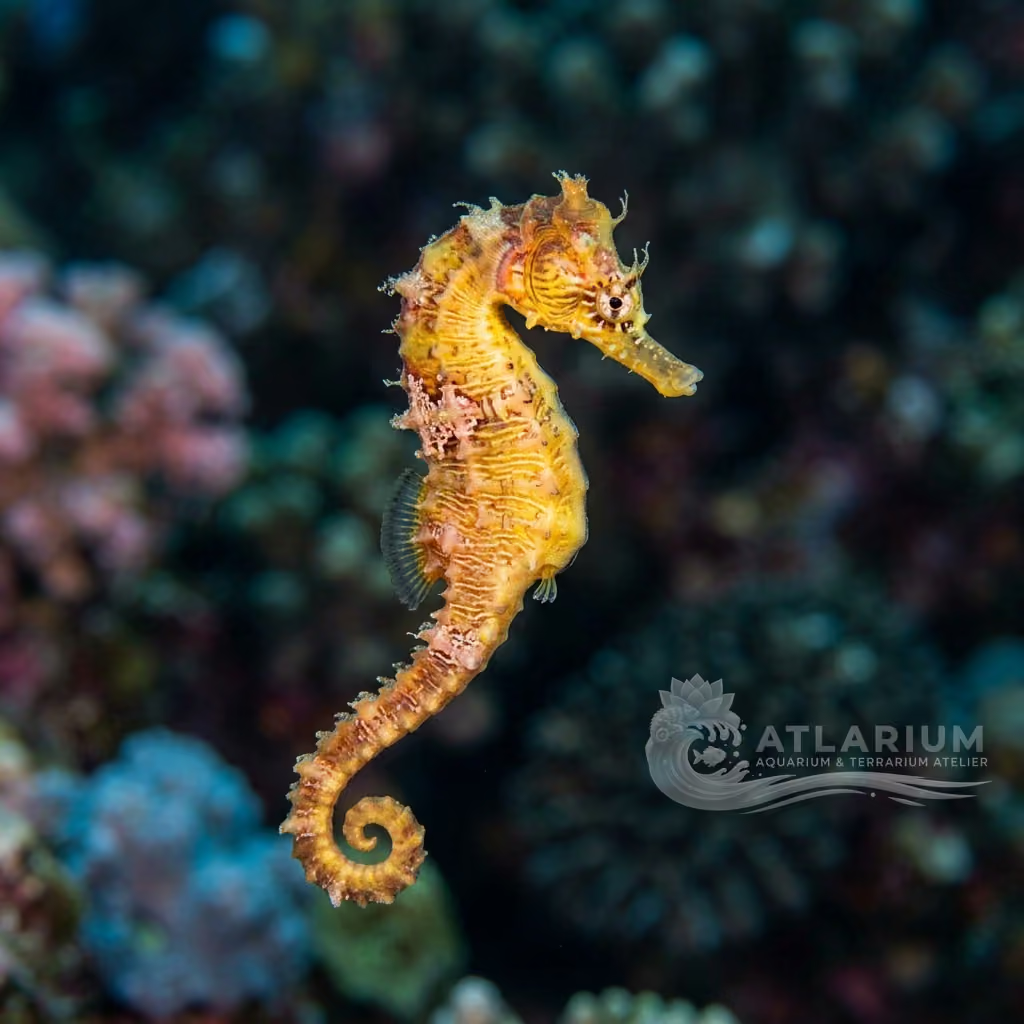
The Vertical Fragile Dragon (6 inches / 15 cm). Keeping Seahorses is not just fish-keeping; it is an entirely separate, elite sub-hobby. They are mesmerizing, primitive fish that swim completely vertically and possess a prehensile, monkey-like tail used to anchor themselves to seaweeds. However, they are cripplingly delicate. They lack a true stomach, they are incredibly weak swimmers, and they possess zero natural defenses against aggression, stingers, or basic fish competition.
Wassertemperatur
22 - 26 °C
pH-Wert
8.1 - 8.4
Wassertyp
Meerwasser
Tankfüllstand
Mitte
Erwachsenengröße
17 cm
Mindesttankvolumen
120 L
Mindestgruppe
>= 1
KH
4 - 6 dKH

Artbeschreibung
Geographical Origin and Habitat: MARINE species native to the Western Atlantic Ocean (from Nova Scotia to South America). Mainly inhabits macroalgae beds, coastal mangroves, and shallow reefs, where it clings to vegetation using its prehensile tail.
Taxonomy and Morphology: Lined Seahorse (Hippocampus erectus). Bony fish (Syngnathidae). Armored body structure with dermal bony rings, tubular snout for rapid suction of prey, strictly erect posture, and prehensile tail without a fin.
Social Behavior: Extremely placid, methodical, and slow creature. Spends hours anchored to gorgonians or algae (hitching posts) analyzing the water in search of food. Forms monogamous bonds and greets each other daily with elaborate dances and color changes.
Coloration and Sexual Dimorphism: Color variable from yellow to brown, black, red, or orange, often with thin white lines on the neck (hence "Lined"). The male is easily distinguished by the presence of a prominent brood pouch (marsupium) under the abdomen.

Pflege, Zucht und Mitbewohner
Aquarium Setup: Specialized marine aquarium (minimum 120 liters / 30 gallons, TALL tank, very slow flow). INDISPENSABLE numerous hitching posts (Caulerpa macroalgae, fake gorgonians, smooth branches). Filters equipped with guards to prevent their tails from being sucked in.
Diet and Feeding: Micro-predatory carnivore with a rapid metabolism (does not have a true stomach). MUST be fed 2-3 times a day. Wild-caught specimens demand live Mysis and Artemia; captive-bred (CB) specimens eat frozen Mysis enriched with vitamins.
Water Quality: Maintain Salinity 1.020-1.025, pH 8.1-8.4, and cool temperature (22-26°C / 72-79°F maximum). Warmer temperatures quickly trigger bacterial proliferations (Vibrio) lethal to seahorses. Skimmer indispensable due to the numerous meals.
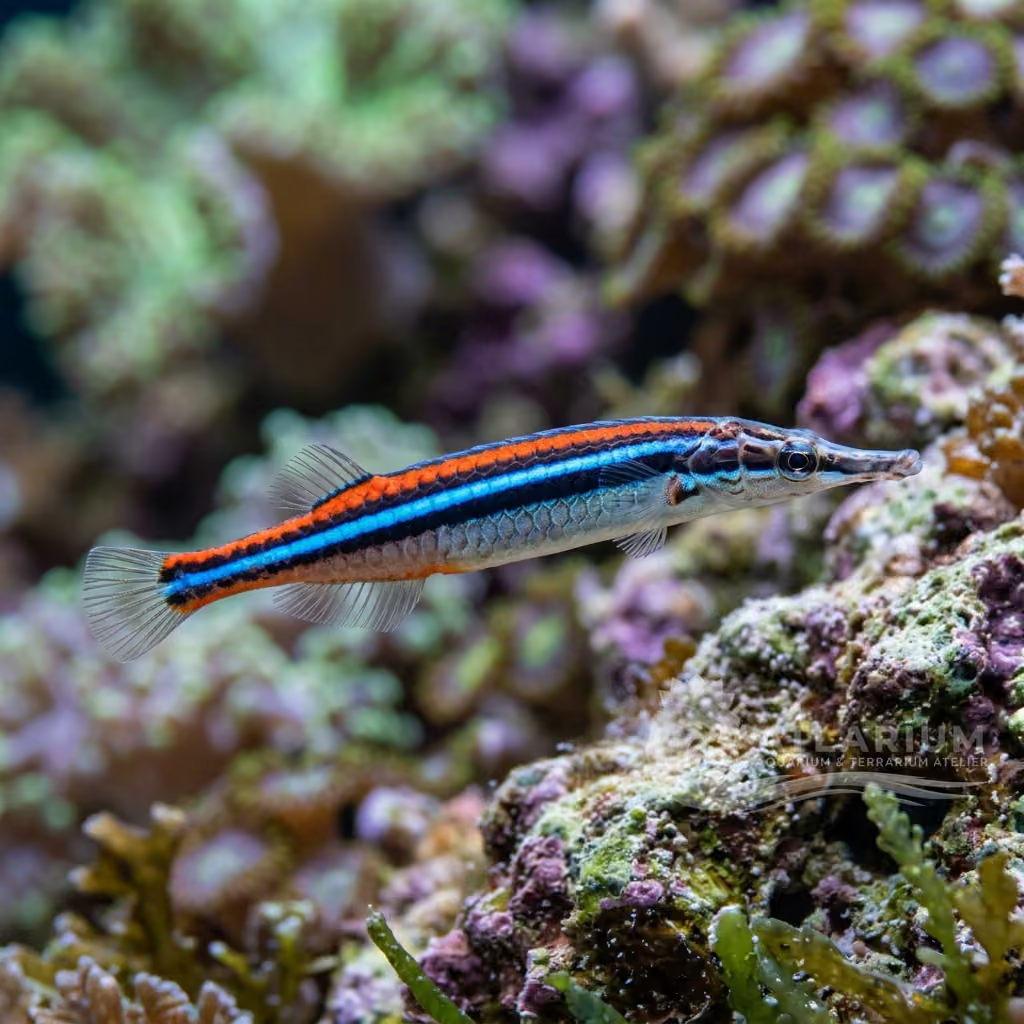
Compatibility and Cohabitation: Optimal keeping only in SPECIES-ONLY tanks or with very small and very slow marine fish (e.g. Neon gobies, pipefish). Stinging corals (anemones, Euphyllia), crabs, and fast fish would compete for food or fatally injure them.
Aquarium Breeding: Frequent in healthy specimens. The female transfers eggs into the male's pouch who undergoes the pregnancy. After 2-3 weeks the male "gives birth" to dozens/hundreds of perfect tiny seahorses, which require constant rotifer cultures.
Risks and Diseases: Very delicate. Susceptible to Gas Bubble Disease where bubbles form under the skin, lethal if untreated. Vibrio infections will decimate the tank if the temperature exceeds 26°C (79°F).

Geografische Herkunft und Verbreitung
MARINE species native to the Western Atlantic Ocean (from Nova Scotia to South America). Mainly inhabits macroalgae beds, coastal mangroves, and shallow reefs, where it clings to vegetation using its prehensile tail.
Ursprung
Tropische Ozeane und RiffeExtra-Amazonas-SüdamerikaMittelamerika und Karibik

Fischprofil
- Temperament
- Semi-aggressive
- Seahorses are extremely docile, curious, and incredibly peaceful marine creatures. They show absolutely no aggression toward other fish species and only minor courtship posturing among themselves. Their calm demeanor requires an equally calm environment to prevent them from becoming overwhelmed. They observe their surroundings meticulously and interact gently with their environment.
- Diät
- Omnivore
- Seahorses are strict carnivores that feed almost exclusively on small crustaceans like mysis shrimp. Captive-bred individuals are usually trained to accept frozen mysis, which forms the core of their diet. Food should be enriched with lipid and vitamin supplements to prevent nutritional deficiencies over time. Wild-caught specimens often refuse frozen food and require a constant supply of live foods.
- Lebenserwartung
- 1-4 years
- Erwachsenengröße
- 17 cm
- Geschlechterverhältnis
- Pair
- Males can be distinguished by the presence of a brood pouch located at the base of their abdomen. Females have a smoother profile and generally maintain a slightly more streamlined shape. They are best kept in male-female pairs or small groups of mixed sexes. They are highly social with their own kind and form strong pair bonds over time.
- Fütterungsfrequenz
- Twice daily
- Because they lack a true stomach, food passes through their system very quickly, requiring almost constant grazing. They must be fed small amounts at least two to three times every single day. Creating a designated feeding station can help ensure they get enough to eat without the food blowing away. Skipping meals can lead to rapid weight loss and compromised health.
- Bioload
- Medium
- Seahorses produce a surprisingly high bioload despite their delicate appearance due to their inefficient digestive systems. They require large amounts of frequent, meaty feedings which quickly degrade water quality. Excellent filtration and diligent maintenance, including frequent water changes, are strictly mandatory. A high-quality protein skimmer is essential to remove dissolved organics before they break down.
- Fluss
- Moderate
- Hippocampus erectus needs steady, moderate circulation distributed across the aquarium rather than a narrow, forceful jet. Specialized marine aquarium (minimum 120 liters / 30 gallons, TALL tank, very slow flow). INDISPENSABLE numerous hitching posts (Caulerpa macroalgae, fake gorgonians, smooth branches). This preserves useful water exchange while retaining calmer shelter for rest and feeding.
- Sprungrisiko
- No
- Reproduktion
- Oviparous
- Seahorses have a unique reproductive cycle where the male carries the eggs in a specialized brood pouch. After a complex courtship dance, the female transfers her eggs to the male, who fertilizes and incubates them. The male eventually gives birth to hundreds of fully formed, miniature seahorses. Raising the fry requires dedicated culturing of rotifers and freshly hatched baby brine shrimp.
- Kompatibilität & Tankkameraden
- Species only
- They are extremely passive and slow-moving, making them highly vulnerable to aggressive or fast-swimming tank mates. They should only be kept in dedicated species-only tanks or with extremely docile companions like pipefish and small gobies. They cannot compete for food with quick fish and will likely starve in a standard community reef. Stinging corals and aggressive invertebrates must also be completely avoided.
- Tankfüllstand
- Middle
- They heavily utilize the vertical space in an aquarium and require tanks that are much taller than they are wide. They spend their days hitched to macroalgae, artificial corals, or gorgonians in the lower and middle levels. They rarely swim in open water, preferring to camouflage themselves among vertical structures. Adequate hitching posts throughout the vertical column are completely essential.

Wissenschaftliche Modelle & Parameter
FishBase
Zugang zu den offiziellen wissenschaftlichen Daten der Art
Daten synchronisiert am: 15.06.2026
- Trophäenniveau
- 3,5 ± 0,51 se
- Belastbarkeit
- Hoch (weniger als 15 Monate)
- Generierungszeit
- 3,2 Jahre
- Phylogenetische Einzigartigkeit (PD50)
- 0.5
- Bayessche Längen-Gewichts-Beziehung
- a = 0.00447, b = 3
- AnfälligkeitGeringe bis mäßige Anfälligkeit (31 / 100)

Verwandte Arten
Empfehlungen gruppiert nach nahen Verwandten, Auswahl von Begleitern und ähnlicher Betreuung.