Zygatus Cory
Osteogaster zygata
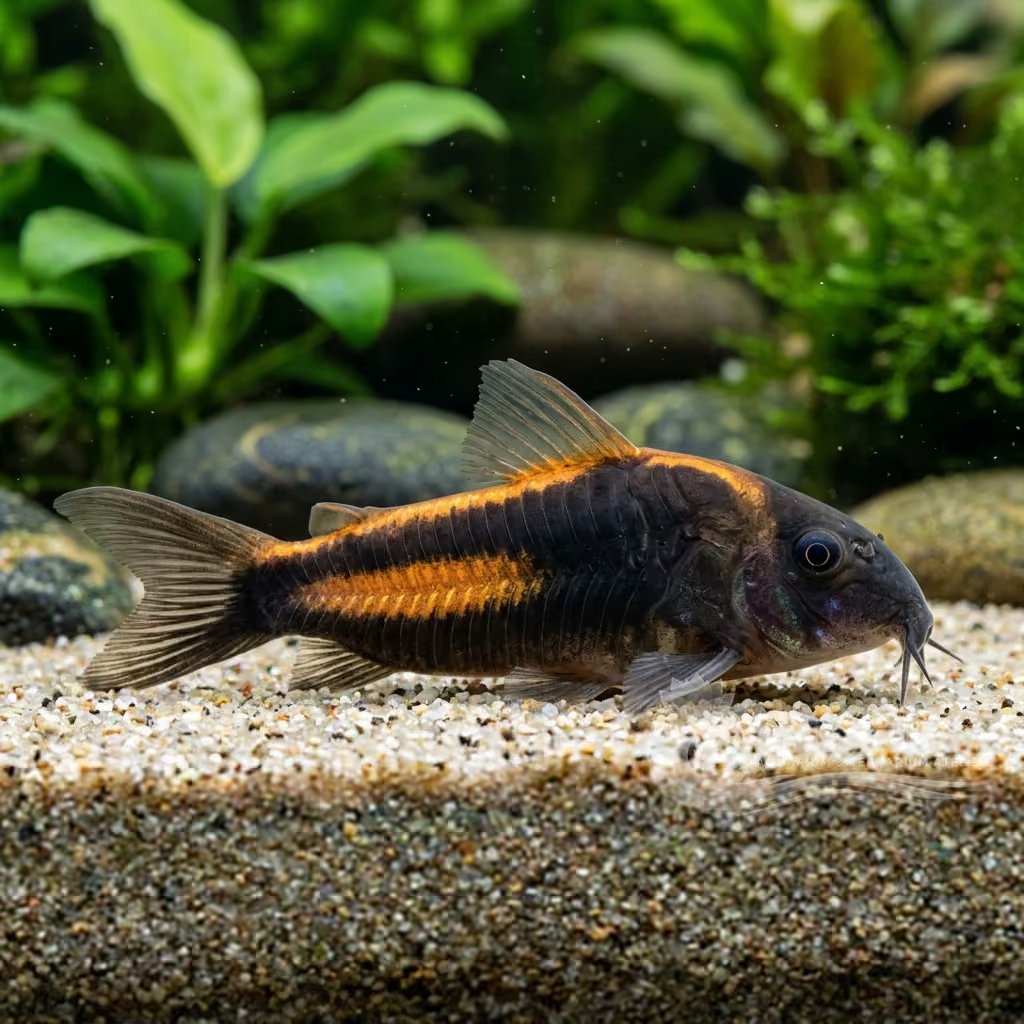
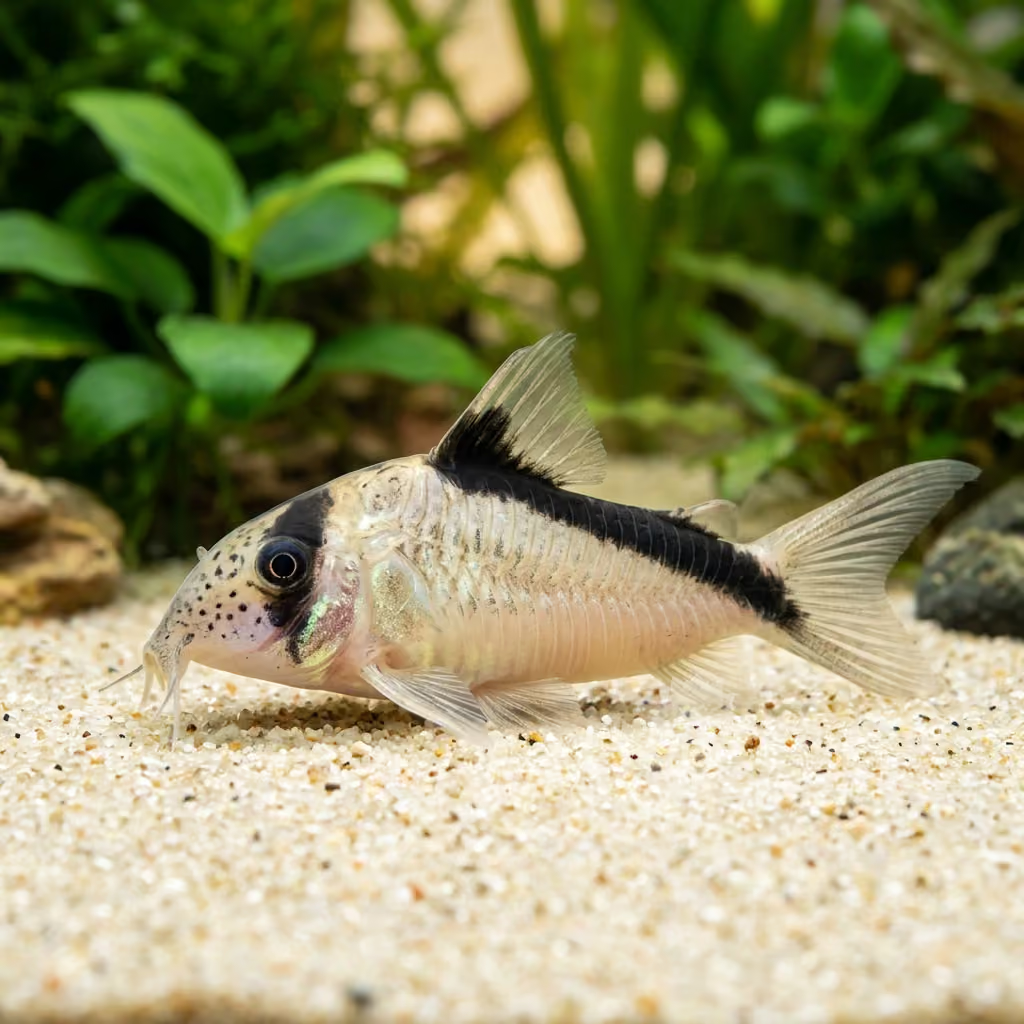
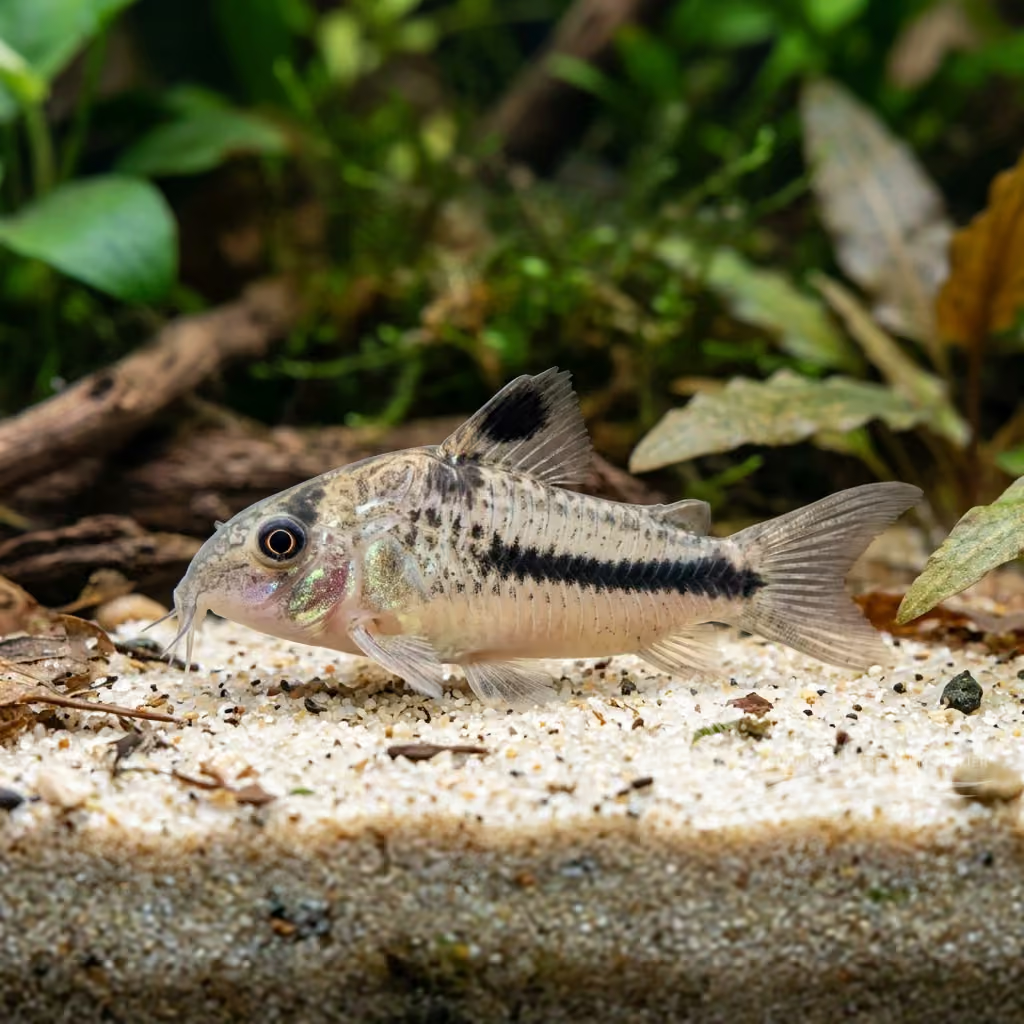
The massive 'Corydoras Zygatus' (7 cm). Often confused with C. rabauti, it is an imposing corydoras of a warm rust-pink color crossed by a wide dark dorsal band. Very active in a school, ideal for very large South American aquariums.
Wassertemperatur
22 - 28 °C
pH-Wert
6 - 7.5
Wassertyp
Süßwasser
Tankfüllstand
Unten
Erwachsenengröße
6 cm
Mindesttankvolumen
>= 60 L
Mindestgruppe
>= 6
GH
2 - 15 dGH
KH
1 - 7 dKH
TDS
40 - 295 ppm
Leitfähigkeit
63 - 461 uS/cm

Artbeschreibung
Geographical Origin and Habitat: Large part of northern South America: Colombia, Ecuador and Peru. Prefers open waters in oxbow lakes, rivers and tributaries with a sandy bed surrounded by the forest.
Taxonomy and Morphology: Black Band Corydoras (Osteogaster zygata). Aesthetically identical to Corydoras rabauti, it has a thick black lateral band, but with a more faded and pale base coloration.
Social Behavior: An ideal tank mate: mild, calm and happy in schools of at least 6 of its kind. If introduced in few specimens it tends to become sad (immobility on the ground for hours).
Coloration and Sexual Dimorphism: On the pinkish-gray or copper background stands out a massive upper black stripe, similar to C. rabauti. Females are noticeably expanded on the abdomen once mature, giving the idea of armored "balloons".

Pflege, Zucht und Mitbewohner
Aquarium Setup: Does not differ from the basics for corys: fine non-siliceous sand (or ultra-flat gravel). Offer lots of intertwined wood under which the group can camp out without suffering the luminous intensity of LEDs.
Diet and Feeding: Explores the sand by swallowing it and expelling it from the gills to sift out small invertebrates. High quality commercial wafer feeds mixed with gruel or freeze-dried prey.
Water Quality: Solid and extremely adaptable fish, tolerant to a wide spectrum of pH and GH. Very demanding only in the organic purity of the water.
Compatibility and Cohabitation: Absolutely neutral and peaceful with all inhabitants compatible with Amazonian community tanks. Can cause panic in tiny fish due to its bulk if it moves quickly.
Aquarium Breeding: Occurs after osmotic and thermal shocks (large cold changes). Females and males move in unison in rituals. Remove eggs immediately to prevent parental predation.
Risks and Diseases: Generalized or mycotic bacteriosis in the presence of absent hygiene or osmotic stress during incorrect introductions. Tends to hit the glass fiercely if terrified.

Geografische Herkunft und Verbreitung
Large part of northern South America: Colombia, Ecuador and Peru. Prefers open waters in oxbow lakes, rivers and tributaries with a sandy bed surrounded by the forest.
Ursprung
Amazonas, Orinoco und Guayana

Fischprofil
- Temperament
- Semi-aggressive
- This is an incredibly peaceful and timid species that thrives in the company of its own kind. Osteogaster zygata should be kept in groups of at least six individuals to feel secure and display their natural, endearing behaviors. When kept alone or in too small a group, they can become highly stressed, lethargic, and prone to illness.
- Diät
- Omnivore
- As omnivorous bottom feeders, Osteogaster zygata requires a varied diet that sinks to the substrate. High-quality sinking pellets or wafers should form the staple of their diet. Supplementing with live or frozen foods like bloodworms, brine shrimp, and daphnia will ensure optimal health and encourage natural foraging behaviors.
- Lebenserwartung
- 5-10 years
- Erwachsenengröße
- 6 cm
- Geschlechterverhältnis
- Specific M:F ratio
- A ratio of two or three males for every female is highly recommended, especially if breeding Osteogaster zygata is the goal. Males are generally smaller and more slender than the plumper, rounder females. Maintaining a proper sex ratio ensures higher fertilization rates during the spawning process.
- Fütterungsfrequenz
- Twice daily
- Osteogaster zygata should be fed small amounts once or twice a day, providing only what they can consume within a few minutes. Because they are nocturnal foragers by nature, dropping some food in just before the aquarium lights go out can be highly beneficial. Avoid overfeeding to maintain excellent water quality.
- Bioload
- Low to Medium
- This species produces a relatively small bioload, typical of most Osteogaster zygata species. Their efficient scavenging behavior can actually help keep the substrate clean, reducing the overall accumulation of detritus. Regular water changes and a properly sized filter will easily manage the waste they produce.
- Fluss
- Stagnant
- These catfish prefer moderate water flow that provides adequate oxygenation without creating overpowering currents. A setup that mimics a slow-moving South American stream is ideal for Osteogaster zygata. Ensure there are calmer resting areas where they can settle on the substrate without expending too much energy.
- Sprungrisiko
- No
- Reproduktion
- Oviparous
- Breeding Osteogaster zygata in captivity can be achieved by simulating the onset of the rainy season with cooler water changes. The female will carry a few eggs in a pouch formed by her pelvic fins and deposit them on broad leaves or the aquarium glass. The parents exhibit no parental care and will eagerly consume the eggs if not separated.
- Kompatibilität & Tankkameraden
- Community
- Osteogaster zygata is a peaceful and highly sociable schooling fish that makes an excellent addition to community aquariums. They do best when kept with other small, non-aggressive species such as tetras, rasboras, and dwarf cichlids. It is crucial to avoid housing them with large or aggressive bottom-dwellers that might outcompete them for food or stress them out.
- Tankfüllstand
- Bottom
- Like other Corydoras, Osteogaster zygata are quintessential bottom dwellers, spending almost all of their time sifting through the substrate in search of food. They require a soft, sandy bottom to prevent damage to their sensitive barbels. Occasionally, they will make quick dashes to the surface to take in atmospheric air, a completely normal behavior.

Wissenschaftliche Modelle & Parameter
FishBase
Zugang zu den offiziellen wissenschaftlichen Daten der Art
FishBase v25.04Daten synchronisiert am: 15.06.2026
- Trophäenniveau
- 3 ± 0,3 se
- Belastbarkeit
- Hoch (weniger als 15 Monate)
- Phylogenetische Einzigartigkeit (PD50)
- 0.5039
- Bayessche Längen-Gewichts-Beziehung
- a = 0.00741, b = 3.14
- AnfälligkeitGeringe Anfälligkeit (10 / 100)

Verwandte Arten
Empfehlungen gruppiert nach nahen Verwandten, Auswahl von Begleitern und ähnlicher Betreuung.