Congo Scorpion
Hottentotta hottentotta
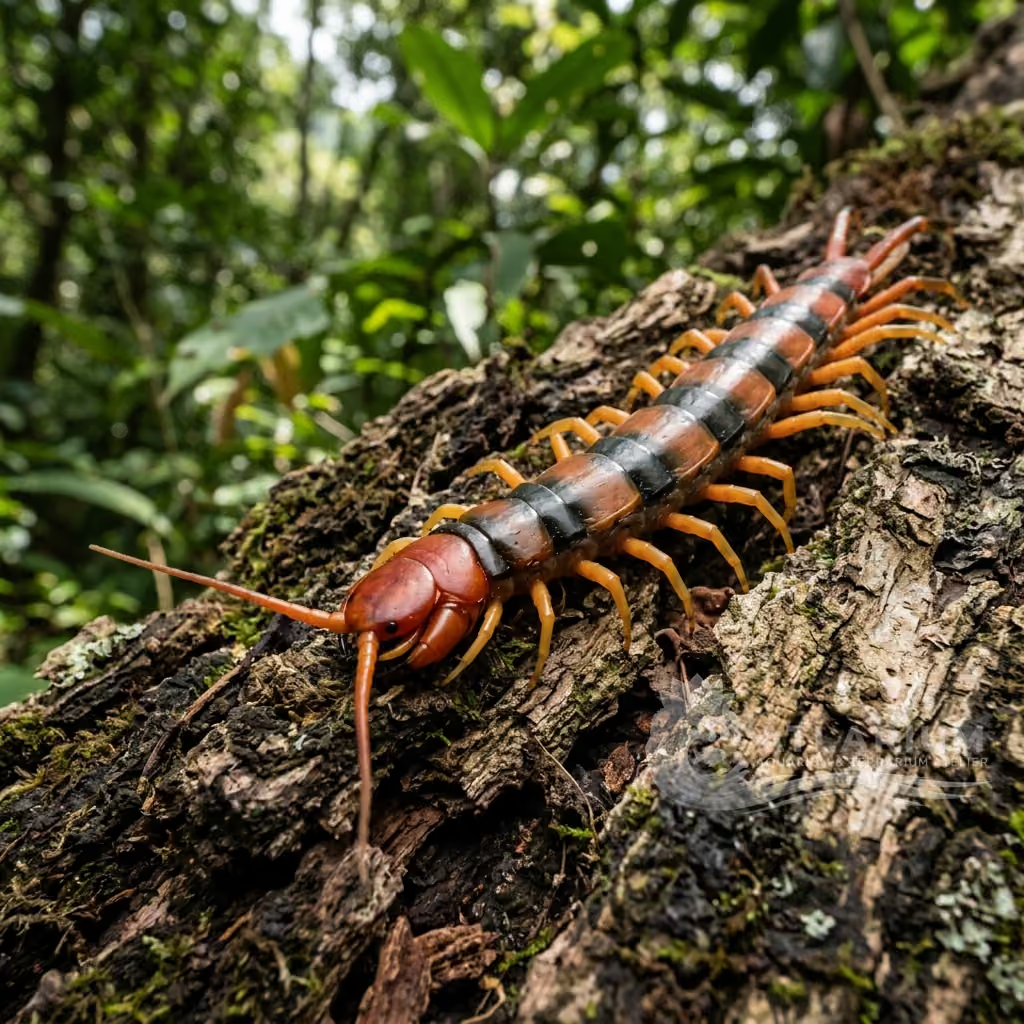
The Hottentotta hottentotta, commonly known as the 'Congo Scorpion'. It is a wonderful but hyper-aggressive African Buthid of medium size (2.3-3.1 inches). Exhibits a hypnotic coloring: dark back with filiform legs and pincers of a bright Yellow-Orange or Rust. The amazing biological peculiarity of this species is PARTHENOGENESIS: an isolated female, without ever having mated, will spontaneously generate perfect clones of herself for her entire life (churning out dozens of 'surprise' newborns in the breeding). Fast, lethal and with 'medically significant' venom (severe neurotoxic cramps), this scorpion colonizes sub-Saharan Africa. Requires semi-arid terrariums and is highly not recommended for the faint of heart due to the continuous 'explosive' reproductions.
Terrestre
50 - 60 %
28 - 32 °C
22 - 25 °C

Descrição da espécie

Cuidado, criação e companheiros de tanque

Origem e distribuição geográfica
Origem

Perfil de invertebrados terrestres
- Dieta
- Carnivore
- The diet consists mainly of appropriately sized live insects, such as crickets, roaches, and mealworms. They are opportunistic ambush predators that rely on their sensitive hairs to detect vibrations. A varied diet, offered once or twice a week depending on the age and size, is recommended for optimal health.
- Tamanho adulto
- 9 cm
- Estilo de vida/Microhabitat
- Terrestrial
- It leads a terrestrial and semi-arboreal lifestyle, frequently climbing on rough surfaces, bark, and rocks in its habitat. While it can dig shallow scrapes, it prefers utilizing existing hiding spots. They are solitary hunters and highly adaptable to different micro-habitats within savanna and semi-arid environments.
- Ciclo de atividades
- Nocturnal
- This scorpion is predominantly nocturnal, becoming active primarily during the night to forage for prey and explore its environment. During the day, it tends to remain concealed in burrows, under rocks, or within natural crevices to escape the heat and potential predators. This activity pattern helps it conserve energy and moisture.
- Socialidade
- Solitary
- This species exhibits a solitary nature and is known for being highly cannibalistic, especially when food is scarce or enclosures are too small. Therefore, they must be housed individually to prevent fatal aggressive encounters. Communal setups are strictly advised against for this highly territorial scorpion.
- Reprodução
- Viviparous
- Reproduction is characterized by parthenogenesis in some populations, allowing females to produce young without mating. The female gives birth to live scorplings, which climb onto her back and remain there until their first molt. After this initial stage, they become independent and must be separated to avoid cannibalism.
- Venenoso
- Yes
- Tolerância de tratamento
- Display only
- Handling is highly discouraged due to its medically significant venom and aggressive defensive posture. They are quick to sting when threatened. Keepers should always use long tweezers or secure catch cups when transferring the scorpion or performing enclosure maintenance to ensure maximum safety.
- Brumação
- Não obrigatório
- Brumation is not strictly necessary for this tropical to sub-tropical species. However, a slight drop in temperature during the winter months can simulate natural seasonal changes and may be beneficial if breeding is planned. Care must be taken to prevent temperatures from dropping too low.
- Muda
- Regular
- Molting occurs periodically as the scorpion grows, requiring a slight increase in ambient humidity to ensure a smooth shed. During this vulnerable time, the scorpion will refuse food and remain secluded. It is crucial not to disturb the animal or leave live prey in the enclosure until its exoskeleton fully hardens.

Espécies relacionadas
Recomendações agrupadas por parentes próximos, escolhas de acompanhantes e cuidados semelhantes.