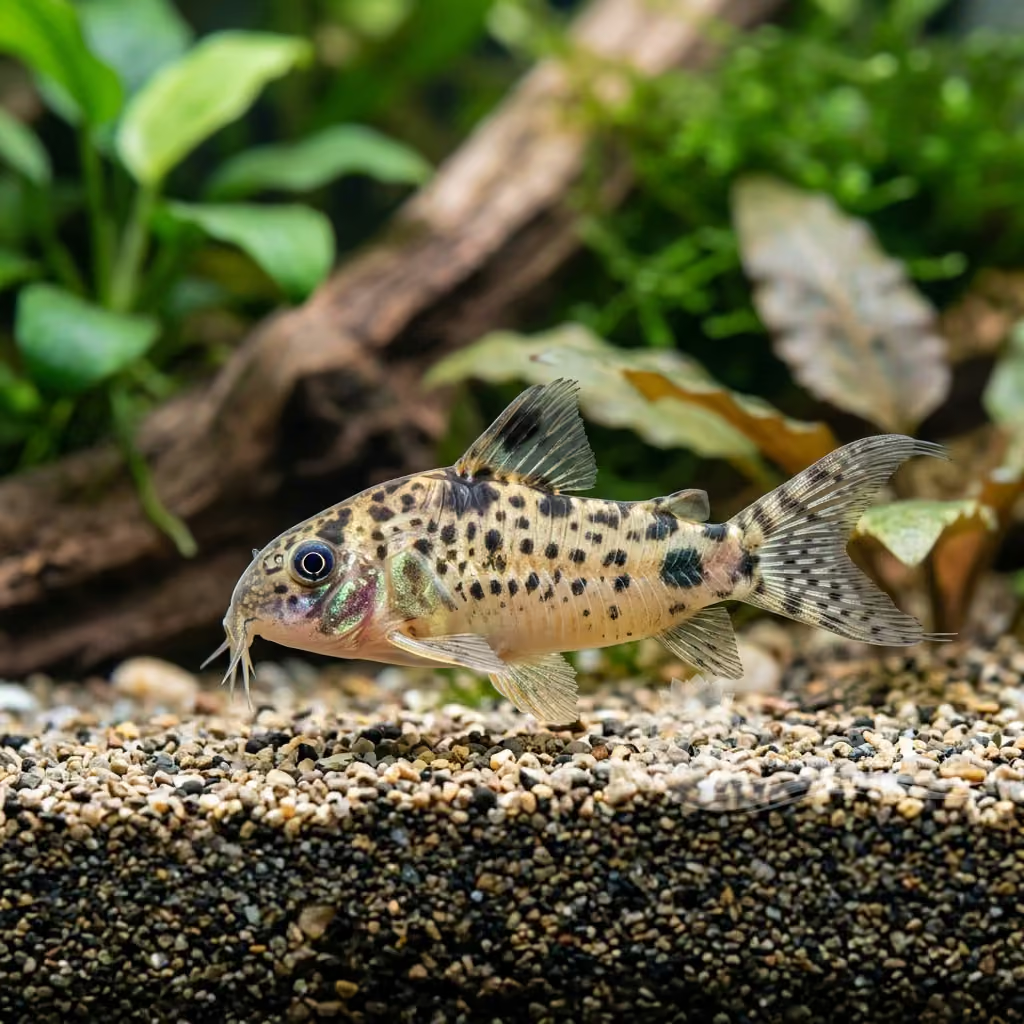
Sailfin pimelodid
Leiarius pictus
A large, exclusively freshwater catfish from the Amazon, Essequibo and Orinoco basins, recognized by its spotted body and tall dorsal fin.
Temperatura da água
22 - 26 °C
Valor de pH
6.2 - 7.5
Tipo de água
Água doce
Nível do tanque
Parte inferior
Tamanho adulto
60 cm

Descrição da espécie
Geographical Origin and Habitat: Leiarius pictus inhabits major tropical river systems of South America, including the Amazon, Essequibo and Orinoco basins. It is a freshwater fish associated with main channels and deeper sandy or muddy habitats.
Taxonomy and Morphology: This species belongs to Pimelodidae, not the marine Ariidae. Its elongated body has dark spots, long sensory barbels and a high dorsal fin; FishBase reports a published maximum of 60 cm total length. Sciades pictus is a historical combination now accepted as Leiarius pictus.
Social Behavior: It is a benthic, crepuscular predator that searches the bottom for prey. Smaller individuals may tolerate one another, but adult size and predatory ability demand extensive space and robust tank mates too large to swallow.
Coloration and Sexual Dimorphism: Dark spots and marbling cover a lighter body, with a paler belly and often spotted fins. No dependable external dimorphism is documented for sexing aquarium specimens.

Cuidado, criação e companheiros de tanque
Aquarium Setup: Adult length requires an exceptionally large aquarium with a broad footprint, smooth sand, robust shelters and extensive open space. Filtration and oxygenation must support a large predator without endangering its long barbels.
Diet and Feeding: Provide a varied carnivorous diet based on complete sinking foods and responsibly sourced frozen prey. Avoid feeder fish and control portions to limit obesity and organic waste.
Water Quality: This is a freshwater species, not a brackish one. Reviewed sources report 22-26 °C and pH 6.2-7.5; keep conditions stable, well oxygenated and low in nitrogenous waste.
Compatibility and Cohabitation: Any animal small enough to enter the mouth may be eaten. Cohabitation requires large, robust fishes with compatible freshwater needs and enough room to avoid bottom-space competition.
Aquarium Breeding: Home-aquarium reproduction is not documented well enough for a reliable procedure. It must not be described as a paternal mouthbrooder; that claim came from the former confusion with marine catfishes.
Risks and Diseases: Fin spines can cause mechanical injury during handling, but this pimelodid must not be presented as a venomous ariid. Use a rigid container, protect the barbels and prevent abrasions and deteriorating water quality.

Origem e distribuição geográfica
Leiarius pictus inhabits major tropical river systems of South America, including the Amazon, Essequibo and Orinoco basins. It is a freshwater fish associated with main channels and deeper sandy or muddy habitats.
Origem
Amazônia, Orinoco e Guianas

Perfil de peixe
- Temperamento
- Peaceful
- Leiarius pictus is a relatively docile and peaceful giant, provided its tank mates are large enough to not be eaten. They are active mostly during twilight and nocturnal hours, but can adapt to daytime feeding. They may become skittish if adequate hiding spaces for their massive size are not provided.
- Dieta
- Carnivore
- A carnivorous predator; provide complete sinking foods and controlled frozen foods rather than live feeder fish.
- Tamanho adulto
- 60 cm
- Proporção sexual
- 1:1 ratio
- For adult Leiarius pictus, the reviewed stocking reference records a 1:1 male-to-female ratio. This ratio is a husbandry reference rather than a guarantee of pairing, because adults are very large and require enough bottom area and separate shelter to avoid forced contact.
- Frequência de alimentação
- Weekly
- Adult Leiarius pictus should be fed about once a week, while juveniles require smaller meals more often. The weekly adult schedule reflects the species' large predatory build and helps avoid chronic overfeeding, excessive waste, and deterioration of water quality.
- Carga biológica
- High
- Leiarius pictus, or the Painted Pimelodid, produces a massive bioload as it grows into a very large and heavy-bodied catfish. Their substantial dietary intake results in a huge amount of physical waste. Enormous aquariums with commercial-grade filtration systems are mandatory to keep the water safe.
- Fluxo
- Strong
- Prefers well-oxygenated water with moderate to strong movement and sheltered resting areas.
- Risco de salto
- No
- Reprodução
- Oviparous
- Aquarium reproduction is insufficiently documented. The former mouthbrooding claim came from confusion with a marine catfish and is not retained.
- Compatibilidade e companheiros de tanque
- Verify
- A large predator suitable only with robust fishes too large to swallow and sharing the same freshwater requirements.
- Nível do tanque
- Bottom
- They are predominantly bottom-dwelling fish that constantly patrol the substrate in search of food. While they stick to the bottom, their large size means they will occupy a significant portion of the lower water column. Large pieces of smooth driftwood can provide welcome cover.

Modelos e parâmetros científicos
FishBase
Acesso aos dados científicos oficiais da espécie
FishBase v26.07Dados sincronizados em: 15/06/2026
- Nível trófico
- 4,1 ± 0,7 se
- Resiliência
- Média (1,4 - 4,4 anos)
- Unicidade filogenética (PD50)
- 0.5625
- Relação bayesiana comprimento-peso
- a = 0.00589, b = 3.09
- VulnerabilidadeVulnerabilidade moderada (44 / 100)

Espécies relacionadas
Recomendações agrupadas por parentes próximos, escolhas de acompanhantes e cuidados semelhantes.