Bulbnose Unicornfish
Naso tonganus
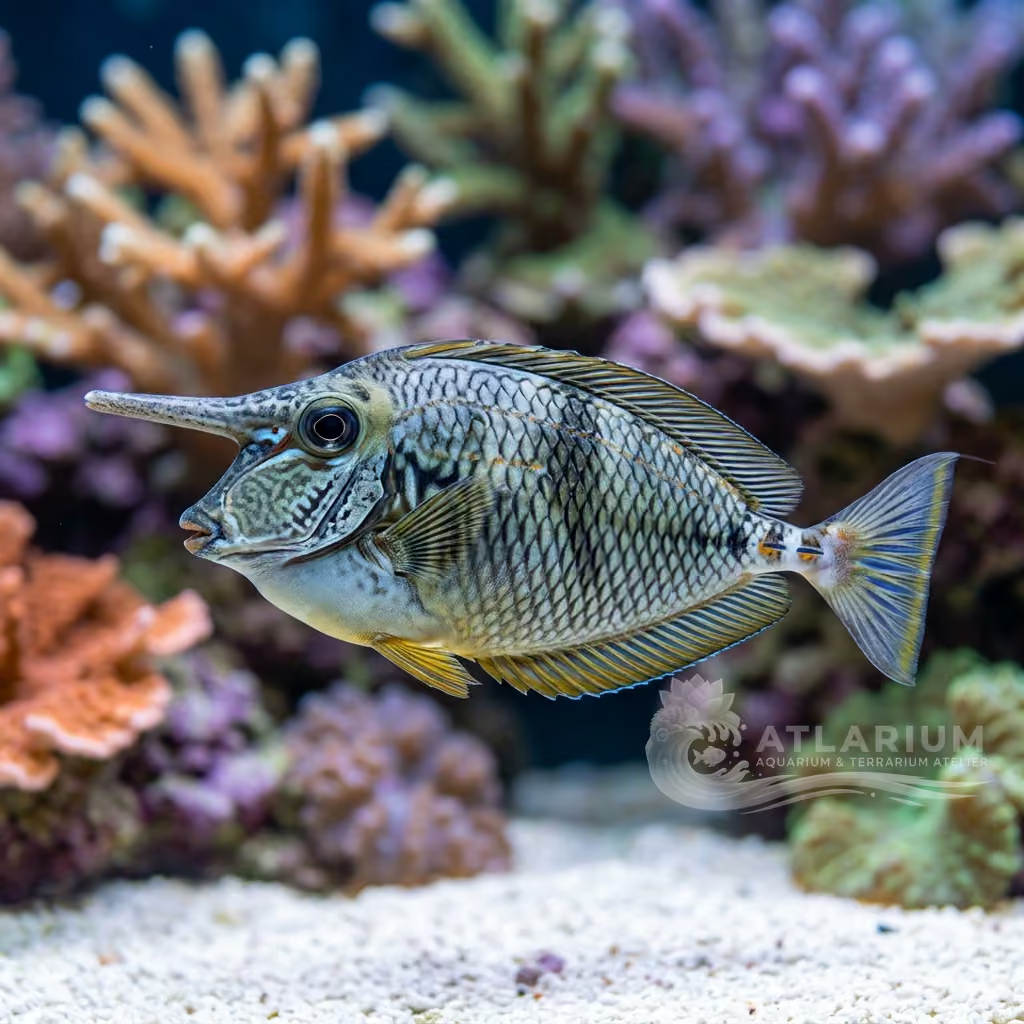
A large Indo-Pacific surgeonfish characterized by a distinctive bulbous snout and sleek greyish-blue body. Highly active, it requires a colossal aquarium with intense water flow.
Temperatura da água
23 - 28 °C
Valor de pH
8.1 - 8.4
Tipo de água
Marinho
Nível do tanque
Meio
Tamanho adulto
60 cm
Volume mínimo do tanque
>= 1.500 L
Grupo mínimo
>= 1
KH
8 - 12 dKH

Descrição da espécie
Geographical Origin and Habitat: Naso tonganus is widely distributed throughout the tropical Indo-Pacific, extending from the East African coast to Samoa, reaching north to the Ryukyu Islands in Japan, and south to the Great Barrier Reef in Australia. It primarily inhabits seaward reef slopes, deep lagoons, and channels with strong tidal currents. It is typically found at depths between 2 and 40 meters, swimming in open water near reef crests and drop-offs.
Taxonomy and Morphology: This species belongs to the family Acanthuridae and subfamily Nasinae. The most prominent morphological feature of adults is a distinct bulbous snout projection located just above the mouth, which enlarges as the fish matures. The body is oblong and laterally compressed. Like all members of the genus Naso, it possesses two sharp, forward-pointing spines on each side of the caudal peduncle, which serve as defensive weapons.
Social Behavior: It is a highly active and social fish, frequently forming small schools or large aggregations that swim mid-water above the reef structure. It exhibits a generally peaceful temperament toward other fish species. However, mature males can display territorial aggression toward conspecifics or other surgeonfish with similar shapes and color patterns, especially in restricted volumes.
Coloration and Sexual Dimorphism: The body coloration is overall greyish-blue to olive-grey, covered with numerous small dark spots on the upper body and head. The ventral region is lighter. The caudal fin has a pale margin. Sexual dimorphism is expressed in body size, with males reaching a larger maximum length (up to 60 cm) and developing longer caudal filaments and a more pronounced bulbous snout than females.

Cuidado, criação e companheiros de tanque
Aquarium Setup: Due to its large adult size and constant, rapid swimming behavior, it requires an exceptionally large aquarium of at least 1000 liters. The aquascape should focus on providing vast open areas for swimming, with live rock arranged against the back walls to provide hiding spots without restricting movement. Powerful water pumps are crucial to simulate the high-flow reef environment.
Diet and Feeding: It is a specialized herbivore that feeds on benthic macroalgae in the wild, while also taking zooplankton in open waters. In captivity, it must be offered a diet rich in marine vegetation, including dried nori seaweed, spirulina, and high-quality herbivore pellets. This should be supplemented with frozen foods like mysis, krill, and brine shrimp to maintain body weight.
Water Quality: It requires stable marine parameters: temperature range of 24°C to 28°C, pH of 8.1 to 8.4, and salinity between 1.022 and 1.025. High-quality filtration is essential, including a heavy-duty protein skimmer to handle the high bioload. A UV sterilizer is highly recommended to control pathogens and improve water clarity.
Compatibility and Cohabitation: Reef-safe and compatible with most reef fish and corals. It can be housed with other surgeonfish if the tank is large enough and they are introduced at the same time. Avoid tankmates that are small and shy, as they may be stressed by its fast swimming, or overly aggressive species that might target its delicate skin.
Aquarium Breeding: Breeding in home aquariums is not possible due to their large size and pelagic spawning behavior. In nature, spawning occurs in groups during twilight, where eggs and sperm are released into the water column. The fertilized eggs drift with the currents as plankton until hatching.
Risks and Diseases: Like other Acanthurids, Naso tonganus has a thin mucus layer and is highly susceptible to external parasites such as marine ich (Cryptocaryon irritans) and marine velvet (Oodinium). Stress from inadequate tank size or poor water quality will compromise its health, making quarantine and optimal water quality vital.

Origem e distribuição geográfica
Naso tonganus is widely distributed throughout the tropical Indo-Pacific, extending from the East African coast to Samoa, reaching north to the Ryukyu Islands in Japan, and south to the Great Barrier Reef in Australia. It primarily inhabits seaward reef slopes, deep lagoons, and channels with strong tidal currents. It is typically found at depths between 2 and 40 meters, swimming in open water near reef crests and drop-offs.
Origem
Oceanos tropicais e recifesÁfrica e MadagascarLeste AsiáticoAustrália, Nova Guiné e Oceania

Perfil de peixe
- Temperamento
- Active
- Despite their imposing size, they have a remarkably peaceful and gentle disposition toward smaller fish. They are very active and visible, constantly interacting with their environment. They can quickly become a 'water puppy' that begs for food when the owner approaches.
- Dieta
- Herbivore
- Their primary diet consists almost entirely of marine algae and vegetable matter. Supplying them with sheets of nori and high-quality spirulina pellets is mandatory for long-term health. Offering meaty items like mysis shrimp occasionally helps maintain their body mass.
- Expectativa de vida
- 20-25 years
- Tamanho adulto
- 60 cm
- Proporção sexual
- Group
- As they mature, males develop a distinctive bulbous hump on their forehead and longer tail streamers. Keeping more than one in a home aquarium usually leads to extreme stress and fatal aggression. They should always be kept as single, solitary specimens.
- Frequência de alimentação
- Twice daily
- They need to graze constantly throughout the daylight hours. Providing a stocked algae clip alongside 2-3 standard feedings ensures they receive sufficient calories. A high feeding frequency prevents malnutrition and keeps their immune system robust.
- Carga biológica
- Extreme
- The Bulbous Tang grows extremely large and places an intense biological burden on its environment. Heavy feedings result in large waste production that can quickly degrade water quality. Oversized mechanical filtration and robust protein skimming are completely non-negotiable for success.
- Fluxo
- Strong
- These massive fish need extremely strong water flow to thrive and exercise. Stagnant or slow-moving water will stress them and lower oxygen levels unacceptably. High-capacity wavemakers should be used to create a strong, reef-crest style current.
- Risco de salto
- No
- Reprodução
- Rare / not documented
- Breeding this species requires vast oceanic space and is impossible in home aquariums. They are pelagic spawners whose larvae develop while drifting in the open ocean. Currently, they are solely sourced from the wild.
- Compatibilidade e companheiros de tanque
- Territorial
- This tang is peaceful toward dissimilar fish and poses no threat to corals. They are generally an excellent addition to massive reef tanks or FOWLR setups. They will aggressively combat other tangs, particularly those within the Naso genus.
- Nível do tanque
- Middle
- They are highly active, open-water swimmers occupying the middle to upper levels. They demand unobstructed swimming lanes measuring at least 8 to 10 feet in length. They use rockwork only for sleeping and require immense swimming freedom.

Modelos e parâmetros científicos
FishBase
Acesso aos dados científicos oficiais da espécie
FishBase v25.04Dados sincronizados em: 15/06/2026
- Nível trófico
- 2 ± 0 se
- Resiliência
- Média (1,4 - 4,4 anos)
- Unicidade filogenética (PD50)
- 0.5
- Relação bayesiana comprimento-peso
- a = 0.02692, b = 2.96
- VulnerabilidadeVulnerabilidade de moderada a alta (49 / 100)

Espécies relacionadas
Recomendações agrupadas por parentes próximos, escolhas de acompanhantes e cuidados semelhantes.