Celebes Rainbowfish
Marosatherina ladigesi
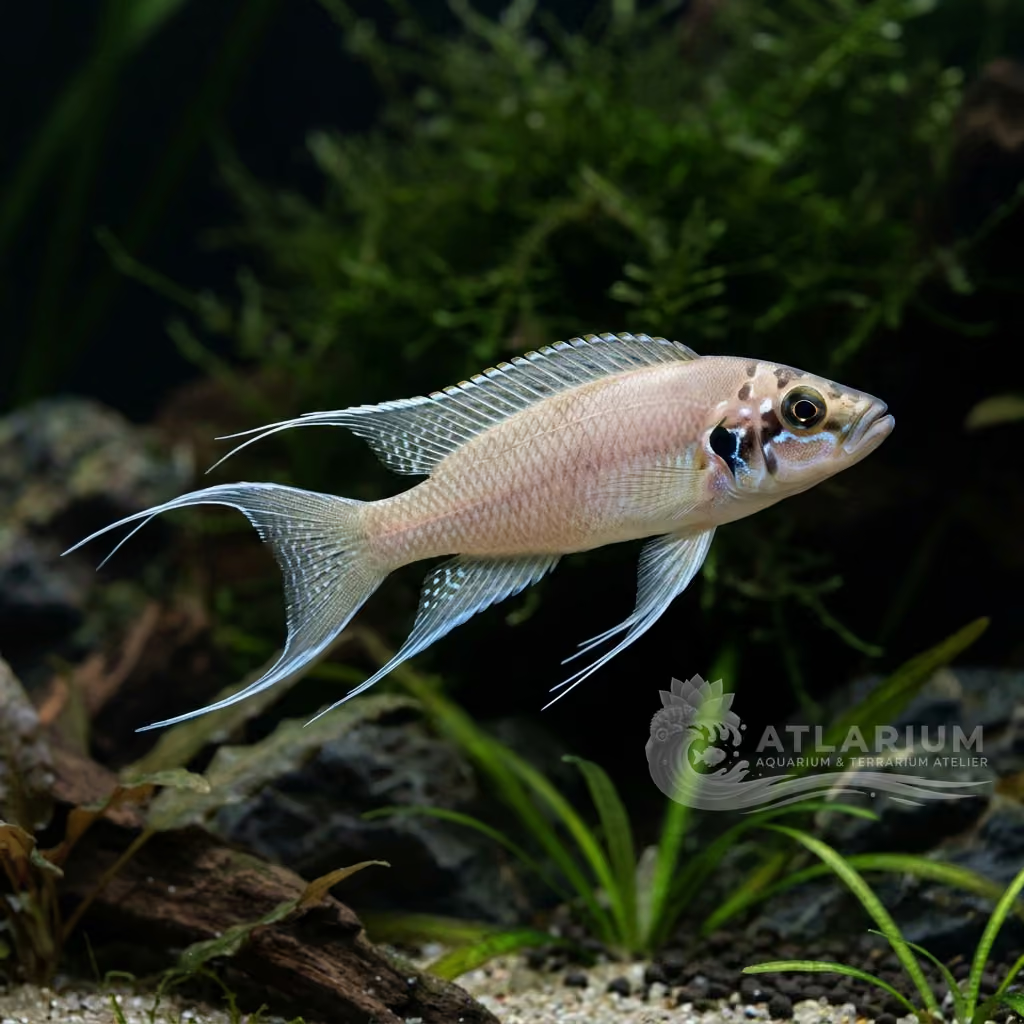
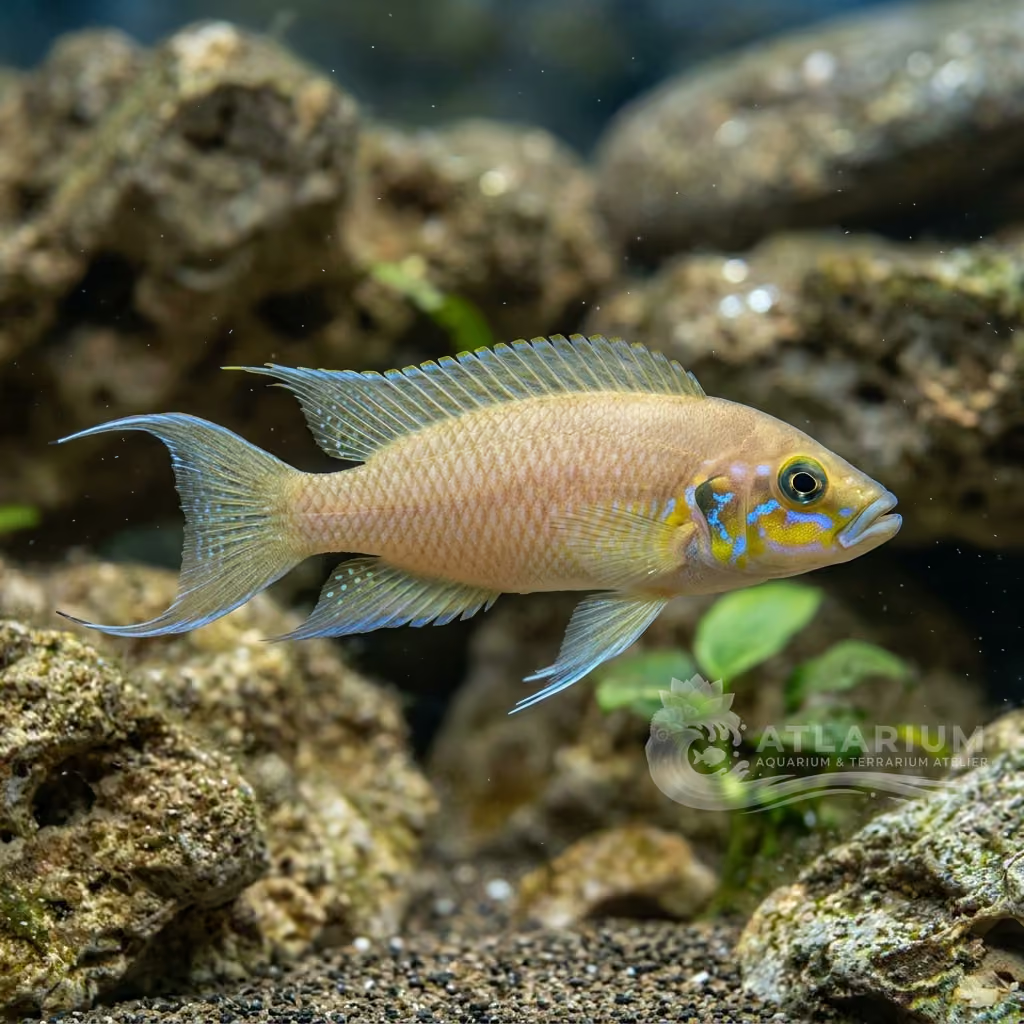
The ethereal 'Celebes Rainbowfish' (8 cm). A gem from the island of Sulawesi, famous for its almost transparent glassy body crossed by a turquoise lightning bolt and for the extraordinary black extensions of the male fins. It is a demanding fish, requiring surprisingly hard and alkaline waters (similar to African cichlids) and tolerates thermal and chemical shocks very poorly.
24 - 28 °C
7.5 - 8.5
Água doce
Parte inferior e intermediária
8 cm
100 L
>= 1
10 - 20 dGH
5 - 10 dKH
200 - 400 ppm
313 - 625 uS/cm

Descrição da espécie

Cuidado, criação e companheiros de tanque

Origem e distribuição geográfica
Origem

Perfil de peixe
- Temperamento
- Semi-aggressive
- The Celebes Rainbowfish is lively, highly active, and generally very peaceful. The males frequently engage in beautiful, harmless sparring displays where they flare their fins at one another to establish hierarchy. They are somewhat timid when first introduced, but become quite bold once they settle into a suitably sized school. Their energetic swimming behavior adds a wonderful dynamic element to the upper levels of any peaceful community tank.
- Dieta
- Omnivore
- In the wild, they are micropredators that feed on small insects, larvae, and tiny crustaceans near the water surface. In the home aquarium, they eagerly accept high-quality micro-pellets and crushed flakes as their staple diet. To promote their best colors and breeding behavior, it is highly recommended to supplement their diet with live or frozen foods like Daphnia, baby brine shrimp, and cyclops. Since they have relatively small mouths, ensure all food particles are appropriately sized.
- Expectativa de vida
- 3-5 years
- Tamanho adulto
- 8 cm
- Proporção sexual
- School
- It is highly recommended to keep more females than males within the school to prevent excessive harassment. Males spend a great deal of time displaying their elaborate fins to attract females and establish dominance among themselves. A ratio of two females for every male is ideal for keeping the group dynamics peaceful and stress-free. If there are too many males, the constant competition can lead to exhaustion and torn fins.
- Frequência de alimentação
- Twice daily
- Because of their active nature and small stomachs, they benefit most from two or three small feedings per day. Provide only what the school can actively consume within a couple of minutes to prevent water fouling. They generally feed from the surface or mid-water column, so foods that sink too quickly might be ignored once they hit the substrate. A varied feeding schedule will help maintain their high energy levels and vibrant yellow and blue hues.
- Carga biológica
- Low to Medium
- The Celebes Rainbowfish has a relatively low bioload compared to heavier-bodied community fish. They are small, slender, and highly active, meaning their waste production is quite manageable in a well-filtered aquarium. However, since they must be kept in schools of at least six individuals, the cumulative bioload should be accounted for. Regular maintenance and a mature biological filter will easily process the minimal waste they generate.
- Fluxo
- Stagnant
- Marosatherina ladigesi naturally inhabits slow-moving streams and estuaries in Sulawesi, often in areas with clear water. They appreciate a moderate water flow that provides some current to swim against without being overpowering. Good oxygenation is important, so a filter return that creates gentle surface agitation is ideal. Avoid creating a true river-manifold system, as excessively strong currents will cause them undue stress and exhaustion.
- Risco de salto
- Yes
- Like many rainbowfish species, they are prone to jumping when startled or during spirited displays. Sudden changes in light, quick movements outside the tank, or chasing during spawning can easily result in a fish leaping from the water. A tight-fitting lid or a secure cover glass is an absolute necessity for this species. Adding floating plants can also dampen their startling reflex and provide a much-needed sense of overhead security.
- Reprodução
- Oviparous
- Breeding the Celebes Rainbowfish requires a dedicated setup with slightly hard, alkaline water and plenty of fine-leaved plants or spawning mops. They are continuous spawners, releasing a few eggs each day over a period of weeks. The adults may eat the eggs or the tiny fry, so it is best to move the spawning medium to a separate rearing tank every few days. The fry are incredibly small upon hatching and require infusoria or specialized liquid fry food before they can accept baby brine shrimp.
- Compatibilidade e companheiros de tanque
- Peaceful
- This is a remarkably peaceful species that makes a wonderful addition to a community aquarium. They are best kept with other small, gentle fish such as rasboras, small tetras, corydoras, and smaller gouramis. Aggressive, boisterous, or fin-nipping tank mates must be avoided, as the delicate fins of the male Celebes Rainbowfish can easily be damaged. They also coexist quite well with peaceful invertebrates like Amano shrimp or snails.
- Nível do tanque
- Middle/Bottom
- This species predominantly occupies the middle and upper levels of the aquarium. They are extremely active and spend their days constantly cruising in the open swimming spaces looking for food. They rarely venture down to the substrate, making them perfect companions for bottom-dwelling fish. It is important to leave plenty of open water at the top of the tank while planting the edges densely for cover.

Modelos e parâmetros científicos
Acesso aos dados científicos oficiais da espécie
- Nível trófico
- 3,1 ± 0,3 se
- Unicidade filogenética (PD50)
- 1
- Relação bayesiana comprimento-peso
- a = 0.01122, b = 3.04
- VulnerabilidadeVulnerabilidade baixa (10 / 100)

Galeria de imagens
Imagens licenciadas vinculadas à espécie ou, quando marcadas, ao táxon representativo mais próximo.

Espécies relacionadas
Recomendações agrupadas por parentes próximos, escolhas de acompanhantes e cuidados semelhantes.