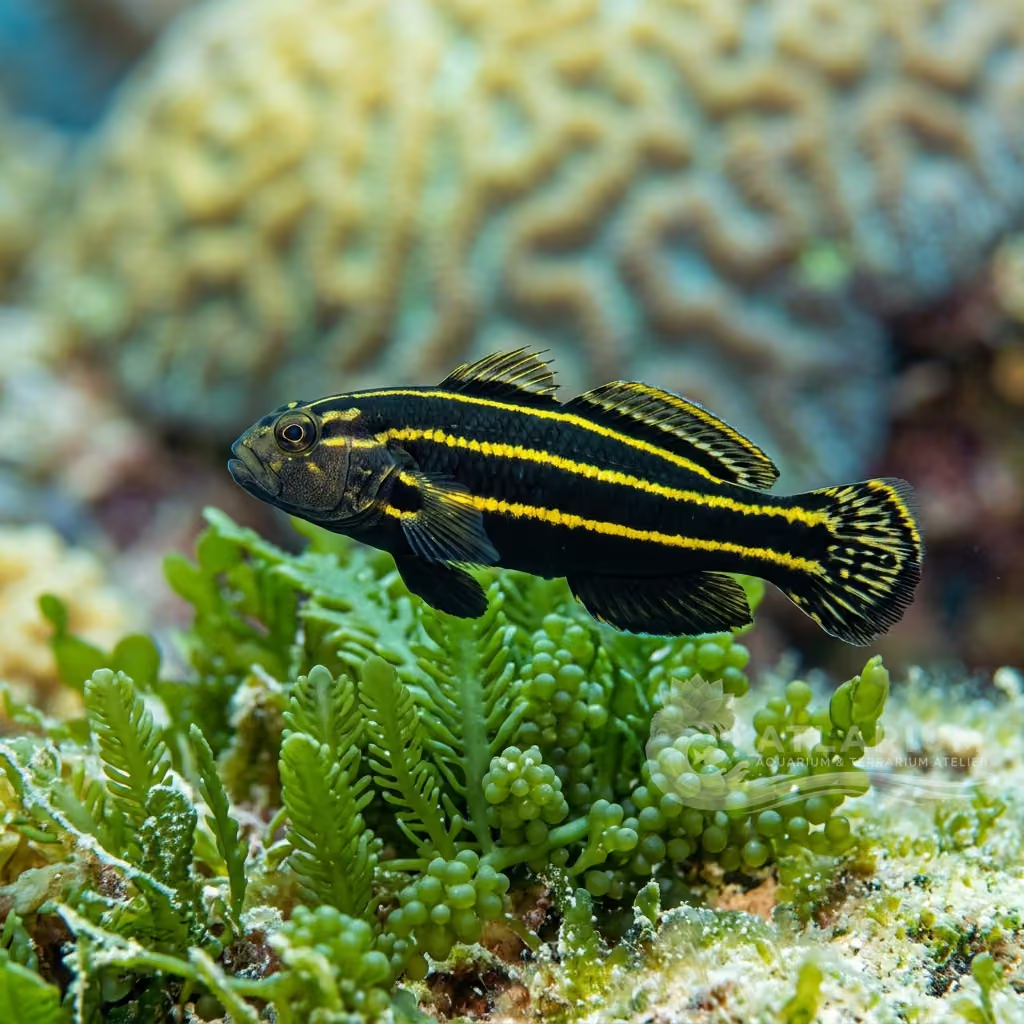
Hancock's blenny
Acanthemblemaria hancocki
A small and charismatic marine blenny from the Eastern Pacific, famous for its habit of living inside empty barnacle shells and rock holes. Its expressive face delights aquarists.
Temperatura da água
22 - 26 °C
Valor de pH
8.1 - 8.4
Tipo de água
Marinho
Nível do tanque
Parte inferior
Tamanho adulto
5 cm
Volume mínimo do tanque
>= 40 L
Grupo mínimo
>= 1

Descrição da espécie
Geographical Origin and Habitat: Acanthemblemaria hancocki is native to the tropical waters of the Eastern Pacific, ranging from the Gulf of California down to Ecuador, including the Galápagos Islands. It inhabits shallow rocky reefs, tide pools, and exposed coral zones, typically at depths of 1 to 10 meters. This fish lives inside empty barnacle shells (such as Balanus) or small holes bored into calcareous rocks by other organisms.
Taxonomy and Morphology: Belonging to the family Chaenopsidae, genus Acanthemblemaria. This family is characterized by small, scaleless benthic fish. Adults are tiny, reaching a maximum length of about 4-5 centimeters. They feature a robust head with small bony spines on top and branched tentacles (cirri) above the eyes, which help with camouflage and detecting water vibrations.
Social Behavior: It is a territorial but highly entertaining species to observe. It spends almost all its time inside its chosen hole or shell, keeping only its head exposed. From this secure lookout, it scans the water for drifting zooplankton, darting out rapidly to grab prey and immediately retreating backward. Males defend their shelters from rivals using territorial mouth-gaping displays.
Coloration and Sexual Dimorphism: The coloration is highly cryptic, with a mottled pattern of brown, black, white, and hints of red or yellow that blend with algae-covered rocks. Adult males tend to display darker and more intense colors, particularly on the head, and have more developed ocular cirri and a larger mouth than females.

Cuidado, criação e companheiros de tanque
Aquarium Setup: Requires a small aquarium, making it highly suitable for nano-reefs starting from 40-50 liters (approx. 10-15 gallons). The layout must include live rock with small holes and, most importantly, clusters of empty barnacle shells (Balanus) glued to the rockwork. These shells are essential for their security and stimulate their natural behaviors.
Diet and Feeding: A zooplanktivore, in the aquarium it readily accepts small frozen foods like copepods, baby brine shrimp, daphnia, and finely chopped mysis. Over time, it may also accept micro-pellets. It is important to disperse the food close to its shelter, as it rarely swims far from its hole to feed.
Water Quality: Requires stable marine parameters but is a rather forgiving species: temperature 22-26°C (72-79°F), pH 8.1-8.4, specific gravity 1.021-1.025. Standard biological filtration and regular 10% water changes every two weeks are sufficient to keep the environment healthy. Avoid sudden temperature changes and ammonia buildup.
Compatibility and Cohabitation: It is a peaceful fish that coexists perfectly with corals and invertebrates. It can be housed with other small, peaceful fish like gobies, clownfish, and small wrasses. Avoid large or aggressive fish that could swallow it. Multiple specimens can be kept together if there are plenty of spaced-out holes available.
Aquarium Breeding: Breeding in the aquarium is possible. The male lures a female into his shelter to deposit adhesive eggs. The male then guards the eggs until they hatch, which takes about a week. The larvae are tiny and planktonic, requiring rotifers and microalgae for their initial feeding stages.
Risks and Diseases: It is a very hardy fish that rarely falls ill if water quality is maintained. The primary risk is competition for shelter holes with other blennies or territorial crabs. Ensure that each specimen has access to multiple shells or cavities of appropriate size to prevent territorial fighting.

Origem e distribuição geográfica
Acanthemblemaria hancocki is native to the tropical waters of the Eastern Pacific, ranging from the Gulf of California down to Ecuador, including the Galápagos Islands. It inhabits shallow rocky reefs, tide pools, and exposed coral zones, typically at depths of 1 to 10 meters. This fish lives inside empty barnacle shells (such as Balanus) or small holes bored into calcareous rocks by other organisms.
Origem
Oceanos tropicais e recifesExtra-Amazônica América do SulAmérica do Norte

Perfil de peixe
- Temperamento
- Territorial
- It is a peaceful, shy, and cautious fish that prefers to stay close to the safety of its established burrow. While it will bravely defend its immediate territory from other bottom-dwellers, it ignores fish swimming higher up. Providing plenty of rubble and a quiet environment helps it feel secure and behave naturally.
- Dieta
- Carnivore
- As an opportunistic ambush predator, it waits in its tube for passing zooplankton and small crustaceans to drift by. In captivity, it will greedily accept small meaty foods like cyclops, brine shrimp, and finely chopped seafood. It rarely leaves its tube to hunt, so foods must be carried to it by the water currents.
- Expectativa de vida
- 2-4 years
- Tamanho adulto
- 5 cm
- Proporção sexual
- Solitary
- There are no obvious external differences between males and females, making sexing this species visually almost impossible. They are best kept singly or as a confirmed mated pair to avoid territorial disputes. Placing multiple unsexed individuals in a small tank usually leads to aggressive territorial battles over burrow sites.
- Frequência de alimentação
- Twice daily
- Feeding small portions two to three times daily is recommended to mimic its natural, continuous foraging behavior. Because it rarely ventures far from its burrow, targeted feeding near its home may be necessary in a busy tank. Care should be taken to ensure it gets enough food without overfeeding the entire system.
- Carga biológica
- Low
- This species has a minimal impact on the overall bioload of the aquarium due to its small size and sedentary lifestyle. It produces very little waste compared to more active, open-water swimmers. Routine maintenance and standard filtration are entirely sufficient to keep the water pristine.
- Fluxo
- Strong
- It favors gentle to moderate water flow, reflecting the calm sandy bottoms and rubble zones it inhabits in the ocean. Exceedingly strong currents can collapse its delicate burrow and make feeding difficult. A well-planned, indirect flow pattern allows the goby to thrive while keeping detritus from accumulating.
- Risco de salto
- No
- Reprodução
- Oviparous
- Captive breeding of this species is extremely rare and technically demanding, primarily due to the difficulty of raising its microscopic pelagic larvae. In their natural habitat, they are substrate spawners that lay adhesive eggs deep within the safety of their burrow. The male takes on the responsibility of guarding and oxygenating the eggs until they hatch.
- Compatibilidade e companheiros de tanque
- Reef safe
- This tube blenny is generally reef-safe and peaceful toward fish that swim in the open water column. However, it can be highly territorial towards other blennies or small fish that approach its chosen crevice or tube. It safely coexists with most corals and motile invertebrates that do not pose a predatory threat.
- Nível do tanque
- Bottom
- It spends almost its entire life dwelling inside empty barnacle shells, worm tubes, or small crevices in the live rock. It usually positions itself in the mid to lower levels of the tank where there is adequate structure. It typically only exposes its head, darting out momentarily to snatch food from the water column.

Modelos e parâmetros científicos
FishBase
Acesso aos dados científicos oficiais da espécie
FishBase v25.04Dados sincronizados em: 15/06/2026
- Nível trófico
- 3,4 ± 0,45 se
- Unicidade filogenética (PD50)
- 0.5
- Relação bayesiana comprimento-peso
- a = 0.00525, b = 3.07
- VulnerabilidadeVulnerabilidade baixa (10 / 100)

Espécies relacionadas
Recomendações agrupadas por parentes próximos, escolhas de acompanhantes e cuidados semelhantes.