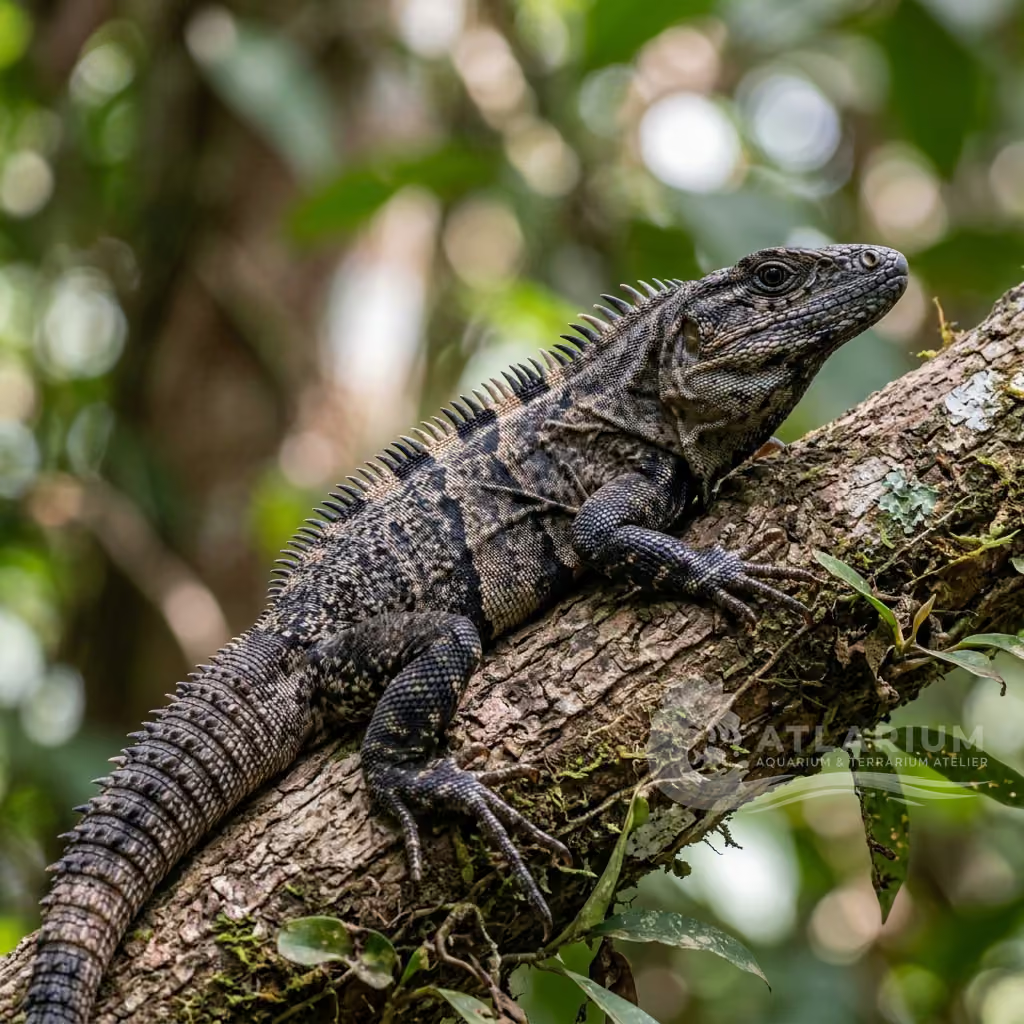
Rhinoceros Iguana
Cyclura cornuta
An imposing, prehistoric-looking reptile native to the island of Hispaniola. Highly intelligent and territorial, it requires massive enclosures and a strictly herbivorous diet.
Environnement
Terrestre
Humidité
60 - 70 %
Température diurne
30 - 38 °C
Température nocturne
24 - 26 °C
Taille adulte
120 cm

Description de l'espèce
Geographical Origin and Habitat: Endemic to the Caribbean island of Hispaniola (shared by Haiti and the Dominican Republic). It inhabits dry forests, coastal scrublands, and rocky arid habitats, sheltering in natural caves.
Taxonomy and Genetics: Belongs to the family Iguanidae and the genus Cyclura. A heavily protected species listed on CITES Appendix I, representing a genetically distinct island lineage vulnerable to habitat destruction.
Behavior and Habits: Strictly diurnal, terrestrial, and highly territorial. They are remarkably intelligent lizards, capable of recognizing individual keepers. Communication involves rapid head-bobbing and dewlap displays.
Morphology: An imposing, heavy-bodied lizard reaching lengths of 1.2-1.4 meters and weights up to 10 kg. Characterized by three horn-like scales on the snout and a uniform dark greyish-brown color. Males possess larger jowls and dorsal crests.

Soins, reproduction et cohabitation
Terrarium Setup: Requires a massive enclosure. Adults need a dedicated room, greenhouse, or secure outdoor enclosure of at least 3x2x2 meters. Furnish with thick climbing logs, large basking rocks, and a deep soil-sand substrate.
Lighting and Heating: Requires high heat and intense UV. Basking spot must reach 43-46°C (109-115°F), with ambient temperatures of 28-32°C (82-90°F) and a night drop to 22-24°C (72-75°F). Intense 12-14% UVB or metal halide lighting is mandatory.
Humidity and Hydration: Maintain moderate humidity (50-60%). Provide a large, shallow water tub for drinking and soaking. Occasional misting helps facilitate shedding.
Feeding and Supplementation: Strictly herbivorous. Diet must consist of leafy greens (collard greens, dandelion, mustard greens), flowers (hibiscus), and squash, with minimal fruit. Supplement with calcium twice a week and multivitamins weekly.
Compatibility: Solitary and highly territorial. Never house multiple males together, as they will fight viciously. Keep individually except during supervised breeding introductions in expansive enclosures.
Health and Common Diseases: Highly susceptible to Metabolic Bone Disease (MBD) if UVB or calcium is deficient. Feeding animal proteins is toxic, leading to gout and kidney failure. Obesity can occur without regular exercise.

Origine et répartition géographiques
Endemic to the Caribbean island of Hispaniola (shared by Haiti and the Dominican Republic). It inhabits dry forests, coastal scrublands, and rocky arid habitats, sheltering in natural caves.
Origine
Amérique centrale et CaraïbesAmérique du Nord

Profil de reptile
- Régime alimentaire
- Herbivore
- This species is primarily herbivorous and requires a diet rich in fresh greens and vegetables. Provide a daily salad consisting of dark leafy greens, squash, and occasional fruit treats. Dusting the meals with a calcium supplement is essential to prevent metabolic bone disease.
- Taille adulte
- 120 cm
- Mode de vie/microhabitat
- Terrestrial
- This species leads a terrestrial lifestyle, spending the vast majority of its time on the ground. Its enclosure should prioritize floor space over height, featuring a deep substrate for digging. Providing various ground-level hides and rocks will encourage natural foraging behaviors.
- Cycle d'activité
- Diurnal
- This species is strictly diurnal, meaning it is highly active during the daylight hours. It requires intense full-spectrum UVB lighting and a proper basking spot to regulate its metabolism. During the night, it will retreat to a secure hide to sleep in complete darkness.
- Sociabilité
- Solitary
- Known for their high intelligence, these reptiles can learn routines and recognize their keepers. They exhibit curious behaviors and often interact thoughtfully with their environment. Providing enrichment is highly recommended to keep their minds actively engaged.
- Reproduction
- Oviparous
- This species reproduces by laying eggs, which require specific conditions to hatch successfully. Females will seek out a suitable nesting site with moist substrate to deposit their clutch. Eggs must be carefully removed and incubated at the correct temperature and humidity levels.
- Tolérance aux manipulations
- Expert only
- Handling this species can be difficult due to its defensive temperament or sheer power. Only experienced keepers should attempt to handle them, utilizing proper techniques and safety equipment. For the most part, interaction should be limited to necessary maintenance and observation.
- Brumation
- Non requise
- This tropical species does not undergo true brumation and requires consistent temperatures year-round. While they may show a slight decrease in activity during winter, their enclosure parameters should not be drastically altered. Heating and lighting must be maintained at standard levels to ensure their health.
- Mue
- Regular
- Like most lizards, this species sheds its skin in patches rather than in one continuous piece. Maintaining proper humidity levels and providing a humid hide are crucial to prevent stuck shed. Keepers should monitor the toes and tail tip closely to ensure all old skin is successfully removed.

Espèces associées
Recommandations regroupées par proches parents, compagnons et soins similaires.