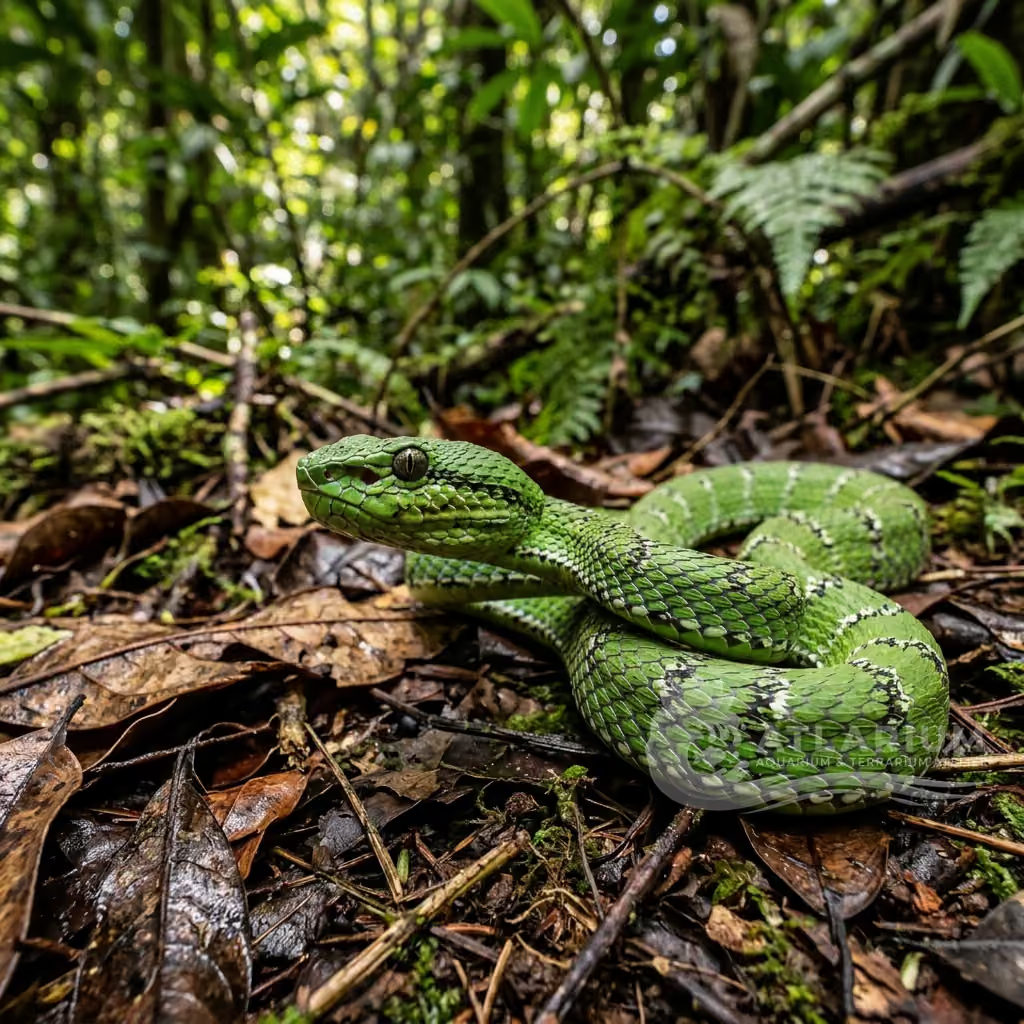
Western diamondback rattlesnake
Crotalus atrox
One of the largest venomous snakes in North America, the western diamondback requires a high-security, dry terrarium. Manageable only by highly experienced professionals.
Environnement
Terrestre
Humidité
30 - 55 %
Température diurne
18 - 34 °C
Température ambiante
18 - 34 °C
Température nocturne
22,5 - 24,5 °C
Point de repos chauffant
34 °C
Taille adulte
150 cm
Enclos minimal
>= 400 L

Description de l'espèce
Geographical Origin and Habitat: The western diamondback rattlesnake (Crotalus atrox) is native to the southwestern United States (from Texas west to southern California) and northern Mexico. It inhabits arid and semi-arid climates, including deserts, grassy plains, rocky hillsides, pine-oak woodlands, and coastal scrub. It frequently utilizes abandoned mammal burrows, rock crevices, and dense desert brush for shelter.
Taxonomy and Genetics: Belongs to the family Viperidae, subfamily Crotalinae. Crotalus atrox is a genetically stable species within its range, showing minimal evolutionary divergence despite its broad geographic distribution. Currently, it is considered a monotypic species with no recognized subspecies, though regional color variations exist.
Behavior and Habits: A primarily terrestrial predator that is active during the day in spring and autumn, transitioning to nocturnal and crepuscular activity during hot summer months. It is a highly efficient ambush hunter. When threatened, it coils into an S-shaped defensive posture, raises its tail, and rapidly shakes its rattle to produce a loud warning sound.
Morphology: One of the largest venomous snakes in North America, with adults typically measuring 120 to 180 centimeters in length, occasionally exceeding 2 meters. It features a heavy, thick body and a distinct triangular head. The base coloration ranges from dusty grey to tan, marked with dark, diamond-shaped blotches outlined in white.

Soins, reproduction et cohabitation
Terrarium Setup: Requires a high-security enclosure of at least 180x80x80 cm for an adult. The terrarium must be constructed with thick tempered glass, double-locking systems, and built-in shift boxes to isolate the snake during cleaning. The substrate must be kept dry, consisting of coarse sand, aspen shavings, or specialized reptile bedding.
Lighting and Heating: Provide a strict thermal gradient: a warm zone of 30-32 °C with a basking spot of 35 °C created by overhead heating elements protected by wire cages. The cool side should remain at 24-26 °C, dropping to 20 °C at night. A 5.0% UVB light source is recommended to support natural behavior and calcium absorption.
Humidity and Hydration: Maintain low relative humidity levels between 30% and 45%. Excessive humidity will cause scale rot and respiratory issues. A heavy, non-tippable water dish must be provided at the cool end; ensure it is located where it can be serviced safely using long forceps or sliding drawer systems.
Feeding and Supplementation: Feed pre-killed, frozen-thawed rodents (rats or mice) using extra-long feeding tongs (minimum 50-60 cm) to prevent strike accidents. Feed juveniles every 7-10 days and adults every 14-21 days. Dietary supplements are unnecessary if high-quality, whole prey items are provided.
Compatibility: Must be housed individually. Keeping multiple venomous snakes in the same enclosure dramatically increases the risk of accidents during feeding and maintenance, increases stress, and makes safe management of these dangerous animals nearly impossible.
Health and Common Diseases: Susceptible to respiratory infections from cold drafts, mouth rot (infectious stomatitis), and intestinal parasites. Any medical handling requires strict adherence to venomous snake protocols, including the use of snake hooks, pinning tools, restraint tubes, and access to antivenom.

Origine et répartition géographiques
The western diamondback rattlesnake (Crotalus atrox) is native to the southwestern United States (from Texas west to southern California) and northern Mexico. It inhabits arid and semi-arid climates, including deserts, grassy plains, rocky hillsides, pine-oak woodlands, and coastal scrub. It frequently utilizes abandoned mammal burrows, rock crevices, and dense desert brush for shelter.
Origine
Amérique centrale et CaraïbesAmérique du Nord

Profil de reptile
- Régime alimentaire
- Carnivore
- The Western diamondback rattlesnake is a formidable predator with a diet that heavily features small to medium-sized mammals. It frequently preys upon prairie dogs, rabbits, ground squirrels, and various species of mice and rats. It will also consume ground-dwelling birds and lizards, particularly when young. It relies on its potent venom, injected through long, hollow fangs, to rapidly dispatch prey before swallowing it whole.
- Taille adulte
- 150 cm
- Mode de vie/microhabitat
- Terrestrial
- Highly adaptable and strictly terrestrial, it thrives in dry habitats spanning deserts, scrublands, and plains, utilizing burrows made by other animals or dense brush for shelter.
- Cycle d'activité
- Crepuscular
- It adjusts its activity based on temperature, being largely crepuscular and nocturnal during the sweltering summer, but shifting to diurnal basking and hunting in early spring and late fall.
- Sociabilité
- Gregarious
- This iconic rattlesnake is famous for its defensive stand; when threatened, it tightly coils its body, raises its head, and vibrates its rattle aggressively. It is primarily terrestrial and can be found across a variety of habitats, from desert scrub to rocky canyons. While capable of diurnal activity in milder weather, it becomes strictly crepuscular or nocturnal during the peak heat of summer. During the winter months, many individuals gather in communal dens to brumate until spring.
- Reproduction
- Viviparous
- Reproduction involves the birth of live young, typical of rattlesnakes, occurring usually in late summer. Mating season takes place in the spring, during which males often engage in elaborate combat dances to establish dominance. A single female can produce anywhere from a dozen to over twenty young in a single litter. Neonates are completely independent and highly venomous from the very first day of their lives.
- Tolérance aux manipulations
- Expert only
- Known for a highly defensive temperament and a massive venom yield, this snake demands zero physical contact and requires robust enclosure security alongside rigorous handling protocols.
- Brumation
- Non requise
- They require a winter brumation, often gathering in communal dens within deep rock crevices or burrows to escape the freezing winter temperatures characteristic of their native range.
- Mue
- Regular
- Adapted to arid environments, they need relatively low ambient humidity. A localized humid hide is all that is necessary to prevent dysecdysis during their shedding phase.

Espèces associées
Recommandations regroupées par proches parents, compagnons et soins similaires.