Cycnogeton procerum
Cycnogeton procerum
Cycnogeton procerum is a colossal, resilient aquatic giant from Australia. Featuring massive, ribbon-like submerged leaves, it rapidly commands the background of large, high-energy display aquariums.
Température de l’eau
15 - 25 °C
Valeur du pH
6 - 7.5
Type d'eau
Eau douce
Lumière
Élevée
CO2
Moyenne
Hauteur attendue
30 cm
Largeur attendue
15 cm
GH
4 - 20 dGH
KH
0 - 14 dKH

Description de l'espèce
Geographical Origin and Habitat: Endemic to the massive, slow-moving rivers, deep billabongs, and expansive seasonal wetlands of eastern and southern Australia. Cycnogeton procerum (formerly classified as Triglochin procera) is a titanic, highly aggressive amphibious survivor. It dominates the Australian waterways by anchoring its massive, tuberous rhizome deep into the heavy, nutrient-rich river mud. It is perfectly evolved to endure severe, prolonged droughts by surviving completely dormant in baked mud, only to explode with massive growth during the torrential rainy season.
Taxonomy & Genetics: Scientifically classified within the Juncaginaceae family, it is commonly known in Australia as the "Water Ribbon." Taxonomically, it is a massive, fleshy true aquatic monocot. Genetically, it is programmed for absolute dominance and extreme vertical growth. Its DNA entirely lacks the ability to produce branching stems or complex leaf shapes; instead, it is genetically locked into producing a continuous barrage of incredibly thick, fleshy, linear (ribbon-like) leaves that race aggressively toward the water's surface.
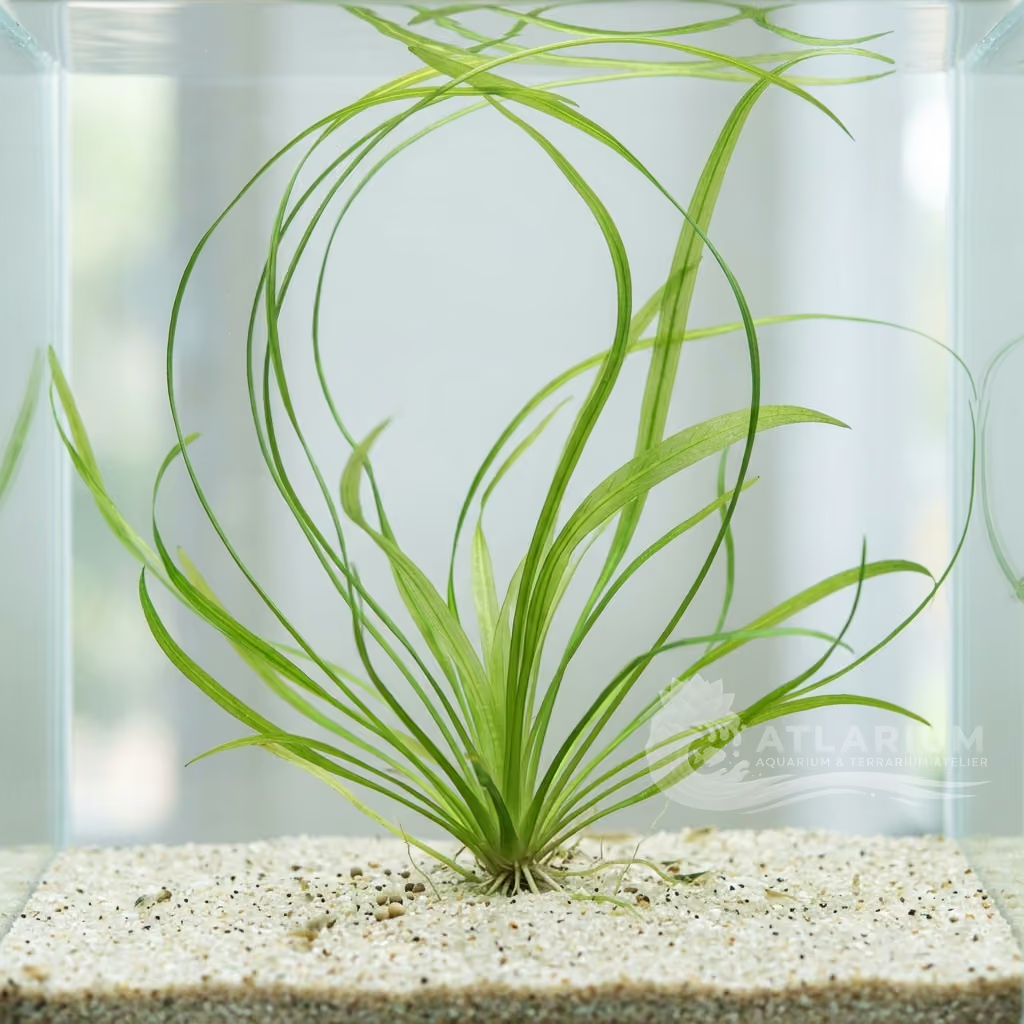
Physical Structure: The architectural structure of C. procerum is overwhelmingly massive, highly linear, and visually dominant. It is a gigantic rosette plant that completely lacks vertical stems. The foundation is a massive, incredibly thick, tuber-like rhizome that drives thick white roots deep into the substrate. The leaves emerge directly from the crown without petioles. The foliage is the defining feature: monstrously long (capable of exceeding 100-150 cm / 40-60 inches), extremely fleshy, linear ribbons that float elegantly across the water's surface.
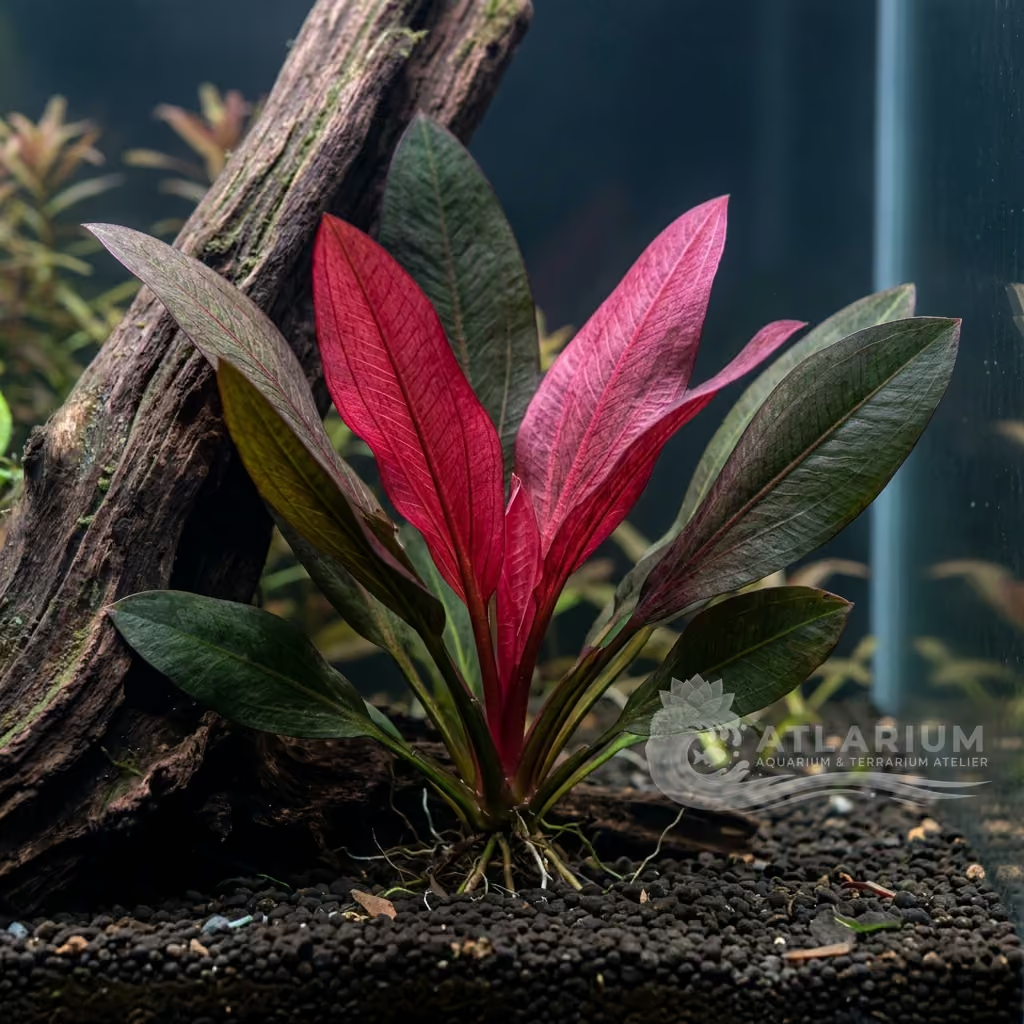
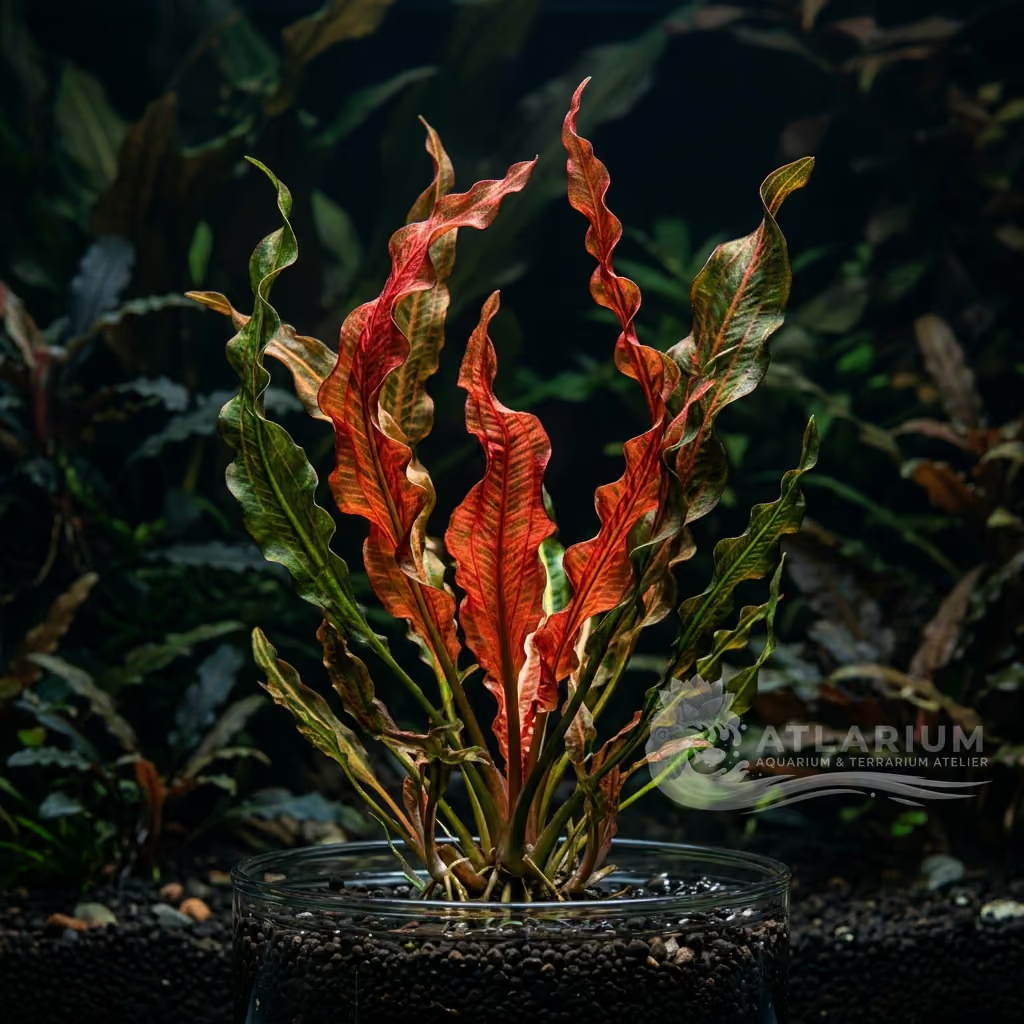
Color & Texture: The coloration is absolutely pure, brilliant, and perfectly uniform. Grown under standard lighting, the massive, fleshy ribbons are a solid, glowing apple-green to vivid bright emerald. The plant completely lacks any mechanism to produce red or brown pigments. The texture is intensely fleshy, highly succulent, and completely smooth. Despite their immense length, the leaves are surprisingly fragile and snap easily if bent forcefully, feeling much like a thick piece of crisp, water-filled celery.

Soins, reproduction et cohabitation
Lighting & CO2: It is an incredibly resilient giant that demands massive amounts of energy to sustain its titanic growth rate. To fuel the rapid production of its 100cm-long fleshy ribbons, high-intensity LED lighting is absolutely mandatory. If shaded, the plant will rapidly cannibalize its older leaves and melt. While it can survive without injected CO2, pressurizing the tank drastically accelerates its terrifying growth rate, forcing it to breach the surface and produce its massive, spike-like emergent flowers.
Nutrition & Substrate: As an absolute titan of a rosette plant, C. procerum is a terrifyingly aggressive, obligate root feeder. Its massive tuberous root system strictly demands an exceptionally deep (minimum 10 cm / 4 inches), highly mature, nutrient-dense substrate. It will effortlessly drain standard gravel of all nutrients within weeks. It absolutely demands premium aquasoil heavily enriched with premium iron and macro-nutrient root tabs directly beneath the massive tuber. If starved of root nutrients, the giant green ribbons will turn pale yellow and rot.
Water Chemistry: Originating from the billabongs of Australia, it is practically invincible regarding standard water parameters, provided the water is kept relatively cool. It prefers unheated or sub-tropical aquariums (18-24°C) and will suffer in extremely hot tropical tanks. It is exceptionally adaptable, tolerating both soft water and extremely hard, highly alkaline water. The single most critical requirement is intense, continuous nutrient supplementation. It prefers slow to moderate water flow, allowing its massive ribbons to drape across the surface gracefully.
Space Management & Placement: Due to its absolute monstrous size (exceeding 100 cm in length) and wildly dominant nature, this plant is strictly reserved as an extreme background centerpiece for the largest of aquariums (minimum 400 liters). It should be planted singularly. Its massive, fleshy ribbons will rapidly reach the surface and stretch across the entire top of the tank, aggressively blocking out all light to the plants below. It must never be crowded, as its massive root system will choke out all competitors.
Pruning: Pruning is a constant, necessary, and delicate procedure. Never attempt to trim the thick, fleshy ribbons in half; the cut edge will instantly rot and pollute the water. To prune dead, yellowing, or excessively long surface leaves, you must reach down to the absolute base of the massive rosette and cleanly snap or slice the thick leaf directly at the tuber. To manage its spread, you must aggressively and physically sever the thick underground runners that constantly try to colonize the entire tank.
Risks & Diseases: The absolute greatest threat to this titan is nutrient starvation. Because its growth rate is so violently fast, it will rapidly strip the substrate of all available nutrients. The moment it runs out of food, the massive fleshy ribbons will begin to turn yellow, become translucent, and dissolve into a massive amount of slimy organic waste, ruining water quality. The second major risk is heat stress; temperatures above 26°C will frequently trigger the plant to melt.

Origine et répartition géographiques
Endemic to the massive, slow-moving rivers, deep billabongs, and expansive seasonal wetlands of eastern and southern Australia. Cycnogeton procerum (formerly classified as Triglochin procera) is a titanic, highly aggressive amphibious survivor. It dominates the Australian waterways by anchoring its massive, tuberous rhizome deep into the heavy, nutrient-rich river mud. It is perfectly evolved to endure severe, prolonged droughts by surviving completely dormant in baked mud, only to explode with massive growth during the torrential rainy season.
Origine
Australie, Nouvelle-Guinée et Océanie

Profil de plante
- Emplacement
- Arrière-plan
- Due to its immense potential size and long, ribbon-like leaves, it is best suited as a background plant in large or very tall aquariums. It can be planted towards the corners or the back to allow its leaves to float across the surface. Not recommended for nano or small tanks.
- Forme botanique
- Rosette
- Features long, flat, ribbon-like leaves that are light green and can grow extremely long, trailing along the water surface. It has a grass-like appearance but on a much larger scale. The leaves originate from a central tuberous root structure.
- Croissance
- VERY_FAST
- Can exhibit a very fast growth rate under ideal conditions, quickly sending its leaves to the water's surface. Adding CO2 and maintaining a rich substrate will significantly accelerate its development. It may require frequent management in shallower tanks due to its rapid vertical growth.
- Substrat
- Élevé
- As a large, heavy root-feeding plant, Cycnogeton procerum requires a deep and highly nutritious substrate. A thick layer of premium aqua soil or a nutrient-packed clay base is necessary to sustain its massive growth and fleshy root system. A minimum substrate depth of 6-8 centimeters is recommended to accommodate its extensive, tuberous roots. Abundant nutrients drawn directly from this deep bed are crucial for producing its characteristic tall, ribbon-like leaves.
- Fertilisation de la colonne d'eau
- Recommandée
- Benefits from standard liquid fertilization to maintain healthy, green foliage. However, column dosing is secondary to ensuring a nutrient-rich root zone. Occasional dosing of trace elements will prevent yellowing of the long leaves.
- Fertilisation racinaire
- Aucune
- Requires a deep, nutrient-rich substrate to accommodate its extensive and thick root system. The addition of root tabs is highly recommended to sustain its rapid growth and large biomass. A strong root base is essential for the health of this large plant.
- Taille
- Occasionnelle
- Maintenance involves removing older, damaged, or overly long leaves by cutting them close to the base. Do not cut the leaves in half, as the cut ends will brown and die back. If the plant becomes too massive, the entire tuber can be divided.
- Propagation
- Division du rhizome, Graines
- Propagates naturally by producing daughter plants from its tuberous base or rhizome. These offsets can be carefully separated and replanted once they have developed their own root systems. Alternatively, larger tubers can be divided using a sharp knife.
- Sensibilité
- Modérée
- Generally hardy, but its leaves can be brittle and susceptible to damage from strong currents or boisterous fish. It does not tolerate prolonged shading and needs adequate light reaching its base. It can also temporarily halt growth if uprooted or relocated.
- Rôle dans le décor
- Plan intermédiaire, Arrière-plan
- Acts as a dramatic background element, providing vertical lines and surface coverage as its leaves trail across the top. It is excellent for creating a natural, jungle-like atmosphere or simulating a riverbank environment. It provides excellent cover and breeding grounds for surface-dwelling fish.

Galerie d'images
Images sous licence liées à l'espèce ou, lorsqu'elles sont indiquées, au taxon représentatif le plus proche.

Espèces associées
Recommandations regroupées par proches parents, compagnons et soins similaires.