Christmas Moss
Vesicularia dubyana
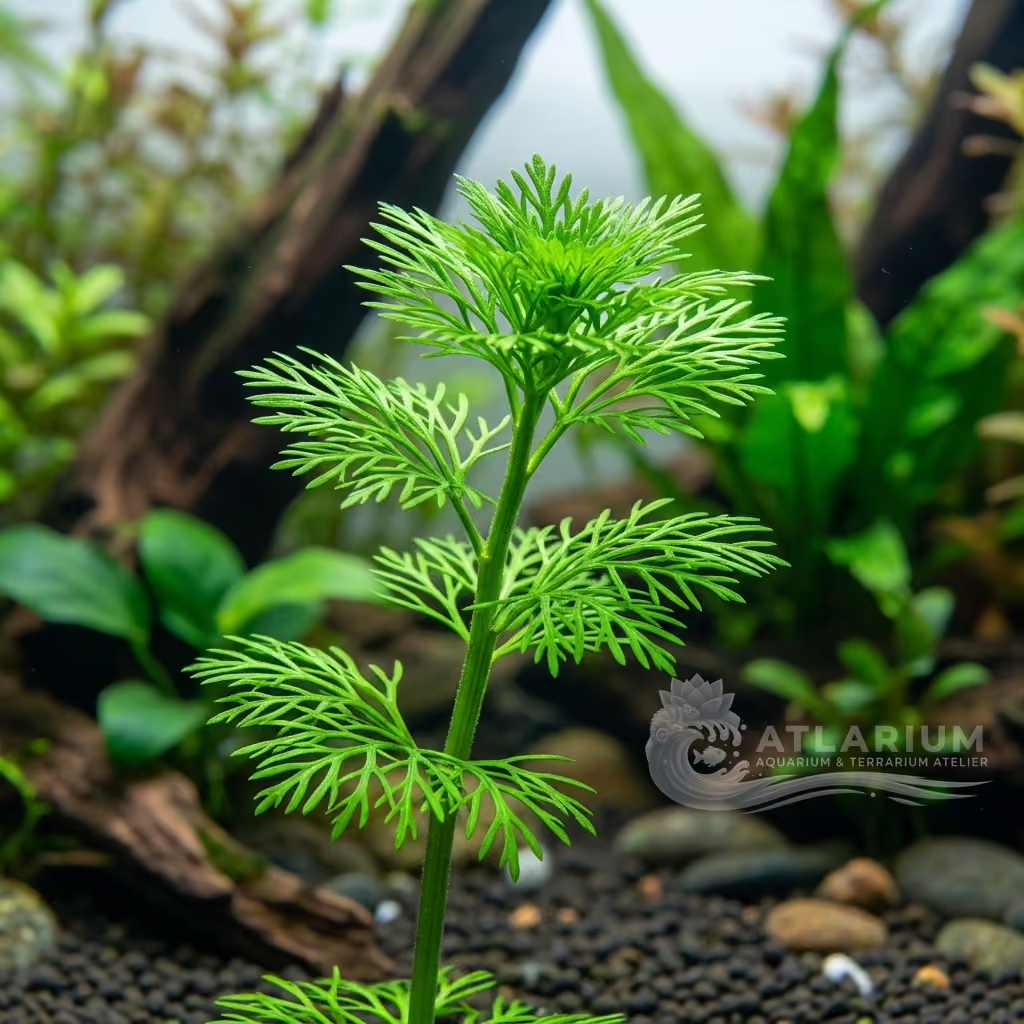
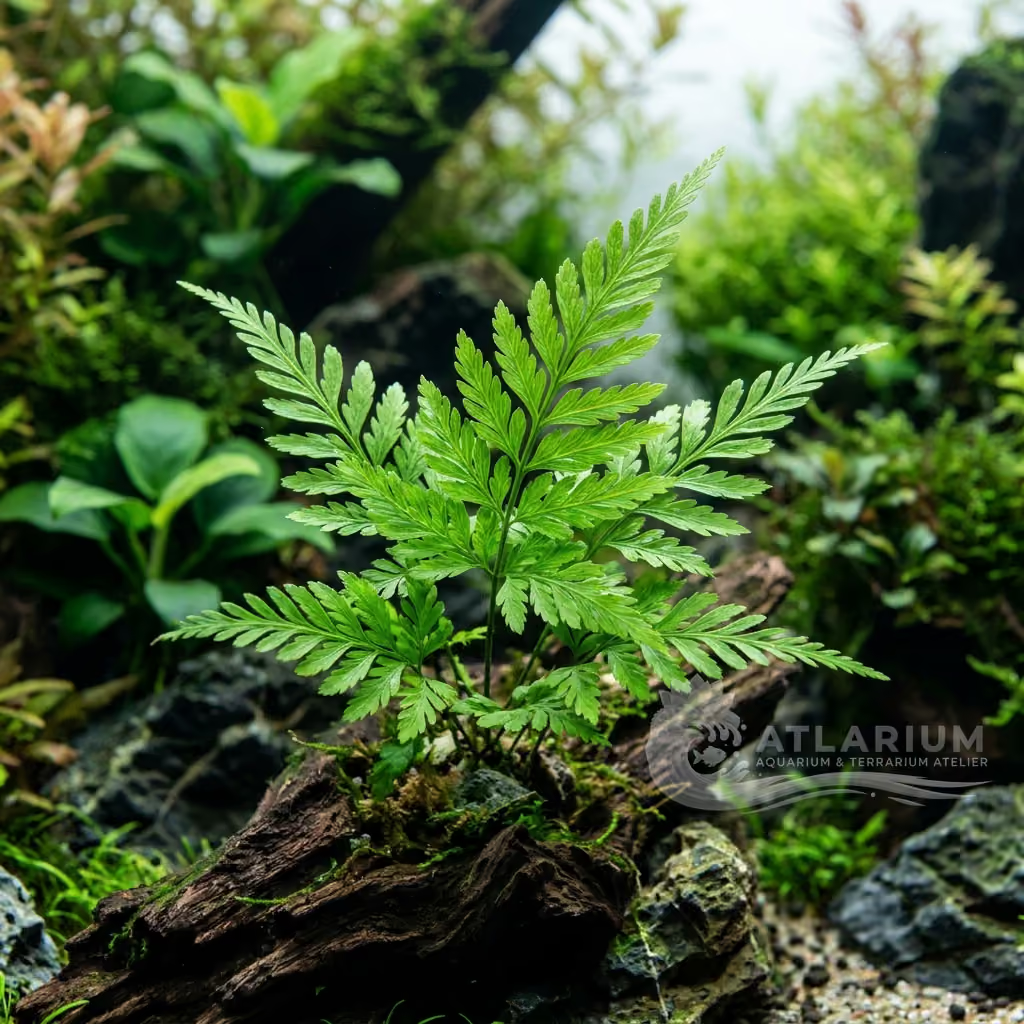
Christmas Moss (Vesicularia dubyana) forms dense, triangular fronds resembling fir trees. It requires moderate lighting to develop its signature branching structure.
Wassertemperatur
20 - 28 °C
pH-Wert
5 - 7.5
Wassertyp
Süßwasser
Licht
Media (se tenuto in bassa luce perde la forma ad abete diventando un groviglio informe)
CO2
Bassa
Erwartete Höhe
5 cm
Erwartete Breite
20 cm
GH
4 - 20 dGH
KH
2 - 15 dKH

Artbeschreibung
Geographical Origin and Habitat: Vesicularia dubyana, commonly known as Christmas Moss, is native to the tropical regions of South and Southeast Asia, widely distributed in India, Indonesia, Malaysia, the Philippines, and Singapore. In the wild, it inhabits extremely humid and shaded environments, growing both submerged and emerged on wet rocks, fallen logs near waterfalls, muddy banks of forest streams, and marshy areas, adapting seamlessly to seasonal water level fluctuations driven by monsoons.
Taxonomy & Genetics: This moss belongs to the Hypnaceae family and the genus Vesicularia. Its taxonomy has historically been a source of confusion in the aquarium trade, often conflated with Java Moss (Taxiphyllum barbieri) or Vesicularia montagnei. Genetically, Vesicularia dubyana is characterized by a regular branching structure that spreads horizontally in a radial pattern, with its fronds developing a distinct triangular, fern-like shape.
Physical Structure: The physical structure consists of creeping main stems from which short, regular lateral branches sprout symmetrically. This arrangement gives rise to dense fronds that closely resemble the shape of fir tree branches. It develops small rhizoids (anchoring organs) along the underside of its stems, enabling it to cling tightly to any solid, porous surface such as lava rocks, driftwood, and roots.
Color & Texture: The color ranges from bright green to deep olive green, depending on light and nutrient availability. The microscopic leaves are densely and regularly arranged along the filaments, giving the fronds a velvety, soft, and three-dimensional texture. Under optimal conditions, the growing tips display a lighter green hue, creating a beautiful contrast.

Pflege, Zucht und Mitbewohner
Lighting & CO2: Christmas Moss can survive in low-light conditions, but to develop its signature compact triangular branching and "Christmas tree" appearance, it requires moderate lighting. Under weak light, it tends to stretch out, grow leggy, and lose its geometric branch symmetry. While CO2 injection is not mandatory, it speeds up growth and promotes a denser, more robust habit.
Nutrition & Substrate: As an epiphytic plant without true roots, it does not require any substrate and must not be buried in the ground. It absorbs all necessary nutrients directly from the water through its foliage. It benefits from a balanced liquid fertilizer in the water column, especially microelements and potassium. The presence of shrimp is highly beneficial to keep the moss clean of organic waste.
Water Chemistry: It tolerates a wide range of water parameters, preferring temperatures between 20°C and 28°C. It thrives best in soft to moderately hard water with an acidic to neutral pH (5.0 - 7.5). It shows moderate sensitivity to harsh chemical algaecides, which should be avoided or dosed carefully to prevent damage to the delicate moss structure.
Space Management & Placement: It should be positioned by tying or gluing it to rocks, driftwood, or mesh in the midground or foreground. It is particularly suited for creating lush green cushions or weeping effects on the edges of hardscape. It can also be used to create vertical green walls by attaching it to plastic mesh. It must not be buried, as this will lead to decay of the lower filaments.
Pruning: Pruning is crucial and must be done regularly by thinning out the moss clump with sharp scissors. If left to grow unchecked, the bottom layers will be starved of light and water, leading to decay and causing the entire clump to detach from its support. The trimmings can be easily bound to new surfaces for propagation.
Risks & Diseases: The primary risk is detritus and waste getting trapped within its dense, intricate branches, which blocks light and attracts filamentous or black brush algae (BBA). Gently siphoning the moss during water changes and keeping detritus-eating shrimp (such as Neocaridina davidi) are highly recommended practices to keep the fronds healthy and algae-free. Algae infestations can be hard to treat and may require removing the affected sections.

Geografische Herkunft und Verbreitung
Vesicularia dubyana, commonly known as Christmas Moss, is native to the tropical regions of South and Southeast Asia, widely distributed in India, Indonesia, Malaysia, the Philippines, and Singapore. In the wild, it inhabits extremely humid and shaded environments, growing both submerged and emerged on wet rocks, fallen logs near waterfalls, muddy banks of forest streams, and marshy areas, adapting seamlessly to seasonal water level fluctuations driven by monsoons.
Ursprung
Süd- und Südostasien

Pflanzenprofil
- Platzierung
- Aufsitzerpflanze
- This moss is best utilized attached to hardscape elements such as driftwood or rocks. Tying or gluing Vesicularia dubyana to roots allows it to create a beautiful aged appearance in the aquascape. It should be placed in areas with moderate to good water flow to keep it clean. It can also be used as a foreground carpet if secured to meshes.
- Botanische Form
- Moos
- Vesicularia dubyana forms dense, intertwined cushions or creeping mats. It lacks true roots and instead uses rhizoids to anchor itself to various surfaces. Its classic messy, creeping growth habit provide exceptional texture and detail to miniature aquascapes. The fine leaf structure acts as an excellent refuge for microfauna and shrimp.
- Wachstum
- Mittel
- The growth rate of Vesicularia dubyana is generally slow to moderate, depending on environmental factors. Higher light intensity and CO2 injection will modestly increase its growth pace and make it more compact. Its slow growth is advantageous as it requires less frequent maintenance. Cooler water temperatures often yield healthier and tighter fronds.
- Substrat
- Keiner
- Christmas Moss (Vesicularia dubyana) flourishes as an epiphyte and completely bypasses the need for a traditional substrate bed. It is best cultivated by attaching it to rough hardscape materials such as stones, driftwood, or mesh using cotton thread or aquarium glue. Tiny root-like structures called rhizoids anchor the moss to its chosen surface while allowing it to absorb liquid nutrients straight from the water. Attempting to plant this moss in soil or gravel can smother it, making hardscape attachment the only ideal method.
- Säulendüngung
- Erforderlich
- Because it relies entirely on the water column for sustenance, liquid fertilization is essential for Vesicularia dubyana. It appreciates a steady supply of micronutrients, especially iron, to maintain a deep green coloration. Avoid large, sudden spikes in nutrients as this can trigger hair algae growth within the moss. Regular, small doses of fertilizer yield the best results.
- Wurzeldüngung
- Keine
- Root fertilization is completely unnecessary for Vesicularia dubyana as it does not possess a true root system. Substrate additives and root tabs will have no direct benefit for this epiphyte. It is strictly a column feeder that absorbs what it needs through its foliage. Focus entirely on maintaining appropriate water chemistry and liquid dosing.
- Trimmen
- Gelegentlich
- Trimming Vesicularia dubyana is straightforward but requires some care to prevent small clippings from spreading uncontrollably. Using sharp aquascaping scissors, trim the outer layers to maintain its compact shape. It is highly recommended to siphon the water out simultaneously while cutting to catch the trimmings. A rigorous trimming session will encourage a denser, more attractive regrowth.
- Ausbreitung
- Teilung
- Propagating Vesicularia dubyana is incredibly simple and can be done at any time. Simply pull apart or cut a clump of the moss into smaller portions. These fragments can then be attached to new hardscape pieces using cyanoacrylate superglue or cotton thread. Over time, each small piece will anchor itself and grow into a new, full cushion.
- Empfindlichkeit
- Mäßig
- Like many mosses, Vesicularia dubyana is prone to accumulating detritus, which can lead to unsightly algae blooms if ignored. It is generally sensitive to high doses of liquid carbon (glutaraldehyde), which can cause the delicate fronds to turn white and die. Algae eaters like Amano shrimp or Cherry shrimp are invaluable for keeping the moss clean. Ensure adequate water flow to flush out debris.
- Layoutrolle
- Aufsitzerpflanze, Mittelgrund, Vordergrund
- Vesicularia dubyana serves as a crucial detailing plant in the aquascape, softening the harsh edges of rocks and wood. It creates a sense of maturity and age, making a newly setup tank look like an ancient, natural biotope. It is exceptionally well-suited for nano aquariums and shrimp breeding setups. Its unique classic messy, creeping growth habit create a highly sought-after aesthetic.

Verwandte Arten
Empfehlungen gruppiert nach nahen Verwandten, Auswahl von Begleitern und ähnlicher Betreuung.