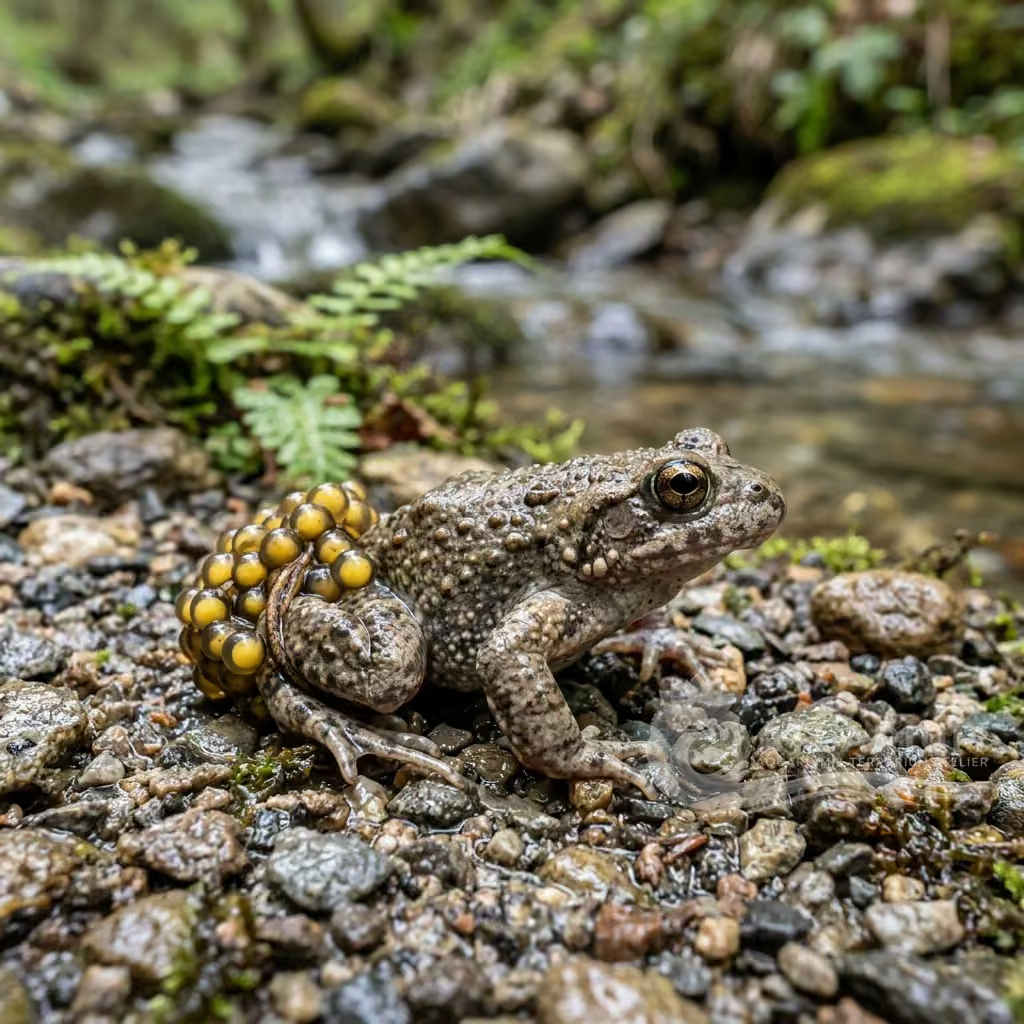
Common tree frog
Polypedates leucomystax
The Common Tree Frog is an incredibly adaptable and hardy species from Southeast Asia. With distinct four-lined back patterns, it readily thrives in a standard arboreal setup with robust live plants.
Umgebung
Terrestrisch
Luftfeuchtigkeit
60 - 85 %
Tagestemperatur
25 °C
Nachttemperatur
20 - 22 °C
Umgebungstemperatur
25 °C
Mindestgehäuse
>= 45 L
UVB
Ferguson 2
UVI
0,7 - 1 UVI

Artbeschreibung
Geographical Origin and Habitat: Polypedates leucomystax, commonly known as the common tree frog or four-lined tree frog, is native to a broad region of Southeast Asia, including India, southern China, Vietnam, Indonesia, and the Philippines. It is a highly adaptable species inhabiting rainforests, agricultural areas, urban gardens, and marshes close to human settlements.
Taxonomy and Genetics: It belongs to the family Rhacophoridae. It is considered a cryptic species complex composed of several closely related populations that show minor genetic and morphological variations but share the unique foam-nesting breeding behavior.
Behavior and Habits: Primarily nocturnal and arboreal, spending most of its time climbing vegetation. During the day, it rests quietly on broad leaves or branches, blending in perfectly. Males are known for their loud, distinct vocalizations during the breeding season to attract mates.
Morphology: Features a slender body with long limbs and expanded toe pads for climbing. The head is triangular with large, prominent eyes. The skin is smooth, and its color ranges from light brown to beige or grey, often adorned with four dark, longitudinal stripes down its back.

Pflege, Zucht und Mitbewohner
Terrarium Setup: Requires a vertically oriented terrarium of at least 50-60 liters for a pair. The ideal substrate is damp coconut fiber covered with sphagnum moss. Branching wood, cork bark, and broad-leaved plants like Pothos are essential for climbing. A shallow, clean water dish must always be accessible.
Lighting and Heating: The ideal daytime temperature should range from 24°C to 28°C, with a localized basking spot of 30°C using a low-wattage heat bulb. Nighttime temperatures can drop to 20-22°C. While UVB lighting is not strictly required, a 12-hour photoperiod is recommended.
Humidity and Hydration: Needs high relative humidity between 70% and 85%. The terrarium should be misted daily with dechlorinated water to keep the substrate damp and provide drinking droplets. Good ventilation is crucial to prevent stagnant, mold-inducing air conditions.
Feeding and Supplementation: Strictly insectivorous. Feed them a variety of live insects, such as crickets, small roaches, mealworms, and flies. Feeder insects must be dusted with calcium and vitamin D3 supplements twice a week for adults and at every feeding for growing juveniles.
Compatibility: Can be housed in small groups of the same species if space permits. Avoid housing them with other amphibian species or specimens of significantly different sizes to prevent stress, territory disputes, or potential cannibalism.
Health and Common Diseases: Common health issues include bacterial or fungal skin infections caused by poor hygiene and poor ventilation. Metabolic bone disease can occur due to inadequate calcium and D3 supplementation. Regular substrate spot-cleaning and fresh water changes help maintain optimal health.

Geografische Herkunft und Verbreitung
Polypedates leucomystax, commonly known as the common tree frog or four-lined tree frog, is native to a broad region of Southeast Asia, including India, southern China, Vietnam, Indonesia, and the Philippines. It is a highly adaptable species inhabiting rainforests, agricultural areas, urban gardens, and marshes close to human settlements.
Ursprung
Süd- und SüdostasienOstasien

Amphibienprofil
- Diät
- Insectivore
- The Common tree frog is an adaptable insectivore that feeds on a wide range of prey. Its natural diet includes flies, moths, spiders, and various small beetles. In captivity, they are easily maintained on a varied diet of crickets, mealworms, and small roaches. They are active and aggressive feeders, often pursuing prey over short distances.
- Lebenserwartung
- 5-8 years
- Erwachsenengröße
- 8 cm
- Lebensstil/Mikrohabitat
- Arboreal
- They exhibit a highly specialized arboreal lifestyle, spending almost their entire lives off the ground in the foliage of trees and shrubs. Their specialized toe pads allow them to climb vertical surfaces and leaves with ease, rarely descending except sometimes to breed.
- Aktivitätszyklus
- Nocturnal
- These amphibians are strictly nocturnal, becoming active under the cover of darkness. During the day, they remain motionless to avoid predators, adhering to leaves or branches. As dusk approaches, they emerge to forage and vocalize, relying on low light conditions for their natural behaviors.
- Sozialität
- Solitary
- This species is primarily nocturnal and highly adaptable, often found near human habitation. They are excellent climbers, utilizing their toe pads to scale vertical surfaces, including walls. During the day, they hide in dark, moist crevices to escape the heat and conserve water. They are known for their loud, distinctive quacking call.
- Reproduktion
- Oviparous
- Breeding can occur year-round in humid, tropical environments, often in stagnant water. They create a foam nest attached to vegetation, walls, or the ground near water. The eggs develop within the foam, and the hatching tadpoles are washed into the water. The tadpoles are hardy and can develop in relatively poor water conditions.
- Toxizität
- Harmless
- The Common tree frog is non-toxic and completely harmless to humans and pets. Their primary defense is their ability to change color slightly to match their background. They do not possess any dangerous skin secretions. However, like all frogs, they should be handled with clean, wet hands to avoid damaging their mucous layer.
- Lebensphase
- Metamorphosis
- Eggs are deposited in a foam nest, providing a moist and protective environment for development. The tadpoles drop or are washed into the water, where they feed and grow rapidly. Metamorphosis produces small froglets that quickly disperse into the surrounding vegetation. They are fast-growing and can reach reproductive maturity within a few months.
- Handhabungstoleranz
- Display only
- As with most amphibians, handling should be avoided unless absolutely necessary for health checks or enclosure maintenance. They possess highly permeable skin that is extremely sensitive to the natural oils, salts, and any chemical residues present on human hands. They are best treated as a 'look, don't touch' display animal.
- Brumation
- This species hails from tropical and subtropical environments with relatively consistent year-round temperatures, so it does not undergo a true brumation period. While they may experience periods of reduced activity during dry seasons, a drastic cooling period is not required or recommended in captivity.
- Häutung
- Periodic
- Like all frogs, they regularly shed their skin to accommodate growth and maintain skin health, often consuming the shed afterward. Because their skin is delicate and prone to desiccation, maintaining a consistently high ambient humidity is absolutely critical to prevent shedding complications and ensuring the molt comes off in one piece.

Verwandte Arten
Empfehlungen gruppiert nach nahen Verwandten, Auswahl von Begleitern und ähnlicher Betreuung.