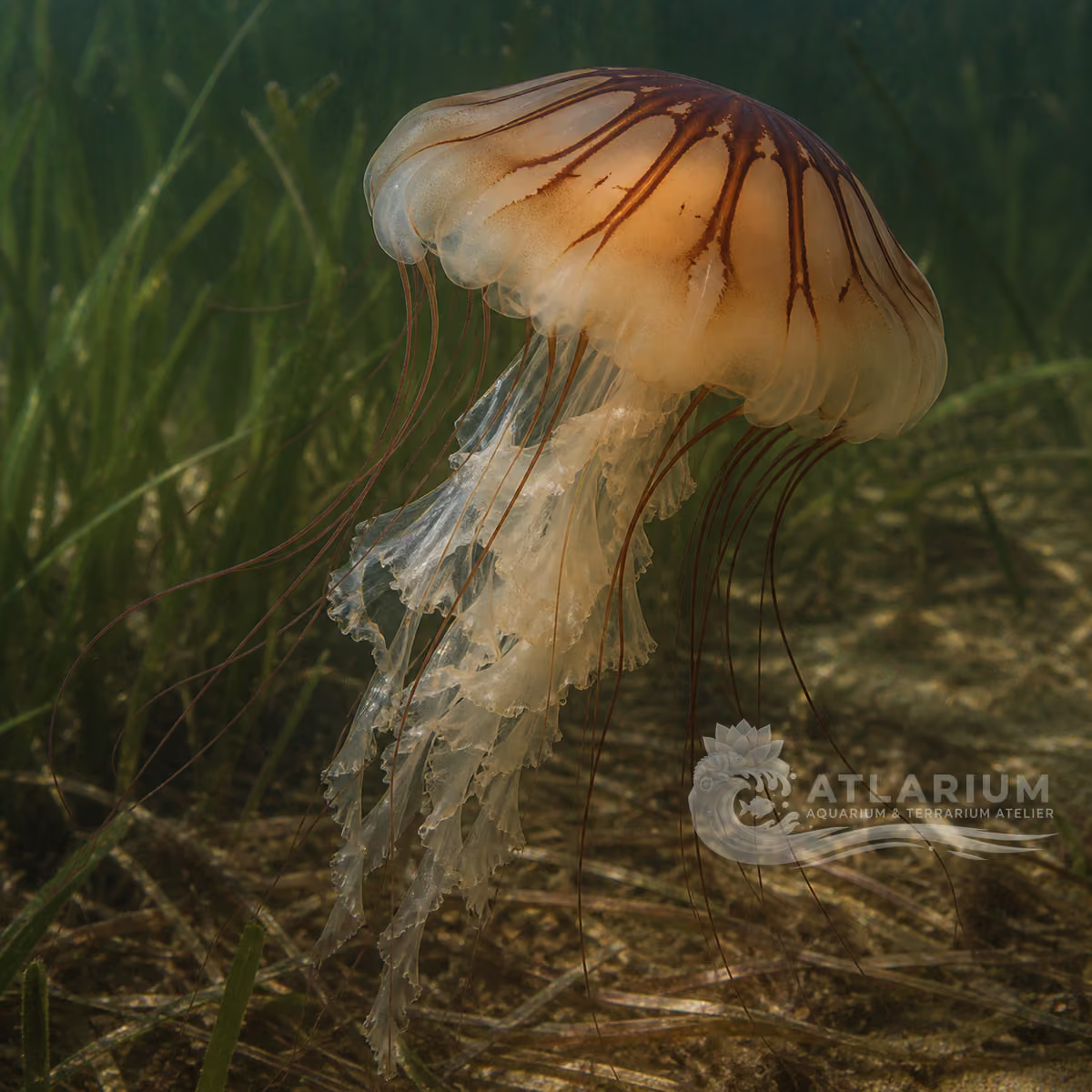
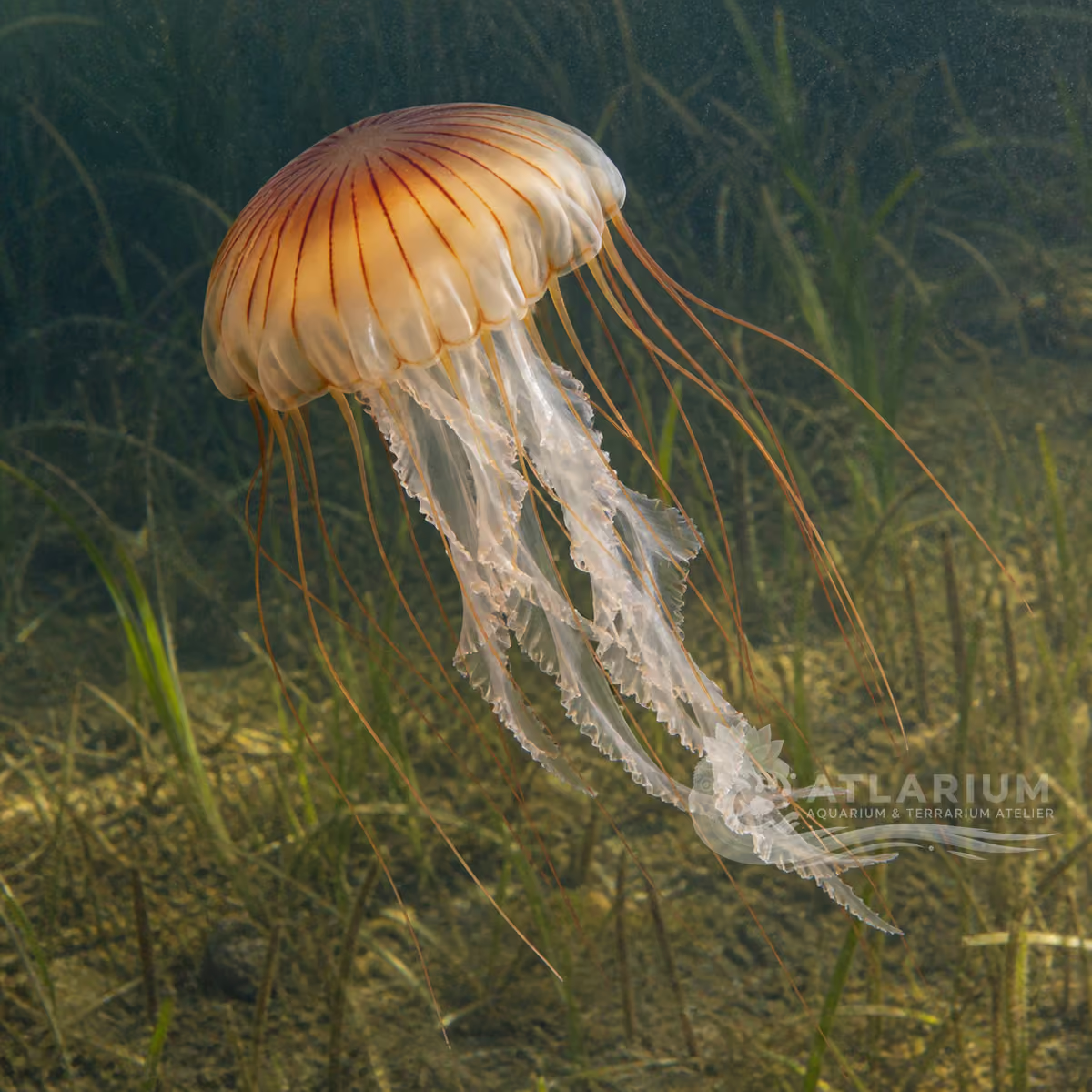
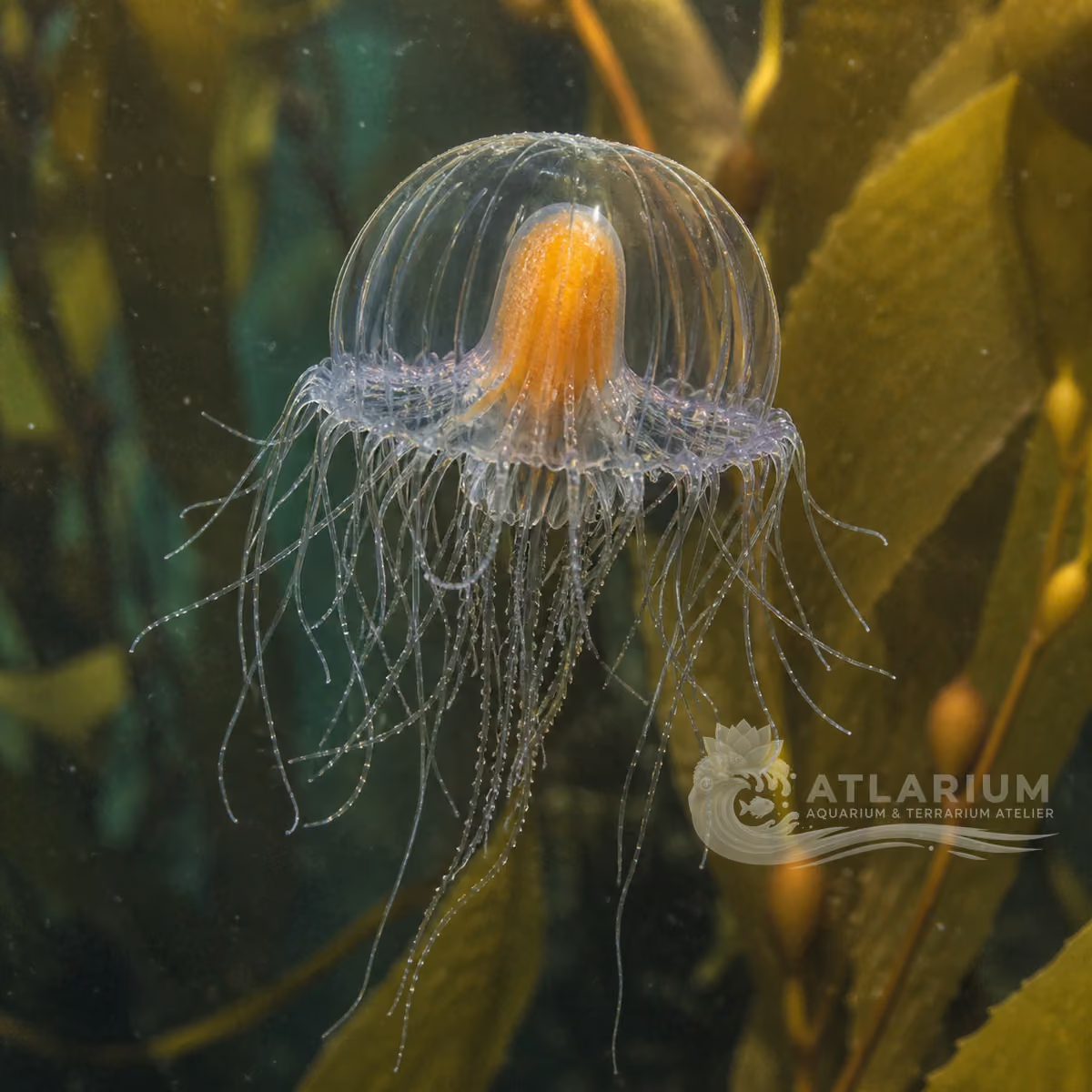
Purple-striped jelly
Chrysaora colorata
Purple-striped jelly (Chrysaora colorata) is a cnidarian medusa documented in public institutions; it needs specialist care and intact tissue in controlled flow.
Valor de pH
8 - 8.4
Tipo de água
Marinho
Tipo invertebrado
Jellyfish
Venenoso
Yes
Tamanho adulto
70 cm
Papel ecológico
Pelagic plankton predator
Sensibilidade ao cobre
Extreme

Descrição da espécie
Geographic Origin and Biotope: Chrysaora colorata is documented in eastern Pacific waters off California. It is a gelatinous water-column animal tied to local conditions that must not be generalized.
Taxonomy and Morphology: WoRMS accepts Chrysaora colorata in class Scyphozoa, order Semaeostomeae, family Pelagiidae. It has a disc-shaped bell with oral arms and nematocyst-bearing marginal tentacles.
Social Behaviour: This is not a conventional aquarium community animal: it drifts or swims in the water column, and repeated contact with conspecifics, walls or décor can damage tissue. Any display group needs a density selected by experienced staff.
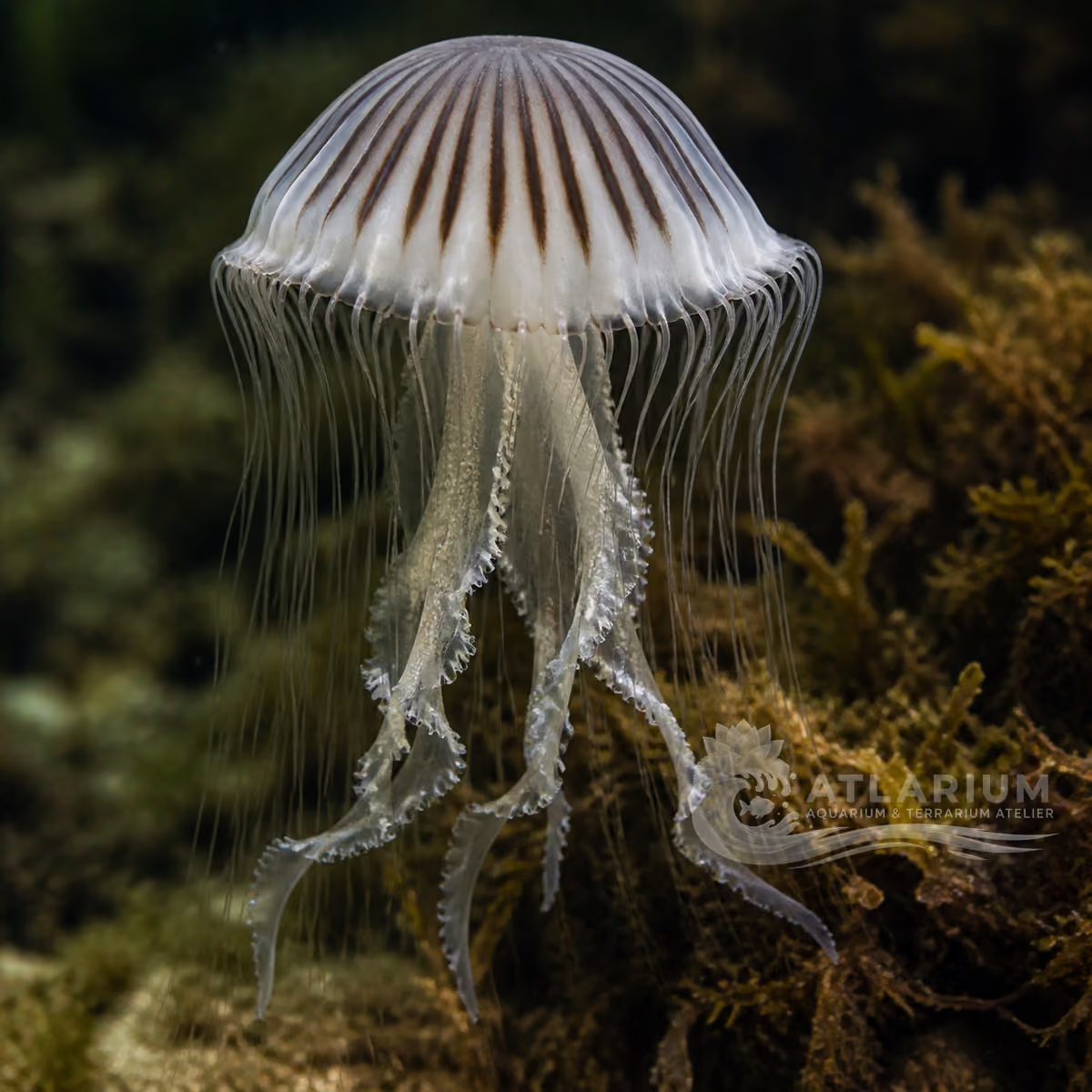
Colouration and Sexual Dimorphism: Transparency and the features evoked by the common name “Purple-striped jelly” aid observation, but color and form vary with life stage, food and lighting. Sex cannot be identified reliably from the medusa's external appearance.

Cuidado, criação e companheiros de tanque
Aquarium Setup: A dedicated kreisel or pseudokreisel without sharp edges is required, with laminar flow that suspends Chrysaora colorata without sweeping it against a surface. Intakes, drains and overflows need fine even guards; free bubbles and abrasive décor are excluded. Care remains specialist and normally institutional.
Feeding and Diet: Offer suitably sized live or enriched planktonic prey in frequent small feeds; rotifers, copepods and Artemia nauplii are common professional reference foods. Remove excess promptly without suctioning tissue.
Water Quality: The professional manual gives 32–35 ppt and pH 8–8.4 for most marine medusae; the source population must still be checked. Stability, oxygenation and control of ammonia, nitrite and heavy metals take priority over an undocumented target.
Compatibility and Coexistence: Use a species-only system: fish, crustaceans, corals, anemones and other gelatinous species can prey, be stung, compete for food or cause abrasion. Prevent collisions and crowding even among conspecifics.
Aquarium Breeding: The cycle alternates a planula, benthic polyp and pelagic medusa; polyps, ephyrae or young medusae need separate vessels, flows and foods.
Risks and Disease: The main risk is mechanical damage to tissue made almost entirely of water, followed by starvation, fouled screens and osmotic shock. Nematocysts remain active on detached tentacles; catalog level: moderately-venomous. Avoid contact and maintain the appropriate sting-response protocol.

Origem e distribuição geográfica
Esta espécie é originária de: eastern Pacific waters off California.
Origem
América do Norte

Perfil de invertebrados
- Dieta
- Planktivore
- Planktivorous: it requires correctly sized live or enriched prey and several controlled feedings.
- Papel ecológico
- Pelagic plankton predator
- A planktonic predator and food-web resource in the pelagic ecosystem; it is not a cleanup animal.
- Tamanho adulto
- 70 cm
- Risco de salto
- No
- Sensibilidade ao choque
- Extreme
- Extremely sensitive to rapid changes in temperature, salinity, pH and flow; acclimation must be slow and observed.
- Venenoso
- Yes
- Muda
- No
- It does not molt; growth directly remodels the gelatinous tissue.
- Reprodução
- Alternating polyp–medusa generations
- Alternating generations with a benthic polyp phase and a pelagic medusa phase.
- Compatibilidade e companheiros de tanque
- Species only
- Professional species-only system; community-aquarium pairings are not appropriate.

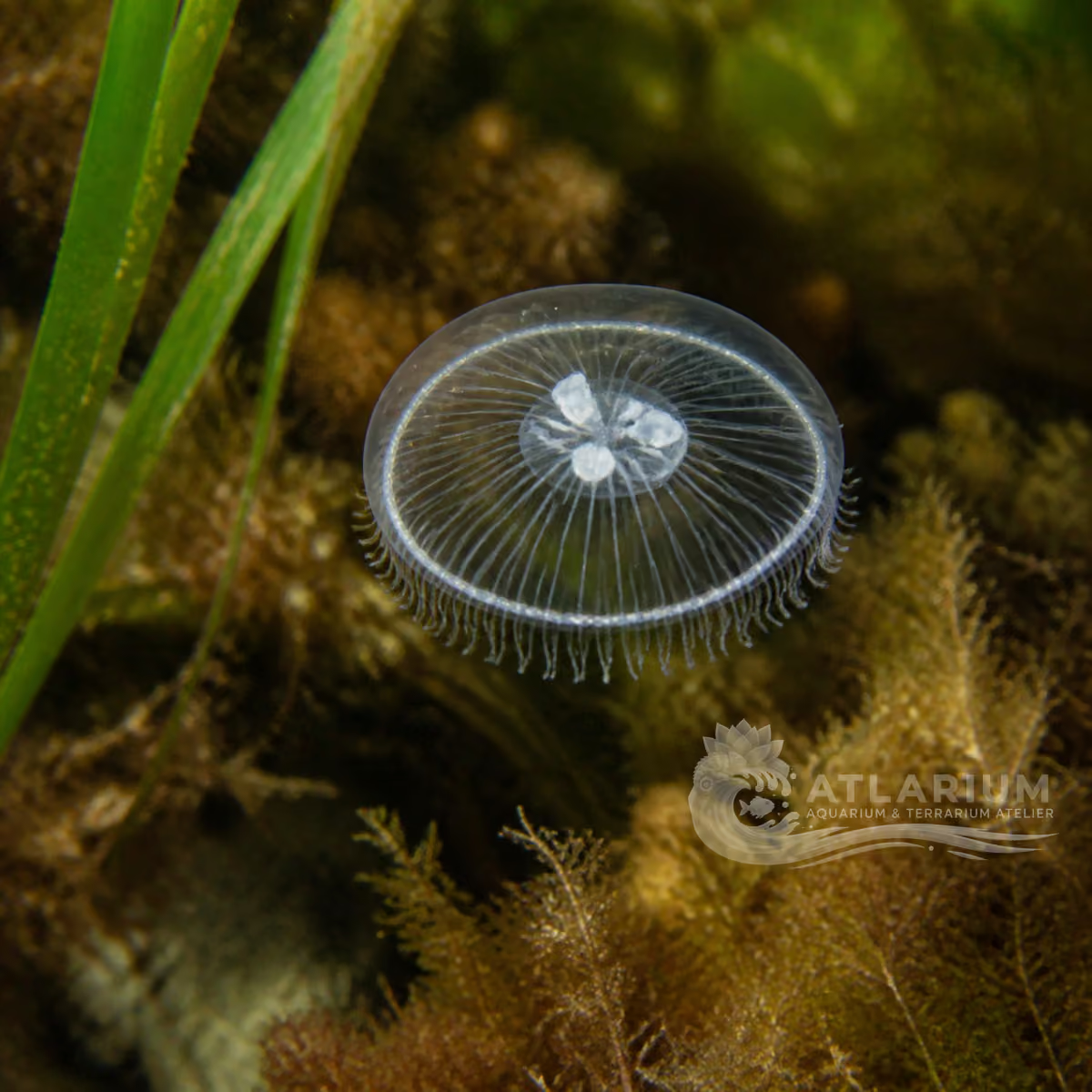
Espécies relacionadas
Recomendações agrupadas por parentes próximos, escolhas de acompanhantes e cuidados semelhantes.