Black Skirt Tetra — GloFish
Gymnocorymbus ternetzi
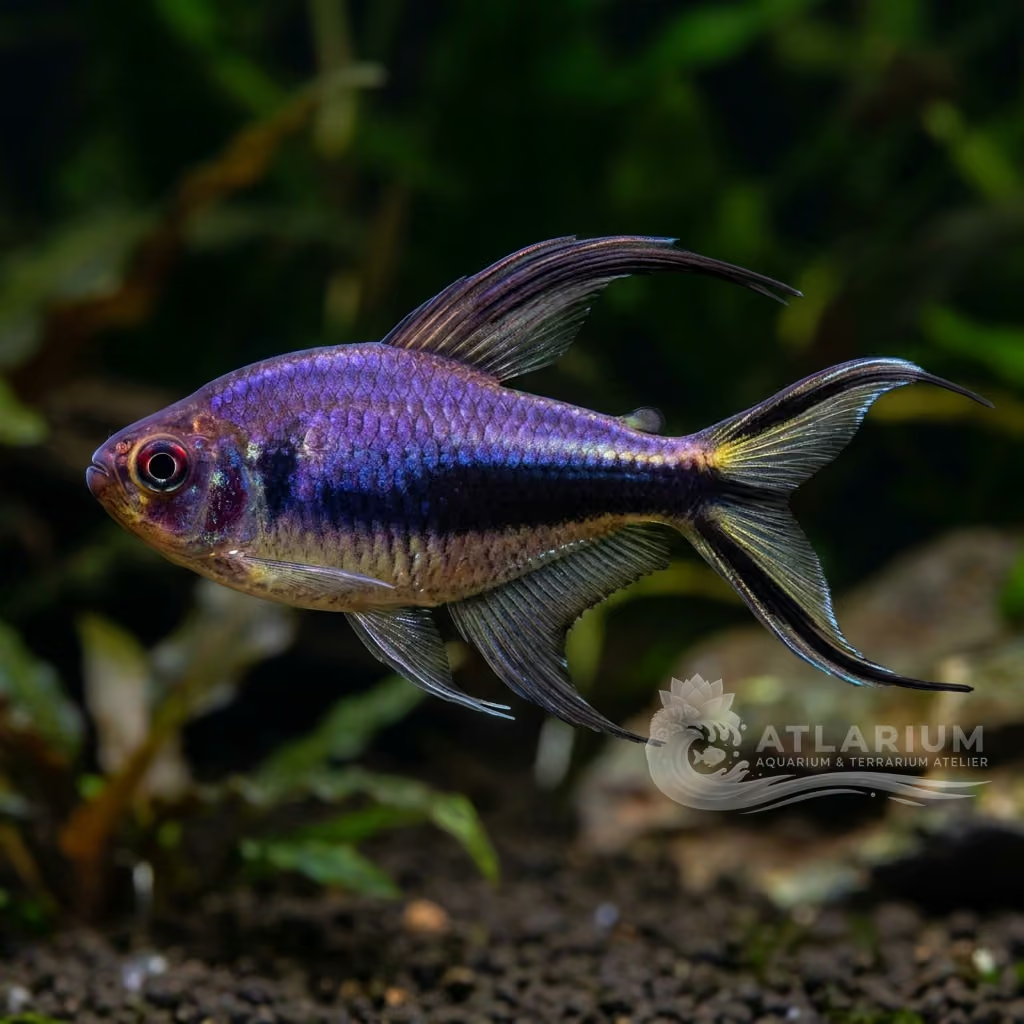
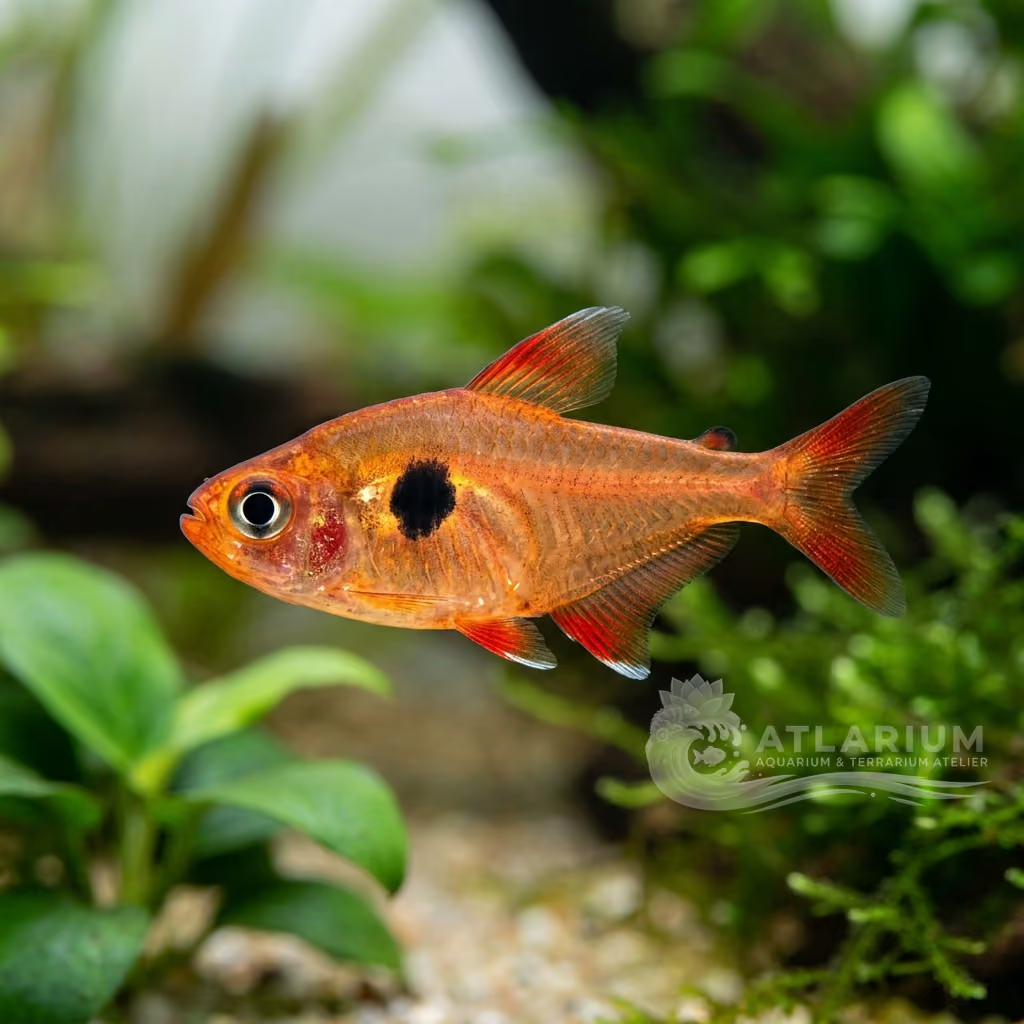
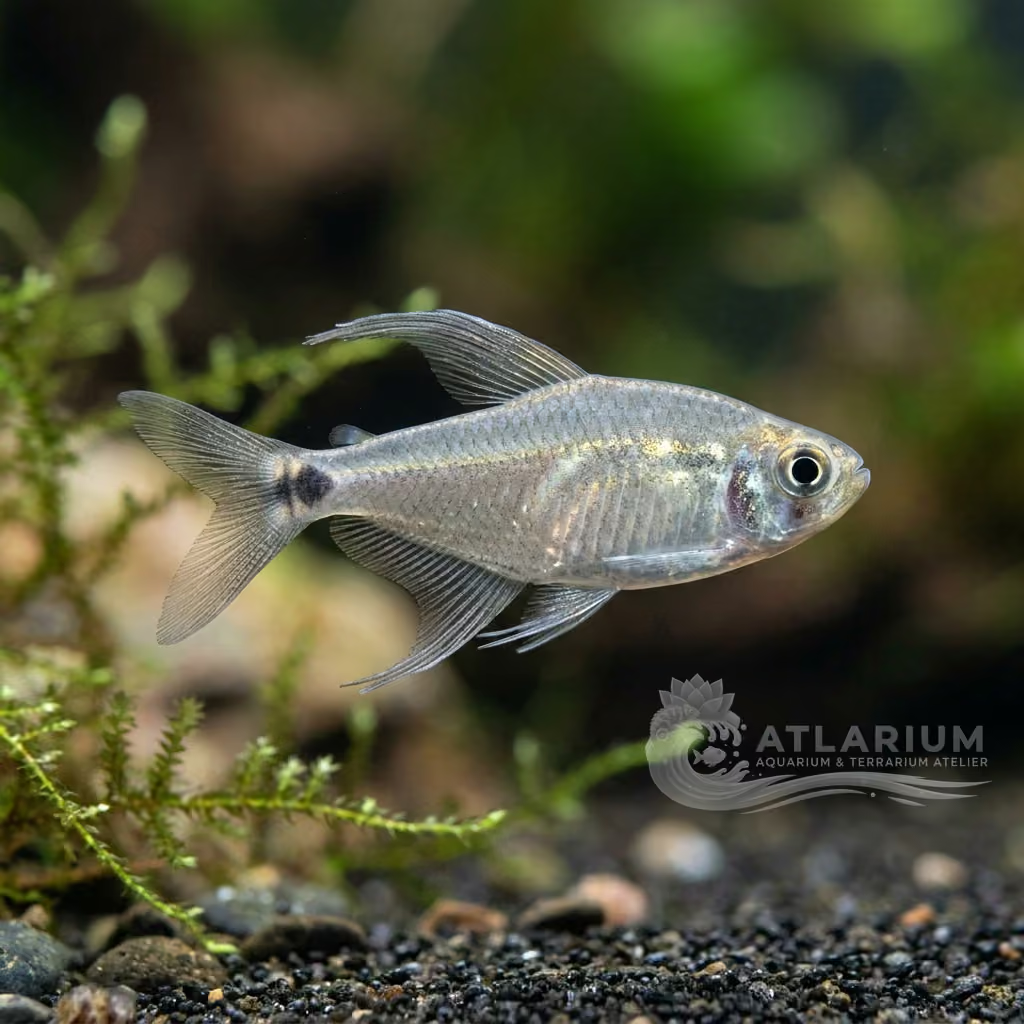
A robust, long-lived tetra with the characteristic black anal fin shaped like a skirt that fades toward the tail — hence the common name. The tall, compressed body with black-silver gradient makes it instantly recognizable. One of the most beginner-friendly tetras: tolerant, active and with a 3–5 year life expectancy. In schools of 6+ the fin-nipping tendency decreases drastically. Available in selected variants (long-fin) and unfortunately also in artificially dyed variants — the latter to be avoided for ethical and health reasons. Breeding moderately easy with a dedicated tank.
22 - 26 °C
6 - 7.5
Água doce
Meio
6 cm
>= 60 L
>= 6
3 - 15 dGH
1 - 7 dKH
55 - 295 ppm
86 - 461 uS/cm

Descrição da espécie

Cuidado, criação e companheiros de tanque

Origem e distribuição geográfica
Origem

Perfil de peixe
- Temperamento
- Semi-aggressive
- They are considered a schooling fish with a somewhat boisterous and lively temperament. While generally peaceful towards other species, they establish a pecking order within their own school through harmless chasing and displaying. If kept in too small of a group, they can become nervous or turn their nippy behavior towards other tank mates. When housed properly in a group of at least six to eight, they are active, entertaining, and relatively peaceful additions to a community setup.
- Dieta
- Omnivore
- In their natural habitat, they are omnivores, feeding on a variety of small invertebrates, crustaceans, and plant matter. In captivity, they are unfussy eaters and will readily accept a staple diet of high-quality flake or pellet food. To ensure optimal health and vibrant coloration, their diet should be supplemented with live or frozen foods such as bloodworms, daphnia, and brine shrimp. They also benefit from occasional vegetable matter, which can be provided through specialized herbivore flakes or blanched vegetables.
- Expectativa de vida
- 3-5 years
- Tamanho adulto
- 6 cm
- Proporção sexual
- School
- While they do not have a strict sex ratio requirement for general keeping, it is often best to keep a mix of males and females in a school. Males are typically slightly smaller and more slender than the plumper, deeper-bodied females. Keeping a slightly higher number of females to males can help diffuse any potential breeding-related chasing or harassment. However, in a sufficiently large school of six or more, a random mix usually works perfectly fine.
- Frequência de alimentação
- Twice daily
- Adult Black Skirt Tetras should typically be fed once or twice a day with small portions. It is crucial to only provide an amount of food they can completely consume within two to three minutes to prevent overfeeding. If you notice uneaten food settling on the substrate, you are likely feeding them too much. Fasting them for one day a week can also help clear their digestive tract and maintain water quality.
- Carga biológica
- Low to Medium
- Gymnocorymbus ternetzi produces a relatively moderate bioload for a tetra, especially considering their slightly larger and deeper body shape compared to neon tetras. While they are not overly messy, maintaining a group can collectively add significant waste to the aquarium. Therefore, adequate filtration and regular water changes are necessary to keep nitrate levels in check. A well-established nitrogen cycle is essential to handle their output effectively.
- Fluxo
- Stagnant
- Coming from the slow-moving rivers, streams, and tributaries of South America, they prefer a gentle to moderate water flow. While they can swim quite actively, strong currents can exhaust them and cause unnecessary stress over time. Providing areas of still water, perhaps buffered by driftwood or dense planting, allows them to rest comfortably. Sponge filters or canister filters with a spray bar attachment are excellent choices to distribute the flow evenly.
- Risco de salto
- Yes
- Black Skirt Tetras are moderately active swimmers and have the potential to jump out of the aquarium, especially when startled. Sudden changes in lighting, aggressive tank mates, or poor water conditions can trigger their flight response. It is strongly advised to maintain a secure and well-fitting lid or cover glass on the aquarium at all times. Floating plants can also help make them feel more secure and deter them from attempting to jump.
- Reprodução
- Oviparous
- They are egg-scatterers that provide no parental care and will readily consume their own eggs if given the chance. To successfully breed them, a separate breeding tank with very soft, slightly acidic water and dim lighting is required. The breeding tank should be equipped with fine-leaved plants or a spawning mop to catch the adhesive eggs. Once spawning has occurred, the adult fish must be immediately removed to protect the eggs, which typically hatch within 24 to 36 hours.
- Compatibilidade e companheiros de tanque
- With caution
- This species is generally peaceful but can exhibit mild fin-nipping behavior, particularly if not kept in a large enough school. They are best kept with other robust, fast-moving fish of similar size, such as larger rasboras, barbs, and bottom-dwelling catfish. It is highly recommended to avoid keeping them with slow-moving or long-finned tank mates like bettas or angelfish, as these will likely be targeted. A large school of at least six individuals helps distribute any intra-species aggression and minimizes their interest in other species.
- Nível do tanque
- Middle
- Black Skirt Tetras are primarily mid-water to top-water swimmers that utilize the open swimming spaces of the aquarium. They are very active and will frequently dart around the middle sections while looking for food or interacting with each other. Providing tall plants around the perimeter of the tank allows them plenty of unobstructed horizontal swimming room in the center. They will occasionally venture to the bottom to scavenge for dropped food, but spend the vast majority of their time higher up.

Modelos e parâmetros científicos
Acesso aos dados científicos oficiais da espécie
- Nível trófico
- 3,1 ± 0,32 se
- Resiliência
- Alta (menos de 15 meses)
- Unicidade filogenética (PD50)
- 0.5625
- Relação bayesiana comprimento-peso
- a = 0.01995, b = 2.97
- VulnerabilidadeVulnerabilidade baixa (10 / 100)

Espécies relacionadas
Recomendações agrupadas por parentes próximos, escolhas de acompanhantes e cuidados semelhantes.