Tiger Centipede
Scolopendra polymorpha
A hardy and active North American centipede known for its striking banded pattern. Possesses a painful venomous bite and requires highly secure, escape-proof housing.
Environnement
Terrestre
Humidité
40 - 60 %
Température ambiante
24 - 28 °C
Température diurne
27 °C
Température nocturne
20 - 22 °C
Profondeur du substrat
>= 8 cm

Description de l'espèce
Geographical Origin and Habitat: Widely distributed throughout the arid and semi-arid regions of North America, particularly in the southwestern United States (California, Arizona, Texas, New Mexico) and northern Mexico. It inhabits desert grasslands, rocky hillsides, canyons, and dry open woodlands, spending daylight hours hidden under stones, decaying logs, and subterranean burrows.
Taxonomy and Genetics: Belongs to the class Chilopoda, order Scolopendromorpha, family Scolopendridae, and genus Scolopendra. Described by Wood in 1861. The specific name polymorpha refers to the wide variety of color phases and morphological variations across different geographical populations, ranging from pale straw to bright orange.
Behavior and Habits: Strictly nocturnal, solitary, and highly predatory. During the day, it seeks dark, moist retreats to conserve body water. At night, it becomes an active hunter, utilizing its speed and powerful toxicognaths (poison claws) to seize insects, spiders, and occasionally small vertebrates.
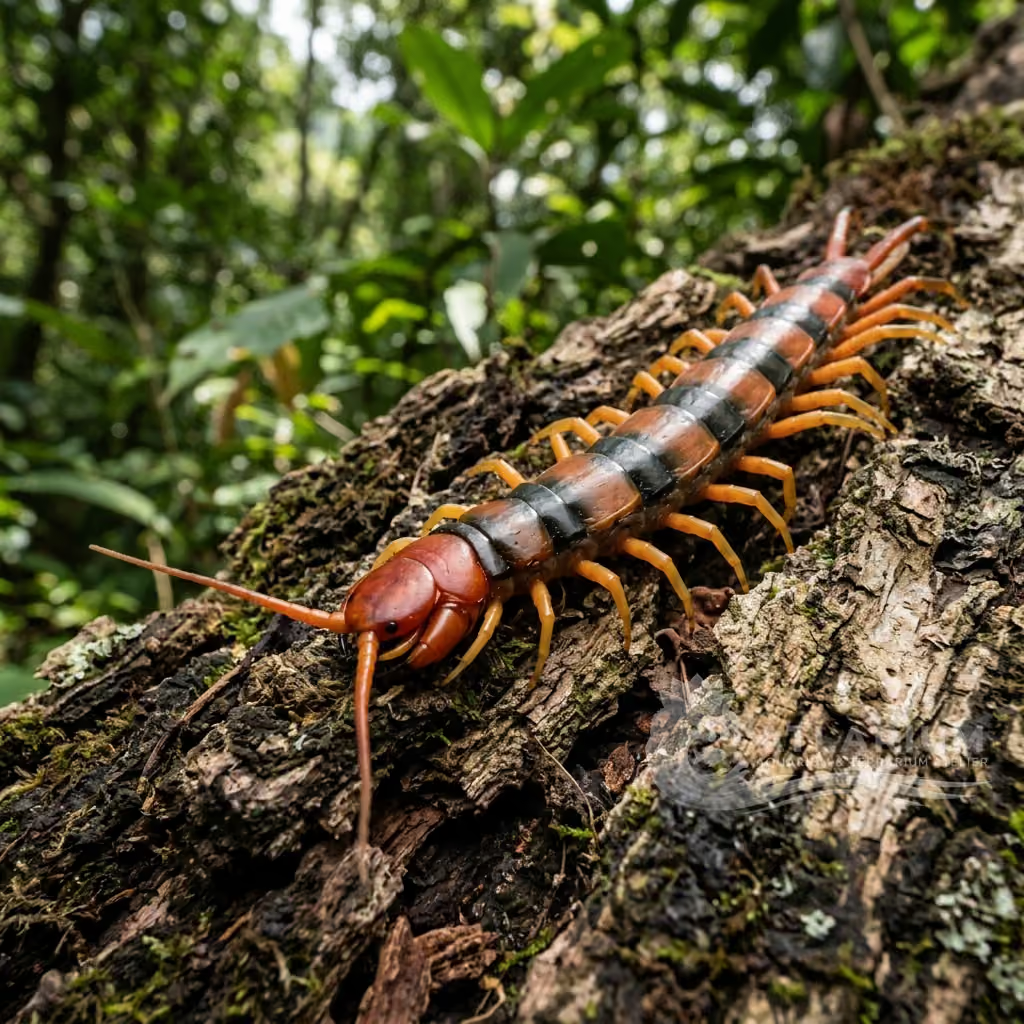
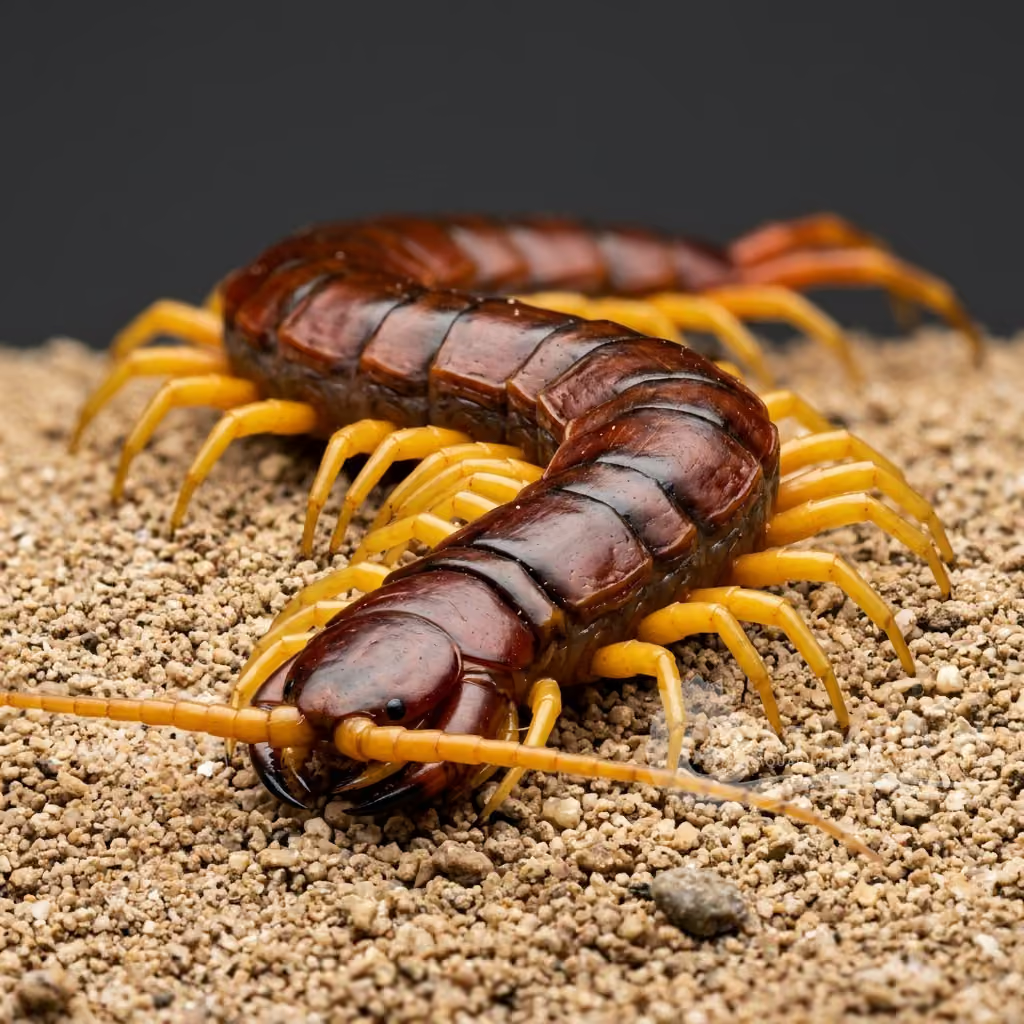
Morphology: Typically reaches an adult length of 10-15 cm (4 to 6 inches). The segmented body is flattened dorsoventrally, featuring a hard exoskeleton. Coloration varies but usually consists of a light brown, tan, or orange body with distinct dark blue or black transverse bands on the posterior margin of each segment. The legs and antennae are yellow or light blue.

Soins, reproduction et cohabitation
Terrarium Setup: An enclosure with a minimum footprint of 30x20x20 cm (12x8x8 inches) is suitable. Secure housing is paramount: centipedes are highly flexible and strong, capable of escaping through loose lids or small vents. Use a terrarium with a lockable lid and fine ventilation mesh. Provide cork bark flats and leaf litter.
Lighting and Heating: No special lighting is required as they are nocturnal and photophobic. Maintain a daytime temperature gradient of 24-28°C (75-82°F) using a side-mounted heat mat. Avoid under-tank heaters as centipedes burrow to cool down. Nighttime temperatures can drop to 20-22°C (68-72°F).
Humidity and Hydration: Being a semi-arid species, it is more tolerant of lower humidity than tropical centipedes, but still requires a moisture gradient. Use a 5-8 cm (2-3 inches) deep substrate of peat moss mixed with play sand, keeping one corner damp while the rest remains dry. Provide a shallow water dish.
Feeding and Supplementation: Voracious predator. Feed once or twice weekly with live crickets, roaches, and mealworms. Feeder insects should be pre-fed (gut-loaded) with nutritious foods. Remove uneaten prey or insect remains within 24 hours to prevent mold and mite infestations.
Compatibility: Strictly solitary and cannibalistic. Never house multiple centipedes together under any circumstances, as they will fight and consume each other. Keep the enclosure in a quiet area, as constant external vibrations can stress the animal.
Health and Common Diseases: Warning: possesses a medically significant, painful venomous bite. Never handle directly; always use long, rubber-tipped feeding forceps. Common issues include dehydration (manifested by lethargy and curled legs) and mycosis (fungal infections) caused by stagnant, wet substrate. Molting is a critical phase where the animal must not be disturbed.

Origine et répartition géographiques
Widely distributed throughout the arid and semi-arid regions of North America, particularly in the southwestern United States (California, Arizona, Texas, New Mexico) and northern Mexico. It inhabits desert grasslands, rocky hillsides, canyons, and dry open woodlands, spending daylight hours hidden under stones, decaying logs, and subterranean burrows.
Origine
Sélection et cultivarsAmérique centrale et CaraïbesAmérique du Nord

Profil d'invertébré terrestre
- Régime alimentaire
- Carnivore
- Carnivorous. Feeds on various insects, arachnids, and small vertebrates. In captivity, thrives on crickets, roaches, and mealworms.
- Taille adulte
- 15 cm
- Mode de vie/microhabitat
- Terrestrial
- This species is primarily terrestrial and semi-fossorial. It relies heavily on a deep, structured substrate to construct burrows, which help it regulate its body temperature and hydration levels in its native habitat.
- Cycle d'activité
- Nocturnal
- The Tiger Centipede is a highly active nocturnal predator. During the daylight hours, it remains concealed beneath rocks, logs, or deep within burrows to conserve moisture. Once darkness falls, it emerges to actively patrol the substrate for invertebrate and small vertebrate prey.
- Sociabilité
- Solitary
- Solitary and highly aggressive. They are fast-moving, terrestrial hunters that prefer burrowing or hiding under debris during the day and hunting at night.
- Reproduction
- Oviparous
- Females lay eggs in a burrow and actively guard them until they hatch. They wrap their bodies around the clutch to protect against predators and fungal infections.
- Venimeux
- Yes
- Tolérance aux manipulations
- Display only
- As a highly venomous and unpredictable centipede, it is strictly a display animal. Handling is strongly discouraged due to its aggressive feeding response, fast movements, and capability of delivering a medically significant, agonizing bite. Always use long tongs for enclosure maintenance.
- Brumation
- Non requise
- Requires a winter cooling period to simulate natural seasonal changes and maintain long-term health.
- Mue
- Regular
- Molting occurs periodically as the centipede grows, requiring elevated humidity to prevent fatal molting complications. It will retreat to a secure, moist burrow and refuse food for several days before shedding, typically consuming the exuviae afterward.

Espèces associées
Recommandations regroupées par proches parents, compagnons et soins similaires.