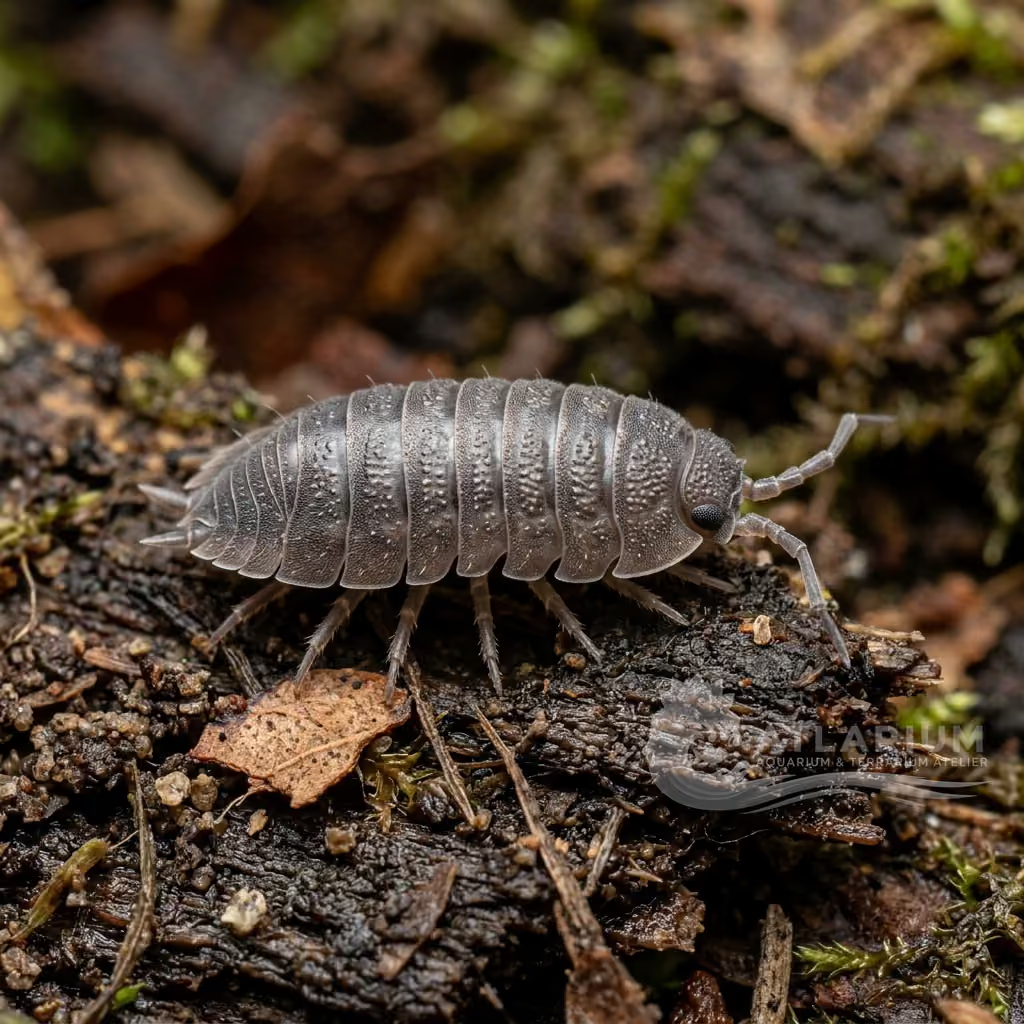
Snow Isopod
Porcellio scaber
A beautiful albino or pure white morph of the common European woodlouse. Highly active and prolific, it serves as an excellent biological clean-up crew for damp terrariums or as a collectible pet.
Umgebung
Terrestrisch
Luftfeuchtigkeit
50 - 70 %
Tagestemperatur
20 - 25 °C
Nachttemperatur
18 - 22 °C

Artbeschreibung
Geographical Origin and Habitat: This phenotypic variant is derived from the common European woodlouse, Porcellio scaber, which is native to Europe but widely naturalized globally. The "Snow" morph was developed in captivity by isolating albino individuals or those almost completely lacking pigmentation. It thrives in damp microclimates beneath rocks, logs, and decaying leaf litter.
Taxonomy and Genetics: Belonging to the family Porcellionidae. The "Snow" phenotype is the result of an autosomal recessive mutation that disrupts melanin synthesis (T+ or T- albinism), producing a fully white or pale translucent exoskeleton. Genetic line stability requires careful selection and breeding.
Behavior and Habits: They are nocturnal terrestrial detritivores with highly gregarious behaviors. They actively avoid light and cluster in warm, humid areas. Their primary function is consuming decomposing organic matter, which significantly aids in nutrient cycling and soil aeration.
Morphology: The body displays the classic oval, segmented shape of Porcellio scaber, with a rough, tuberculated cuticle. Coloration is solid white or light ivory. Eyes may appear red or dark depending on the specific type of albinism. Adults reach 1.5 - 2 cm in length. Males possess slightly longer uropods.

Pflege, Zucht und Mitbewohner
Terrarium Setup: A plastic container or faunabox measuring 30x20x20 cm is optimal for starting a colony. The substrate must consist of a damp mixture of coco coir, peat moss, crushed leaves, and decaying wood. It is essential to place cork bark flats on the surface for shelter and foraging.
Lighting and Heating: They do not require direct light, preferring complete darkness. The optimal temperature range for growth and breeding is between 18°C and 24°C (64-75°F). Avoid high temperatures exceeding 26°C (79°F), which drop breeding rates and increase mortality.
Humidity and Hydration: A moisture gradient is necessary. Keep one corner of the enclosure damp by spraying clean water onto a handful of sphagnum moss, while leaving the rest of the substrate dry. High humidity allows their abdominal pleopodal gills to function.
Feeding and Supplementation: Primarily feed on leaf litter and decaying wood. Supplement their diet with fresh vegetables (carrots, sweet potatoes), protein-rich fish or shrimp pellets, and a constant calcium source (cuttlebone) to prevent molting issues.
Compatibility: Ideal clean-up crew for humid bioactive terrariums. They can coexist peacefully with small to medium reptiles and amphibians. While they can live with other isopods, resource competition may cause one species to dominate over time.
Health and Common Diseases: The primary threat is desiccation caused by dry conditions. Conversely, stagnant air and oversaturated substrates promote toxic mold and bacterial growth. Remove uneaten fresh food promptly to prevent mites and fungus gnats.

Geografische Herkunft und Verbreitung
This phenotypic variant is derived from the common European woodlouse, Porcellio scaber, which is native to Europe but widely naturalized globally. The "Snow" morph was developed in captivity by isolating albino individuals or those almost completely lacking pigmentation. It thrives in damp microclimates beneath rocks, logs, and decaying leaf litter.
Ursprung
Selektive Züchtung und SortenEuropa, Mittelmeerraum und WestasienKosmopolitisch oder eingeführt

Profil der terrestrischen Wirbellosen
- Diät
- Detritivore
- They are aggressive, highly voracious detritivores that require a diverse diet. A staple base of decaying hardwood leaves and rotting white wood must be supplemented with a permanent bulk calcium source and frequent, large offerings of protein like dried shrimp to prevent cannibalism within the colony.
- Erwachsenengröße
- 1.7 cm
- Lebensstil/Mikrohabitat
- Terrestrial
- They possess a completely terrestrial, strongly surface-active lifestyle. They prefer exploring leaf litter and climbing over overlapping bark structures rather than burrowing deep into the substrate. They require a distinct moisture gradient and good ventilation to prevent overly stagnant, damp air.
- Aktivitätszyklus
- Crepuscular
- These strikingly pure white isopods are extremely active and bold, frequently visible wandering the terrarium surface both day and night. Because they lack any dark pigmentation, they stand out vividly against dark soil and cork bark, making them a highly engaging display species.
- Sozialität
- Gregarious
- They are intensely social, communal invertebrates that perform exceptionally well in large, densely populated colonies. They live peacefully alongside adult conspecifics, and high population density often triggers aggressive, highly entertaining communal feeding responses whenever fresh, high-value food is introduced.
- Reproduktion
- Marsupial
- They are famous for being incredibly prolific breeders, making them perfect for a rapidly expanding colony. Females incubate large broods of developing mancae in their specialized ventral pouch. Under optimal conditions of warmth and abundant food, they will quickly multiply and overrun a small enclosure.
- Giftig
- No
- Handhabungstoleranz
- Display only
- They are quite robust and can be handled gently without perishing. However, they are incredibly fast and prone to frantic scurrying when startled. Handling must be done cautiously, low to the ground, to prevent them from sprinting off a hand and suffering a fatal fall.
- Brumation
- Nicht erforderlich
- This hardy morph requires no brumation period. They will remain highly active, continuing to forage and breed rapidly year-round when maintained at comfortable, stable room temperatures. Prolonged exposure to severe cold will drastically slow their metabolism and completely halt reproduction.
- Häutung
- Periodic
- Like all isopods, they molt in two distinct halves, shedding the posterior exoskeleton first. Ensuring continuous access to a localized damp hydration station is absolutely critical for a clean molt, as dry conditions can cause the old shell to stick fatally. They will eagerly consume their shed.

Verwandte Arten
Empfehlungen gruppiert nach nahen Verwandten, Auswahl von Begleitern und ähnlicher Betreuung.