Bicolor Anthias
Nemanthias bicolor
A striking, slender anthias from deep reef drop-offs. It requires a 300L tank with turbulent flow and demands multiple daily feedings of high-quality zooplankton.
Wassertemperatur
22 - 26 °C
pH-Wert
8.1 - 8.4
Wassertyp
Meerwasser
Tankfüllstand
Mitte
Erwachsenengröße
13 cm
Mindesttankvolumen
>= 300 L
Mindestgruppe
>= 4

Artbeschreibung
Geographical Origin and Habitat: Tropical Indo-Pacific, from East Africa and Mauritius to the Hawaiian and Line Islands. It inhabits outer reef slopes and drop-offs exposed to strong currents, at depths ranging from 15 to 70 meters.
Taxonomy and Morphology: Belongs to the Serranidae family, subfamily Anthiadinae. It reaches approximately 13 cm (5 inches) in length. Features a slender, compressed body with elongated fins; males develop long filaments on the dorsal fin rays.
Social Behavior: Schooling species that lives in large harems composed of a single dominant male and multiple females. In the aquarium, they must be kept in groups (at least 4-6 individuals) to maintain natural social structure and minimize stress.
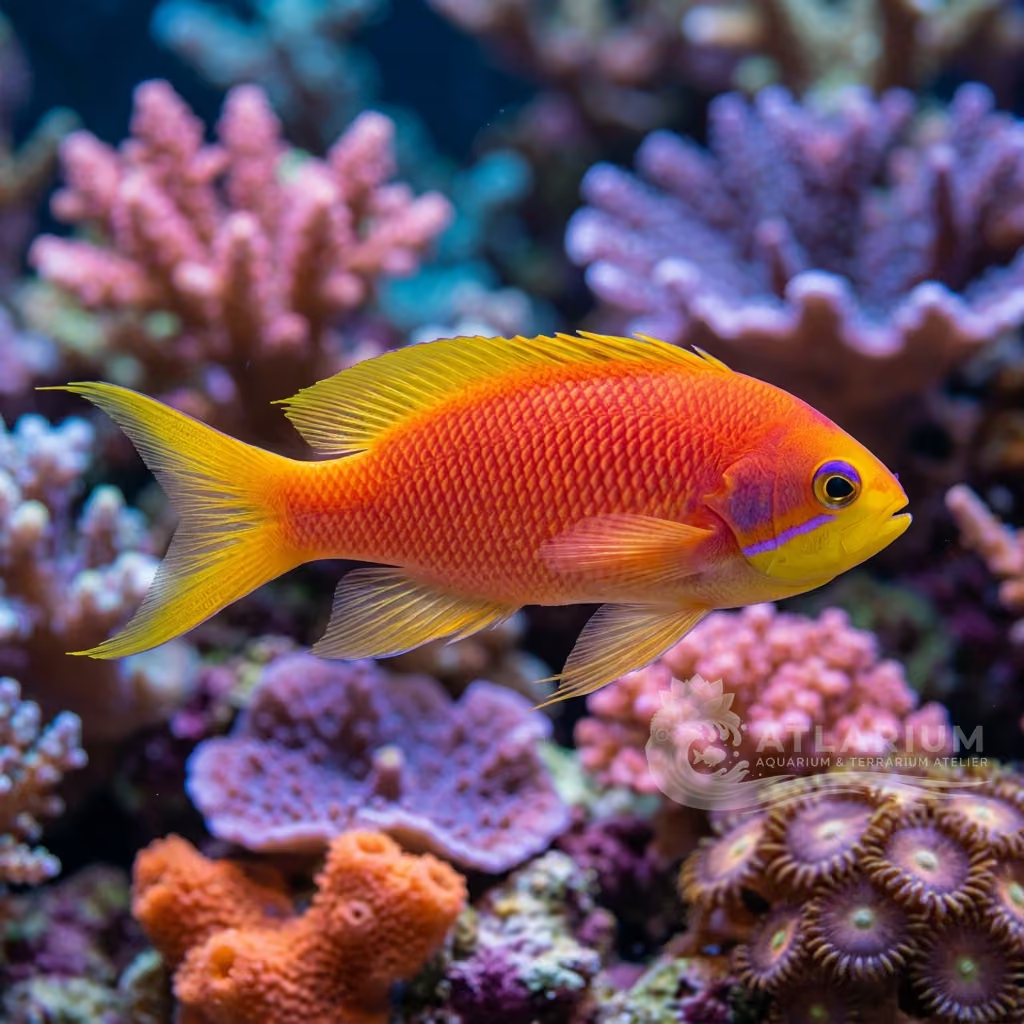
Coloration and Sexual Dimorphism: Spectacular bicolor pattern: the upper body and dorsal fin are bright yellow-orange, while the lower body and flanks are pinkish-purple. Males have longer dorsal filaments and more intense coloration.

Pflege, Zucht und Mitbewohner
Aquarium Setup: Requires a tank of at least 300 liters (80 gallons) with plenty of open swimming space and a mature live rock reef structure featuring caves and overhangs. Strong, turbulent water movement is highly recommended.
Diet and Feeding: Demanding planktivore. Must be fed small amounts multiple times daily (at least 2-3 times) of high-quality frozen foods like mysis, copepods, and enriched brine shrimp. Can eventually be trained to eat fine dry pellets.
Water Quality: Demands pristine, highly oxygenated water with low organic waste levels. Temperature 23-26°C (73-79°F), pH 8.1-8.4, salinity 1.022-1.025. A heavy duty protein skimmer and regular water changes are required.
Compatibility and Cohabitation: Excellent candidate for reef tanks with peaceful community fish. Avoid keeping with large, hyperactive, or aggressive tankmates that may intimidate the anthias and force them into hiding.
Aquarium Breeding: Protogynous hermaphrodite. Captive breeding is extremely difficult due to the tiny size of their pelagic larvae, which require specialized culture tanks and microscopic live foods like rotifers and copepods.
Risks and Diseases: Highly susceptible to shipping stress and starvation during acclimation. Prone to marine ich (Cryptocaryon) and skin infections if introduced into immature tanks. A quiet quarantine period is vital.

Geografische Herkunft und Verbreitung
Tropical Indo-Pacific, from East Africa and Mauritius to the Hawaiian and Line Islands. It inhabits outer reef slopes and drop-offs exposed to strong currents, at depths ranging from 15 to 70 meters.
Ursprung
Tropische Ozeane und RiffeAfrika und MadagaskarAustralien, Neuguinea und Ozeanien

Fischprofil
- Temperament
- Peaceful
- They are peaceful and somewhat skittish, preferring the safety of a group. The male maintains a strict but non-lethal hierarchy among the females through energetic displays. They are a highly engaging and colorful focal point for a tranquil reef tank.
- Diät
- Carnivore
- They primarily feed on zooplankton in the water column in their natural habitat. Provide a varied diet of frozen mysis, enriched brine shrimp, copepods, and fine flake foods. Enhancing their food with fatty acids and vitamins preserves their striking coloration.
- Lebenserwartung
- 5-6 years
- Erwachsenengröße
- 13 cm
- Geschlechterverhältnis
- Harem
- They are hermaphroditic and should be kept in a harem of one male to multiple females. Starting with a group of juveniles allows the dominant fish to naturally morph into a male. Two males in the same tank will fight relentlessly until one perishes.
- Fütterungsfrequenz
- Twice daily
- They have very high caloric demands and require small feedings three to four times a day. Using a refugium to supply live copepods continuously is highly beneficial. Without frequent meals, they will quickly deteriorate and waste away.
- Bioload
- Medium
- The Bicolor Anthias adds a moderate bioload due to the constant feeding required to keep them healthy. Powerful filtration and rigorous skimming are necessary to export the heavy nutrient input. Regular water changes are critical for maintaining the pristine environment they demand.
- Fluss
- Strong
- They require strong, highly oxygenated water flow to thrive. Dynamic currents keep them swimming vigorously and simulate their natural reef drop-off habitats. Good flow also ensures food remains suspended in the water column where they can catch it.
- Sprungrisiko
- Yes
- They have a high propensity for jumping when startled or bullied by tank mates. A tightly fitted mesh screen is an absolute necessity for their aquarium. Exercise caution and make slow movements when performing tank maintenance.
- Reproduktion
- Hermaphrodite
- They are pelagic broadcast spawners, mating high in the water column during twilight hours. Courtship displays by the male are a spectacular sight in a large aquarium. Unfortunately, raising the microscopic fry in captivity remains largely undocumented and extremely difficult.
- Kompatibilität & Tankkameraden
- Peaceful
- They are a peaceful and somewhat delicate species that does well in reef community tanks. They must be housed with peaceful tank mates to prevent them from becoming shy and refusing food. Avoid keeping them with aggressive dottybacks, large damsels, or predatory fish.
- Tankfüllstand
- Middle
- They are open-water swimmers that occupy the upper and middle levels of the aquarium. They require expansive swimming space combined with rocky overhangs for security. At night, they retreat deep into the live rock crevices to sleep safely.

Wissenschaftliche Modelle & Parameter
FishBase
Zugang zu den offiziellen wissenschaftlichen Daten der Art
FishBase v25.04Daten synchronisiert am: 15.06.2026
- Trophäenniveau
- 3,4 ± 0,45 se
- Belastbarkeit
- Hoch (weniger als 15 Monate)
- Phylogenetische Einzigartigkeit (PD50)
- 0.5312
- Bayessche Längen-Gewichts-Beziehung
- a = 0.01413, b = 3
- AnfälligkeitGeringe Anfälligkeit (10 / 100)

Verwandte Arten
Empfehlungen gruppiert nach nahen Verwandten, Auswahl von Begleitern und ähnlicher Betreuung.