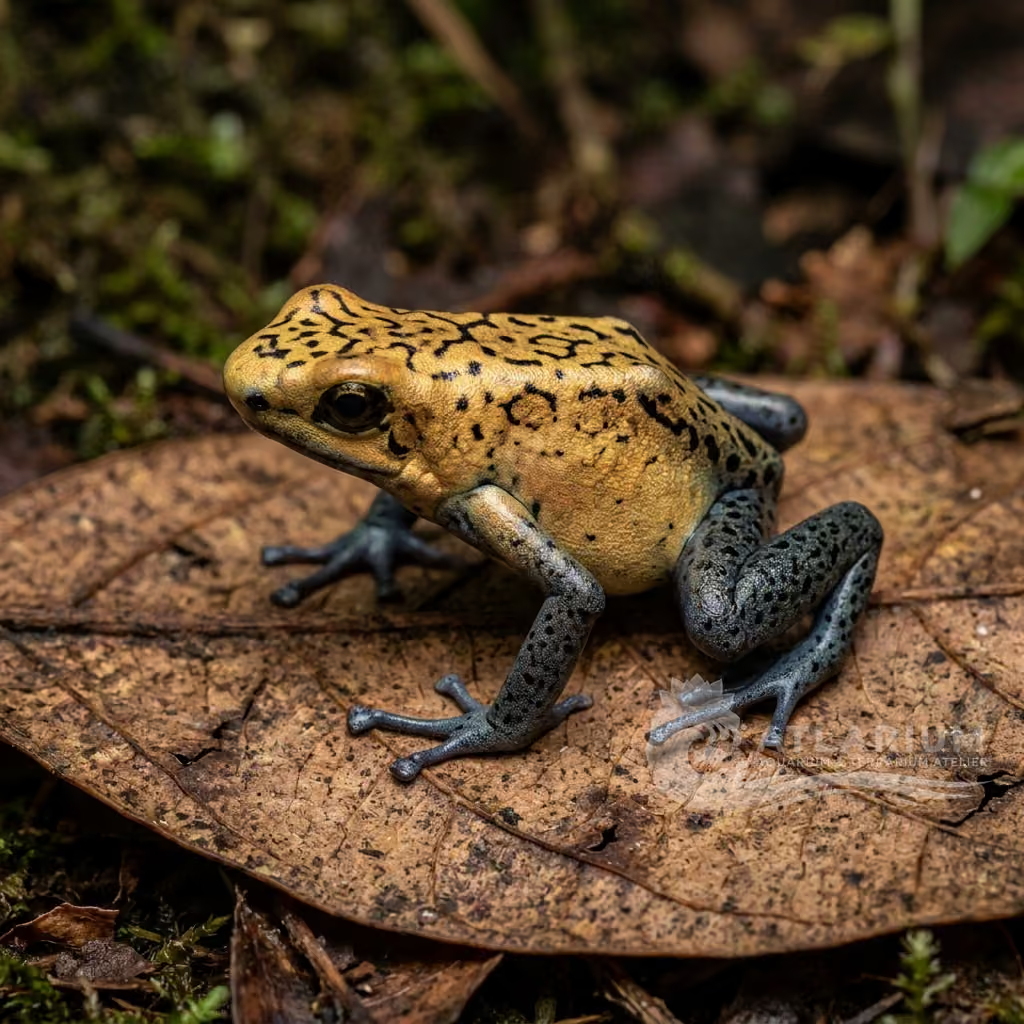
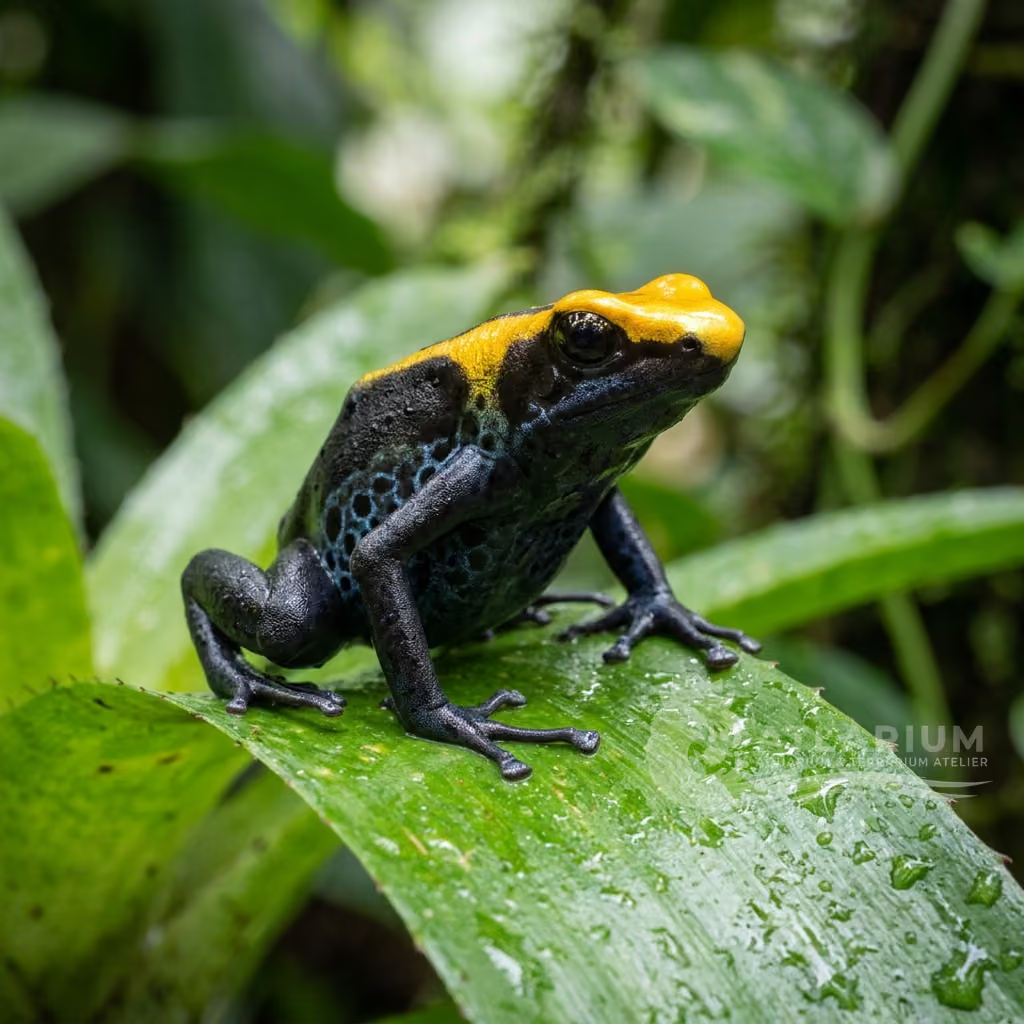
Solomon Island Leaf Frog
Cornufer guentheri
The master of mimicry of the Pacific. It has an angular, triangular head, a leaf-like body, and is famous for its unusual direct development (hatching as a fully formed frog).
Umgebung
Terrestrisch
Luftfeuchtigkeit
70 - 100 %
Tagestemperatur
20 - 25 °C
Nachttemperatur
18 - 21 °C

Artbeschreibung
Geographical Origin and Habitat: Cryptic, leaf-mimicking species endemic to the dense tropical rainforests of the Solomon Islands and Papua New Guinea. It inhabits the deep leaf litter of the shady forest floor, blending in perfectly.
Taxonomy and Genetics: Family Ceratobatrachidae. Commonly known as the Solomon Island Leaf Frog. An extraordinary example of evolutionary mimicry, featuring triangular dermal flaps (like horns) above the eyes, nose, and heels.
Behavior and Habits: Strictly terrestrial and nocturnal. During the day, they remain completely motionless among dry leaves, relying on their camouflage. At night, they are ambush predators. Notably, they exhibit direct development: eggs are laid in moist soil, hatching directly into tiny froglets without a tadpole stage.
Morphology: Triangular, flattened head with a pointed snout and horn-like skin flaps on the eyelids. Coloration is highly variable, ranging from dead-leaf brown, ochre, rust-red, to green or yellow. Females are much larger, reaching 6-9 cm, while males are smaller.

Pflege, Zucht und Mitbewohner
Terrarium Setup: Requires a horizontal terrestrial terrarium (minimum 60x45x30 cm). Provide a thick, moist organic soil substrate covered in multiple layers of leaf litter (oak, beech, or Catappa). Include cork bark hides.
Lighting and Heating: Keep temperatures between 25-28°C during the day, dropping to 21-23°C at night. Avoid temperatures above 30°C. Provide 5% UVB lighting.
Humidity and Hydration: Maintain high humidity (75-85%) with daily misting using reverse osmosis water. Good ventilation is vital to prevent stagnant conditions and bacterial infections (Red Leg disease). Provide a shallow water bowl.
Feeding and Supplementation: Voracious ambush predator. Feeds on large crickets, roaches, and earthworms. Dust prey with calcium and vitamin D3 supplements three times a week.
Compatibility: Highly cannibalistic. Do not house specimens of different sizes together. Best kept individually or in same-sized pairs.
Health and Common Diseases: Highly sensitive to ammonia toxicity from accumulated waste. Replace the substrate regularly. Avoid handling as human skin oils are toxic. Maintain clean, humid leaf litter.

Geografische Herkunft und Verbreitung
Cryptic, leaf-mimicking species endemic to the dense tropical rainforests of the Solomon Islands and Papua New Guinea. It inhabits the deep leaf litter of the shady forest floor, blending in perfectly.
Ursprung
Afrika und MadagaskarAustralien, Neuguinea und Ozeanien

Amphibienprofil
- Diät
- Insectivore
- The Solomon Island Leaf Frog is a voracious ambush predator with a diet primarily consisting of insects and other small arthropods. They wait patiently among the leaf litter for crickets, spiders, and roaches to cross their path before striking. In captivity, they do well on a varied diet of appropriately sized feeder insects, always dusted with essential calcium and vitamins.
- Lebenserwartung
- 5-15 years
- Erwachsenengröße
- 10 cm
- Lebensstil/Mikrohabitat
- Terrestrial
- They are exclusively terrestrial forest dwellers that inhabit the humid, tropical environments of the Solomon Islands. Their entire life cycle is completed on the ground, requiring deep, damp leaf litter to thrive and reproduce. A captive enclosure must replicate this with a thick substrate layer and high humidity, avoiding the need for deep water pools.
- Aktivitätszyklus
- Nocturnal
- These frogs are strictly nocturnal, emerging from their daytime hiding spots only after dark to hunt for prey. During the day, they remain perfectly still in the leaf litter, essentially disappearing into the forest floor. In a terrarium, they require a distinct day/night cycle and will only become active once the lights are completely off.
- Sozialität
- Gregarious
- They are quintessential ambush predators, utilizing their leaf-like appearance to remain entirely motionless for long periods. Their angular heads and cryptic coloration make them nearly invisible against the backdrop of fallen leaves. If spotted, they prefer to freeze rather than flee, relying completely on their disguise to survive.
- Reproduktion
- Oviparous
- Reproduction is entirely terrestrial and does not require a water source, making them unique among many amphibians. Males call from concealed locations on the forest floor to attract females for amplexus. The female deposits a small clutch of large, yolk-rich eggs in a moist depression, which she may briefly guard.
- Toxizität
- Harmless
- They do not possess the toxic skin secretions found in many other amphibian species and are considered non-toxic. Their primary defense is their remarkable camouflage, completely avoiding detection rather than relying on chemical deterrents. While non-toxic, their skin remains sensitive, and standard hygiene practices must be followed when handling them.
- Lebensphase
- Direct development
- This species exhibits direct development, completely bypassing the aquatic tadpole stage typical of most frogs. The female lays fully terrestrial eggs in damp, hidden locations, such as inside rotting logs or under dense vegetation. Fully formed, miniature froglets hatch directly from the eggs, ready to begin their terrestrial lifestyle immediately.
- Handhabungstoleranz
- Display only
- Handling should be kept to a minimum as they are easily stressed and rely heavily on remaining undisturbed in their environment. If handling is necessary for enclosure maintenance, use moistened, powder-free gloves to protect their delicate skin. Because they do not flee readily, they are easy to scoop up, but doing so frequently disrupts their natural behavior.
- Brumation
- Nicht erforderlich
- Coming from a consistently warm, tropical climate, they do not undergo brumation or require a winter cooling period. They need stable, warm temperatures and high humidity year-round to remain healthy and active. Significant drops in temperature or humidity can be highly stressful and potentially fatal to this species.
- Häutung
- Periodic
- Like all frogs, they shed their skin periodically to facilitate growth and maintain proper skin hygiene. The shedding process involves stretching, yawning, and rubbing the body to loosen the old layer of skin. They consume the shed skin immediately, a practical behavior that reclaims valuable nutrients and energy.

Verwandte Arten
Empfehlungen gruppiert nach nahen Verwandten, Auswahl von Begleitern und ähnlicher Betreuung.