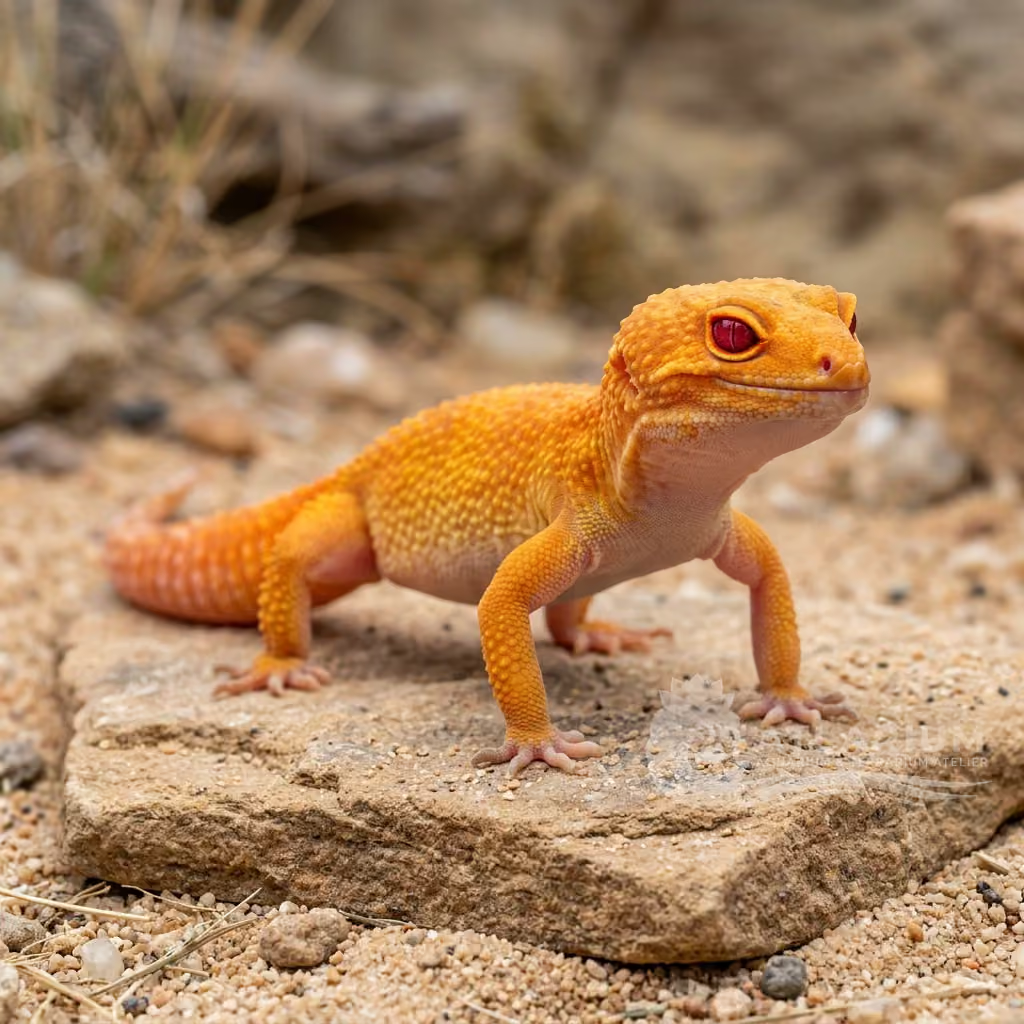
Central Bearded Dragon
Pogona vitticeps
The Central Bearded Dragon is the ultimate reptilian companion. Highly interactive and docile, this Australian desert lizard thrives in hot, dry setups with high UVB and a varied omnivorous diet.
Ambiente
Terrestre
Umidade
30 - 40 %
Temperatura diurna
28 - 35 °C
Temperatura noturna
20 - 24 °C
Tamanho adulto
60 cm
UVB
Ferguson 3-4
UVI
1 - 3,5 UVI

Descrição da espécie
Geographical Origin and Habitat: Endemic to the semi-arid and arid regions of central and eastern Australia. It inhabits rocky deserts, dry savannas, open woodlands, and scrublands. It displays semi-arboreal habits, frequently climbing onto low tree branches, fence posts, or exposed rocks to bask in the sun and scan its surroundings for prey.
Taxonomy and Genetics: Belongs to the family Agamidae, genus Pogona. Described by Ahl in 1926. In captivity, numerous color and morphological mutations (known as morphs) have been selectively bred, including Leatherback, Silkback, and Witblits. However, the wild type retains excellent genetic vigor. It is one of the most widely studied and bred reptiles in captivity.
Behavior and Habits: Diurnal and exceptionally docile. It exhibits distinct social behaviors, such as 'head bobbing' to establish dominance, and 'arm waving' as a sign of submission or appeasement. When threatened, it inflates its throat covered in spikes, which turns black (hence the name 'bearded'), and opens its mouth wide to deter predators.
Morphology: Features a robust, dorsoventrally flattened body with a large, triangular head bordered by specialized keratinized spikes. The sides of the body are lined with rows of softer spines. Adults reach a total length of 45-60 centimeters (18-24 inches), including the long tail. The wild coloration ranges from grey to brown, providing camouflage in the arid Australian outback.

Cuidado, criação e companheiros de tanque
Terrarium Setup: An adult requires a desert terrarium measuring at least 120x60x60 cm (48x24x24 inches). The ideal substrate for adults is a sand-clay mix or slate tiles; avoid loose sand for juveniles due to the risk of impaction. Provide sturdy climbing branches, stable rocks, and spacious shelters in both the warm and cool zones.
Lighting and Heating: Requires powerful heating and intense light. Create a daytime thermal gradient: a cool side at 24-26°C (75.2°F - 78.8°F), a warm zone at 30-32°C (86°F - 89.6°F), and a basking spot of 38-42°C (100.4°F - 107.6°F) under a protected spotlight. Turn off heating at night (20-22°C). A high-output T5 UVB bulb (10.0% or 12.0%) is mandatory for 12 hours daily.
Humidity and Hydration: Humidity must be kept low, around 30-40%. High humidity will cause respiratory infections. Provide a bowl of fresh water on the cool side, cleaned daily. Juveniles benefit from light misting on their snout twice a week to lick droplets, or shallow lukewarm baths outside the enclosure.
Feeding and Supplementation: An omnivore whose diet shifts with age. Juveniles require 80% live insects (crickets, roaches, worms) and 20% greens; adults require 80% greens (chicory, dandelion, endive, arugula) and 20% insects. Avoid iceberg lettuce. Dust insects with pure calcium at every feeding, and with calcium and Vitamin D3 two to three times a week.
Compatibility: Strictly solitary. Adult males must never be housed together as they will fight aggressively over territory. Housing females or pairs together can also cause silent dominance stress, resulting in starvation; solitary housing is highly recommended for their long-term health.
Health and Common Diseases: The most common illness is metabolic bone disease (MBD) caused by inadequate UVB or calcium, leading to tremors and deformed bones. Other common issues include intestinal impaction from swallowing loose sand, and internal parasites (coccidia). Conduct regular veterinary fecal examinations.

Origem e distribuição geográfica
Endemic to the semi-arid and arid regions of central and eastern Australia. It inhabits rocky deserts, dry savannas, open woodlands, and scrublands. It displays semi-arboreal habits, frequently climbing onto low tree branches, fence posts, or exposed rocks to bask in the sun and scan its surroundings for prey.
Origem
Melhoramento seletivo e cultivaresAustrália, Nova Guiné e Oceania

Perfil de réptil
- Dieta
- Omnivore
- The Central Bearded Dragon is a true omnivore, undergoing a significant dietary shift as it ages. Hatchlings and juveniles require a diet composed of approximately 80% insect prey (crickets, dubia roaches, black soldier fly larvae) and 20% vegetation to fuel their rapid growth. Conversely, mature adults flip this ratio, thriving on a primary diet of healthy leafy greens (mustard greens, collard greens, squash) while insect feedings are reduced to prevent obesity. All meals must be heavily supplemented with calcium powder to support proper bone health.
- Expectativa de vida
- 10-15 years
- Tamanho adulto
- 60 cm
- Estilo de vida/Microhabitat
- Terrestrial
- Famous for its 'beard' which it can puff out and darken when stressed or displaying. As a highly adapted terrestrial species, the Pogona Vitticeps utilizes its environment to the fullest. This lifestyle requires a terrarium setup that mimics such conditions, focusing on floor space and hiding spots. Proper enrichment should be provided to allow for natural behaviors.
- Ciclo de atividades
- Diurnal
- The Pogona Vitticeps is predominantly diurnal in its natural habitat. It typically exhibits its highest levels of activity during the day, emerging to forage for food and explore its surroundings while resting during the alternating periods to conserve energy and avoid predators.
- Socialidade
- Solitary
- Despite their calm and affectionate reputation with humans, Bearded Dragons are solitary and strictly territorial toward each other. Males will fiercely defend their basking sites, displaying dominance through intense head-bobbing and beard blackening. Housing multiple males together will inevitably lead to severe stress, mutilation, or death. While multiple females can sometimes coexist in exceptionally large enclosures, solitary housing is the gold standard for long-term physiological and psychological health.
- Reprodução
- Oviparous
- Bearded Dragons are prolific oviparous breeders. Following a brumation period and successful mating, a female will become noticeably plump as eggs develop. She will frantically dig a deep burrow in damp sand to deposit a clutch of 15 to 30 leathery eggs, doing this multiple times per season. The eggs require careful incubation in a vermiculite medium at around 84°F (29°C) and will typically hatch after 50 to 70 days into miniature, highly active dragons.
- Tolerância de tratamento
- Tolerant
- When it comes to interactions, the Pogona Vitticeps is generally considered docile. It tolerates occasional handling well, though sessions should be kept short to minimize stress.
- Brumação
- Obrigatório
- Regarding seasonal cycles, brumation is yes for the Pogona Vitticeps. It naturally undergoes a cooling period in winter, which can be simulated by gradually lowering temperatures and reducing light cycles for a few months.
- Muda
- Regular
- The Pogona Vitticeps requires low humidity conditions for a successful molt. It sheds easily in drier conditions, and excessive moisture should be avoided to prevent respiratory or skin infections.

Espécies relacionadas
Recomendações agrupadas por parentes próximos, escolhas de acompanhantes e cuidados semelhantes.