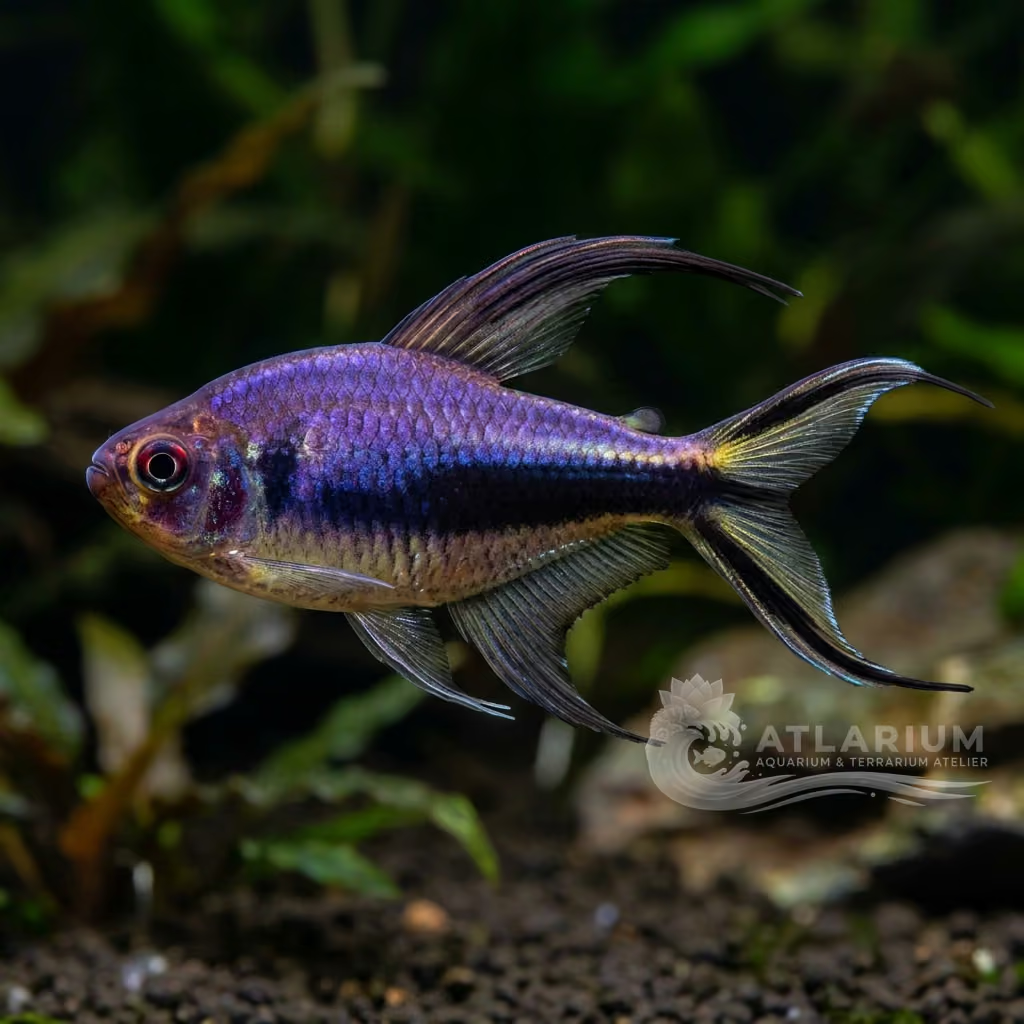
Red spot tetra
Hemigrammus stictus
A peaceful and active South American tetra, recognizable by the bright red spot on its tail base. Its energetic swimming makes it an excellent choice for a vibrant community tank.
Temperatura da água
23 - 27 °C
Valor de pH
5.5 - 7.2
Tipo de água
Água doce
Nível do tanque
Parte inferior e intermediária
Tamanho adulto
6 cm
Volume mínimo do tanque
>= 80 L
Grupo mínimo
>= 8
GH
2 - 10 dGH
KH
1 - 6 dKH
TDS
40 - 210 ppm
Condutividade
63 - 328 uS/cm

Descrição da espécie
Geographical Origin and Habitat:
This species is native to the Orinoco and Rio Negro basins in Venezuela, Colombia, and northern Brazil. It inhabits slow-flowing tributaries, flooded forests, and acidic blackwater lagoons.
Taxonomy and Morphology:
Belongs to the Characidae family. It features a slender and elongated body that reaches a maximum length of 4-5 cm. It has large black eyes and a small adipose fin near the caudal peduncle.
Social Behavior:
A lively and peaceful schooling fish. It must be kept in groups of at least 8-10 individuals to promote group stability and reduce stress. It coexists well with other tetras and dwarf cichlids.
Coloration and Sexual Dimorphism:
The body is translucent silver with golden reflections. It shows a conspicuous bright red spot at the base of the caudal fin. Mature females are rounder and larger than the slender males.

Cuidado, criação e companheiros de tanque
Aquarium Setup:
Requires a tank of at least 60-80 liters with dark sandy substrate, decorative roots, and dried leaves. Dense vegetation along the sides offers shelter while leaving central space.
Diet and Feeding:
An omnivorous micro-predator. It accepts high-quality dry flakes or micro-granules, but the diet should be regularly supplemented with live or frozen foods like brine shrimp and daphnia.
Water Quality:
Needs soft and acidic water conditions. Maintain temperature between 22 and 28 °C, pH between 5.5 and 7.0, and GH between 2 and 10 dGH. It is sensitive to nitrate accumulation.
Compatibility and Cohabitation:
Ideal for South American community tanks with peaceful tankmates like Corydoras, pencilfish, and Apistogramma dwarf cichlids. Avoid housing with large predatory fish.
Aquarium Breeding:
Breeding occurs in a separate tank with soft acidic water, dim lighting, and fine-leaved plants. Parents must be removed immediately after spawning to protect the eggs.
Risks and Diseases:
Susceptible to ich and bacterial infections under sudden temperature changes or stress. Efficient biological filtration and regular maintenance prevent these diseases.

Origem e distribuição geográfica
This species is native to the Orinoco and Rio Negro basins in Venezuela, Colombia, and northern Brazil. It inhabits slow-flowing tributaries, flooded forests, and acidic blackwater lagoons.
Origem
Amazônia, Orinoco e Guianas

Perfil de peixe
- Temperamento
- Aggressive
- They possess a docile and somewhat timid temperament, relying heavily on their school for confidence. A group of six is the absolute minimum, but larger schools of ten or more are strongly recommended. When kept properly, they are active, fascinating fish to observe.
- Dieta
- Omnivore
- In their natural habitat, they are micropredators feeding on tiny aquatic insects and zooplankton. In captivity, they easily transition to high-quality dry flakes and micro-pellets. Supplementing with small live or frozen foods, such as daphnia, will promote the best coloration and health.
- Expectativa de vida
- 5-8 years
- Tamanho adulto
- 6 cm
- Proporção sexual
- School
- Maintaining a balanced ratio of males to females is best for group harmony. While males may display and spar harmlessly, injuries are exceptionally rare. A sufficiently large group size ensures any minor squabbles are diluted among the school.
- Frequência de alimentação
- Twice daily
- They should be fed two small meals daily, offering only what they can consume in a few minutes. Frequent, small feedings mimic their continuous foraging habits in the wild. This practice also prevents excess food from spoiling the water quality.
- Carga biológica
- Low
- This small tetra creates a negligible bioload, making it suitable for heavily planted or smaller community setups. When kept in standard schooling numbers, their waste output places very little strain on the biological filter. Regular weekly maintenance is typically sufficient to keep parameters in check.
- Fluxo
- Stagnant
- They prefer slow-moving waters akin to their native South American streams and oxbow lakes. High-flow environments will cause them to struggle and eventually succumb to exhaustion. Sponge filters or baffled HOB filters provide the ideal gentle circulation.
- Risco de salto
- Yes
- There is a mild risk of jumping if the fish are startled by sudden lights or loud noises. A secure aquarium lid is highly recommended to prevent any accidental jumping. Including floating plants makes them feel secure, reducing the likelihood of startled leaps.
- Reprodução
- Oviparous
- Like other Hemigrammus species, they scatter their eggs among fine-leaved aquatic vegetation. They do not protect their young and will actively eat their own eggs if given the chance. A separate, dimly lit breeding tank with a mesh floor or dense moss is required to save the eggs.
- Compatibilidade e companheiros de tanque
- Peaceful
- A highly peaceful species that interacts amicably with other gentle community fish. They pair well with small rasboras, pencilfish, and bottom-dwelling catfish like Corydoras. They should not be mixed with fin-nipping species or large carnivorous fish.
- Nível do tanque
- Middle/Bottom
- They are predominantly mid-water swimmers, rarely venturing to the very top or bottom of the tank. They prefer to school in open areas that are closely bordered by dense plant growth. They use these planted areas as immediate retreats if they feel threatened.

Modelos e parâmetros científicos
FishBase
Acesso aos dados científicos oficiais da espécie
FishBase v25.04Dados sincronizados em: 15/06/2026
- Nível trófico
- 3,2 ± 0,4 se
- Resiliência
- Alta (menos de 15 meses)
- Unicidade filogenética (PD50)
- 0.5
- Relação bayesiana comprimento-peso
- a = 0.01259, b = 3.05
- VulnerabilidadeVulnerabilidade baixa (10 / 100)

Espécies relacionadas
Recomendações agrupadas por parentes próximos, escolhas de acompanhantes e cuidados semelhantes.