Lilaeopsis ruthiana
Lilaeopsis ruthiana
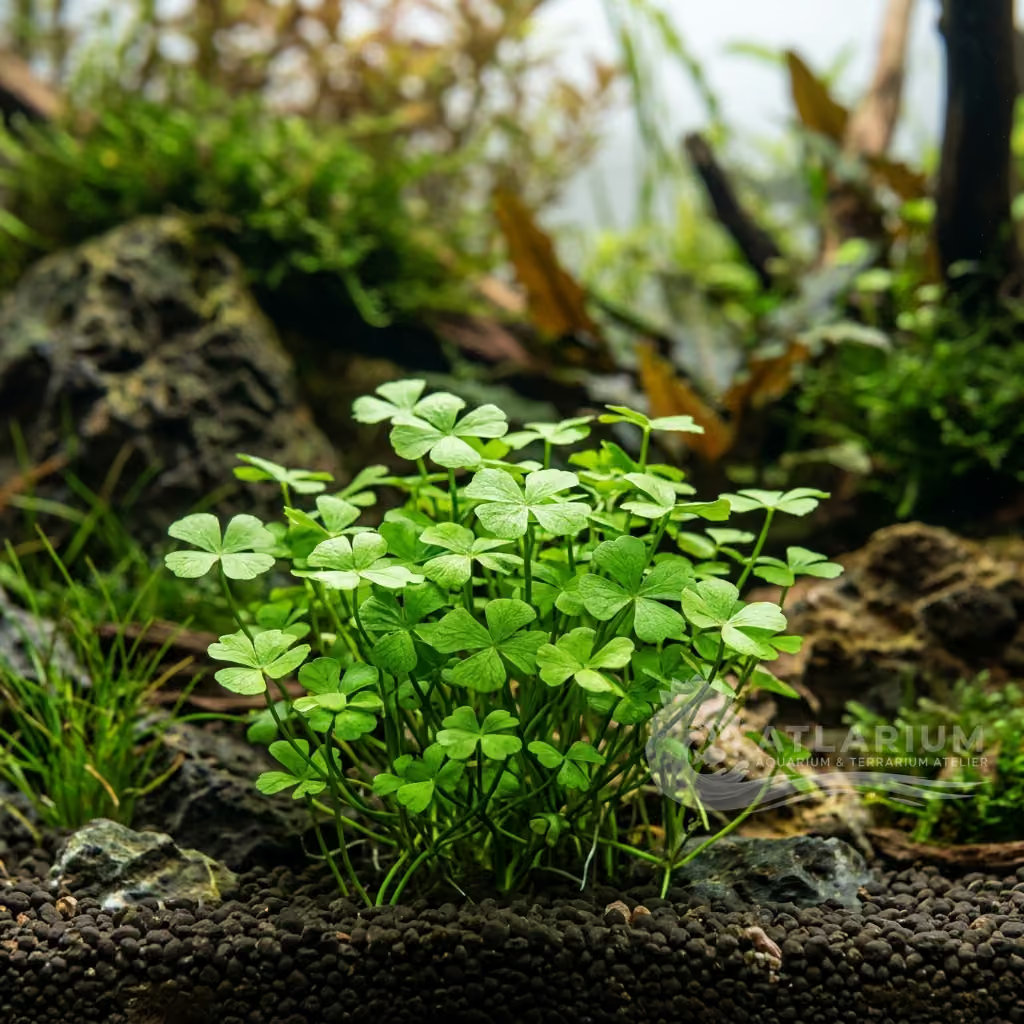
A rare New Zealand native featuring fine, curved leaves. It creates a subtle, wavy grassy texture. Cultivation requires bright light and a soft, fertile substrate for its delicate runners.
Wassertemperatur
15 - 26 °C
pH-Wert
6 - 7.5
Wassertyp
Süßwasser
Licht
Mittel - Hoch
CO2
Mittel - Hoch
GH
4 - 20 dGH
KH
2 - 14 dKH

Artbeschreibung
Geographical Origin and Habitat: Lilaeopsis ruthiana is native to New Zealand, where it grows along the margins of lakes, marshes, and calm rivers, in both coastal and inland environments. In nature, it is used to living submerged or exposed to damp air depending on the water level. This species is accustomed to temperate and cool climates, giving it superior tolerance compared to other tropical species of the genus.
Taxonomy & Genetics: Belongs to the Apiaceae family (formerly known as Umbelliferae). It is phylogenetically close to Lilaeopsis brasiliensis but differs in its significantly smaller overall size and narrower, thinner leaves. Its genetics allow it to maintain a stable dwarf growth habit, which is highly sought after by fans of small aquariums and aquascaping.
Physical Structure: It features a horizontal creeping rhizome that runs just below or on the surface of the substrate. From each node of the rhizome, thin roots and small tufts of vertical, erect, needle-like leaves develop. The leaves are hollow and divided internally by transverse septa, an anatomical structure typical of marsh plants that allows the storage of gases for cellular respiration.
Color & Texture: The color is a bright, uniform grass green, which gives a very natural and fresh look to the layout. The texture of the leaves is smooth and slightly fleshy to the touch. The overall appearance is that of a fine lawn or thin grass, creating a very fine visual texture, suitable for contrasting with structured rocks or dark wood.

Pflege, Zucht und Mitbewohner
Lighting & CO2: Prefers moderate to intense lighting. With high light levels, the plant grows more compactly and spreads faster via stolons. CO2 supplementation is recommended to obtain a dense and homogeneous lawn in reduced times, although the plant can grow slowly even in low-tech aquariums.
Nutrition & Substrate: A fine-grained, fertile substrate is of fundamental importance to allow the creeping rhizome to expand without obstacles and to absorb the necessary nutrients. It benefits from regular liquid fertilization containing iron and potassium to keep the leaves green and prevent basal chlorosis.
Water Chemistry: Grows best in soft or moderately hard water, with a neutral or slightly acidic pH (6.0 - 7.5). Being native to New Zealand, it tolerates cool water temperatures very well (15°C - 24°C), but can adapt to temperatures up to 26°C. Avoid prolonged extreme tropical temperatures.
Space Management & Placement: Its natural placement is in the foreground of the aquarium, where it is used to create submerged lawns. To plant it correctly, it is advisable to divide the purchase portion into small tufts and bury them in a checkerboard pattern a few centimeters apart, favoring uniform coverage.
Pruning: Pruning consists of periodically shearing leaves that grow too tall with sharp aquascaping scissors to stimulate lateral expansion and keep the lawn low. Stolons that invade unwanted areas can be cut and replanted elsewhere to start a new colony.
Risks & Diseases: The main risk is the development of invasive algae among its thin leaves if water circulation is not optimal or if there is an excess of phosphates. As a slow-growing plant, it can suffer from shading caused by taller plants or organic debris accumulating on the bottom.

Geografische Herkunft und Verbreitung
Lilaeopsis ruthiana is native to New Zealand, where it grows along the margins of lakes, marshes, and calm rivers, in both coastal and inland environments. In nature, it is used to living submerged or exposed to damp air depending on the water level. This species is accustomed to temperate and cool climates, giving it superior tolerance compared to other tropical species of the genus.
Ursprung
Australien, Neuguinea und Ozeanien

Pflanzenprofil
- Platzierung
- Vordergrund
- This slender plant is best utilized in the foreground or midground of the aquarium, where it can weave a tight, attractive carpet. Planting small, individual nodes evenly spaced across the desired area encourages a more uniform horizontal spread. It thrives when placed in well-lit areas free from the shade of larger, overhanging species. Its fine texture pairs beautifully with small hardscape elements like accent stones or slender driftwood.
- Botanische Form
- Rhizom
- Characterized by its very fine, almost cylindrical leaves, Lilaeopsis ruthiana grows in a creeping manner via a robust horizontal rhizome. The leaves typically remain short, often settling between 2 and 5 centimeters in height. Its structure is delicate yet resilient, allowing it to form a dense, low-lying turf. The slender leaves provide a uniquely refined texture compared to broader-leaved foreground grasses.
- Wachstum
- Mittel
- Lilaeopsis ruthiana exhibits a moderate growth rate, slightly slower than some of its relatives, but highly dependent on environmental conditions. When provided with optimal lighting and injected CO2, it steadily produces new runners that interlock over time. In lower-tech setups, patience is required as its spread becomes significantly slower. Maintaining clean water and consistent fertilization is key to accelerating its carpeting process.
- Substrat
- Hoch
- Lilaeopsis ruthiana demands a highly nutritious, fine-textured substrate to support its fast-paced carpet formation and high metabolic needs. It develops a dense matrix of fine roots that require a porous aqua soil at a depth of 4-5 cm to ensure adequate oxygenation and nutrient uptake. For optimal health and to prevent the runners from detaching, regular enrichment with bottom fertilizers is highly recommended in established setups.
- Säulendüngung
- Empfohlen
- Consistent liquid column fertilization provides Lilaeopsis ruthiana with readily available nutrients to support its foliage. Dosing a comprehensive mix of macro and micronutrients ensures that the fine leaves maintain their structural integrity and vibrant hue. While it relies heavily on root feeding, foliar absorption helps compensate for any substrate nutrient depletion. Careful dosage control is necessary to prevent algae from colonizing its delicate leaf surfaces.
- Wurzeldüngung
- Keine
- A nutrient-rich substrate or the strategic placement of root tabs is critical for the long-term success of Lilaeopsis ruthiana. Its extensive root system continuously draws nutrients from the soil to fuel the production of new runners. Ensuring the substrate is deeply enriched prevents the older sections of the carpet from deteriorating. Periodic replenishment of root fertilizers helps maintain a lush, continuous lawn over many months.
- Trimmen
- Gelegentlich
- Trimming Lilaeopsis ruthiana is straightforward but requires sharp, fine-tipped aquatic scissors to avoid crushing the delicate leaves. Regular, horizontal pruning encourages the plant to stay low and promotes denser lateral runner growth. It is important to trim away any yellowing or damaged leaves to maintain the carpet's pristine appearance. Removing the trimmings quickly is necessary to keep the water column clean and prevent organic buildup.
- Ausbreitung
- Stecklinge
- Propagating Lilaeopsis ruthiana is easily achieved by dividing its horizontal runners. Simply cut a section of the runner that includes several healthy leaves and an intact root system. Replant the divided sections into the substrate, spacing them appropriately to allow new growth to fill the gaps. This vegetative method is highly effective for expanding the carpet or transferring the plant to another aquarium.
- Empfindlichkeit
- Mäßig
- This plant is sensitive to poor water circulation, which can lead to debris settling within its dense mat and causing rot. It can also be prone to algae issues if nutrient imbalances occur or if light intensity is too high without adequate CO2. Abrupt fluctuations in water chemistry may cause the leaves to melt temporarily. Ensuring a mature, stable aquarium environment is the best defense against these sensitivities.
- Layoutrolle
- Vordergrund, group
- In aquascaping, Lilaeopsis ruthiana is prized for its ability to create a highly detailed, manicured lawn effect. Its extremely fine texture makes it an excellent choice for nano aquariums or for creating forced perspective in larger tanks. It softens the edges of hardscape transitions without overpowering the intricate details of rocks or wood. This plant is a favorite in nature-style layouts where a subtle, grassy foreground is desired.

Verwandte Arten
Empfehlungen gruppiert nach nahen Verwandten, Auswahl von Begleitern und ähnlicher Betreuung.