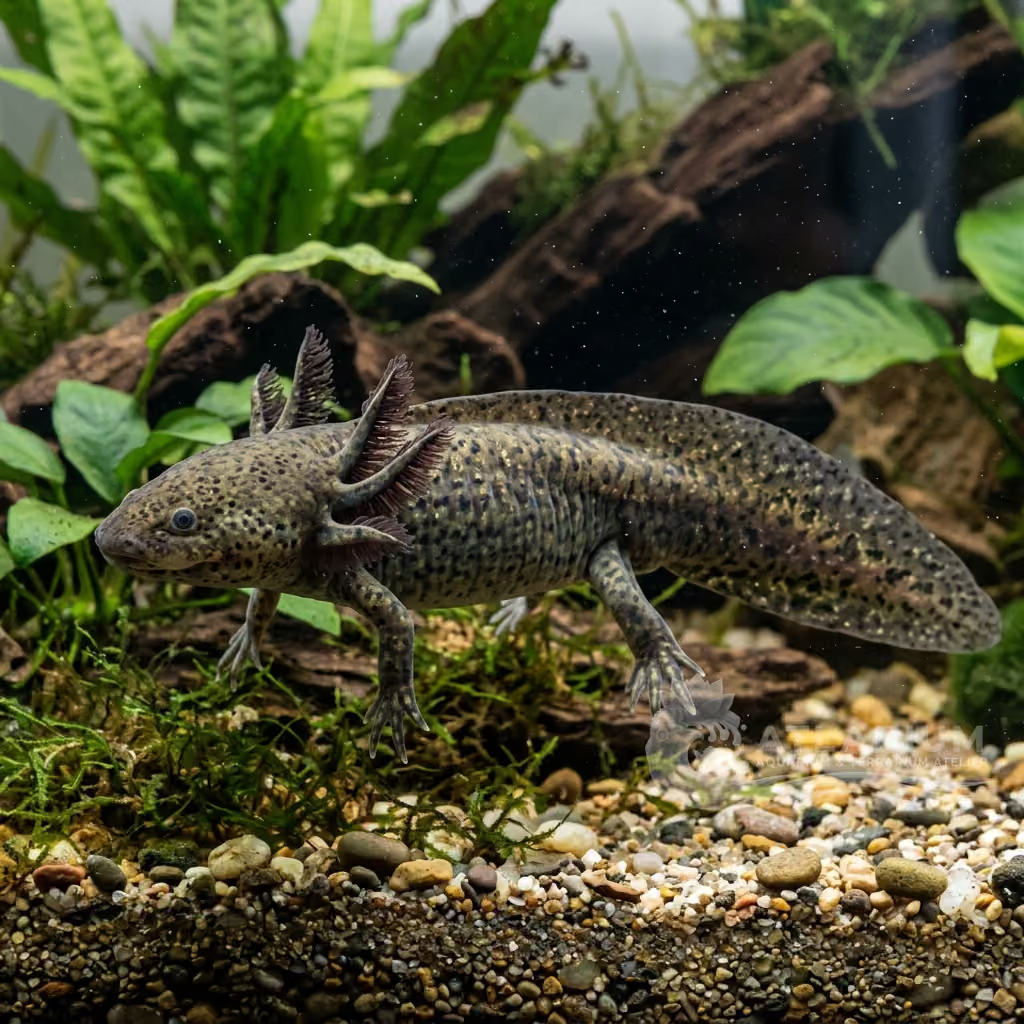
Mudpuppy
Necturus maculosus
The common mudpuppy is a large, fully aquatic neotenic salamander with feathery red gills. Active year-round, it needs a 200L tank with cool, well-oxygenated water, numerous hiding spots, and a carnivorous diet.
Wassertemperatur
10 - 22 °C
pH-Wert
6.5 - 8
Umgebung
Süßwasser
Luftfeuchtigkeit
100 %
Tagestemperatur
10 - 15 °C
Nachttemperatur
5 - 10 °C

Artbeschreibung
Geographical Origin and Habitat: A massive, neotenic aquatic salamander native to the glacial lakes, deep rivers, and highly oxygenated gravel streams of eastern North America and Canada. Commonly known as the Common Mudpuppy or Waterdog, it inhabits cold, dark depths, avoiding light and seeking refuge under logs and rocks.
Taxonomy and Genetics: Belonging to the family Proteidae. As a strictly neotenic species, it retains larval characteristics throughout its entire life, including large, feathery red external gills, four short legs, and a laterally compressed paddle-like tail. The skin is extremely smooth and slimy, with a brown, gray, or olive base color heavily mottled with dark spots.
Behavior and Habits: Primarily nocturnal, spending the day hidden under rocks or submerged logs on the riverbed. At night, it becomes an active hunter, walking slowly along the bottom and using vacuum suction to capture prey. It remains active under the ice during cold winter months.
Morphology: Females are generally larger, heavier, and broader than males, especially when carrying eggs. Males are more slender and exhibit a slightly swollen cloaca during the breeding season.

Pflege, Zucht und Mitbewohner
Terrarium Setup: Must be kept in a large, fully aquatic tank (minimum 100-120 cm in length, 200+ liters). Provide a water depth of 30-40 cm. The substrate should consist of fine sand or large, smooth river stones to prevent accidental ingestion and impaction. A tight-fitting lid is mandatory as they can escape. Provide large, dark caves using stones or PVC pipes for shelter.
Lighting and Heating: Adapted to cold, temperate climates. Water temperature must be kept low, between 10 and 18°C. High temperatures are highly dangerous; water exceeding 22°C can cause gill necrosis, respiratory distress, and death, making a water chiller mandatory. Lighting should be very dim, as they are sensitive to bright light.
Humidity and Hydration: Being strictly aquatic, water quality is critical. The water must be clean, well-filtered, and highly oxygenated, with a constant flow. Use dechlorinated water, as chlorine damages their skin and gills. Perform regular water changes of 30-40% weekly, supported by a heavy-duty canister filter to manage waste.
Feeding and Supplementation: A voracious carnivore. Feed on whole items such as nightcrawlers, earthworms, small thawed fish (like silversides), and freshwater shrimp. They strike quickly using suction. Ensure a varied diet to support proper growth and bone density.
Compatibility: Highly territorial and aggressive towards smaller animals, which they will eat. Can be kept with conspecifics of similar size only in very large tanks with multiple separate hides. Otherwise, severe fighting and gill-biting will occur. Best housed individually.
Health and Common Diseases: Extremely sensitive to heat and poor water quality, which lead to ammonia poisoning, bloating, skin ulcers, and saprolegnia fungal infections on the gills. Never handle with bare hands, as human skin acids, soaps, and warmth will damage their sensitive protective slime coat and induce severe stress.

Geografische Herkunft und Verbreitung
A massive, neotenic aquatic salamander native to the glacial lakes, deep rivers, and highly oxygenated gravel streams of eastern North America and Canada. Commonly known as the Common Mudpuppy or Waterdog, it inhabits cold, dark depths, avoiding light and seeking refuge under logs and rocks.
Ursprung
Mittelamerika und KaribikNordamerikaEuropa, Mittelmeerraum und Westasien

Amphibienprofil
- Diät
- Carnivore
- The diet of Necturus maculosus consists primarily of appropriately sized prey items found in its natural habitat. In captivity, they should be offered a varied selection of live insects, worms, or small invertebrates to ensure nutritional balance. It is important to gut-load the feeder insects and occasionally dust them with high-quality calcium and vitamin supplements. Monitoring their food intake helps prevent obesity and maintains optimal health. Fresh water must always be available to aid in digestion.
- Lebenserwartung
- 11-20 years
- Erwachsenengröße
- 30 cm
- Lebensstil/Mikrohabitat
- Aquatic
- Necturus maculosus leads a specialized lifestyle adapted to the specific niches of its ecosystem, whether that involves climbing, burrowing, or swimming. Its daily routine is a delicate balance of thermoregulation, seeking out hydration, and avoiding predators. In a captive environment, replicating these microhabitats—such as providing ample climbing branches or deep substrate—is crucial for their well-being. They generally thrive when left undisturbed to carry out their natural routines. A proper setup dramatically improves their lifespan and overall vitality.
- Aktivitätszyklus
- Nocturnal
- The activity pattern of Necturus maculosus is heavily influenced by the specific light cycle and ambient temperatures of its native range. It may be primarily diurnal, nocturnal, or crepuscular, meaning its peak activity times align with the safest and most optimal conditions for survival. During these active periods, they can be seen exploring, hunting, or patrolling their territory. Careful regulation of the enclosure's lighting and heating schedules will help maintain these natural circadian rhythms. Disruptions to this pattern can cause significant stress or lethargy.
- Sozialität
- Gregarious
- Necturus maculosus is known for its fascinating and unique behavioral traits that reflect its evolutionary adaptations. Observers may notice periods of active foraging interspersed with long spells of resting or hiding. They interact with their environment carefully, using their specialized senses to navigate and detect both prey and potential threats. While some individuals can be quite shy and reclusive, others may exhibit bold and curious behavior when comfortable in their enclosure. Providing a complex habitat with plenty of enrichment is essential for expressing natural behaviors.
- Reproduktion
- Oviparous
- Reproduction for Necturus maculosus typically follows a seasonal pattern, often triggered by specific environmental changes such as temperature or humidity fluctuations. Mating behaviors can include complex courtship displays or specific vocalizations to attract a partner. After successful mating, the female will carefully deposit eggs or give birth, depending on the reproductive strategy of the species. Incubation or gestation periods require stable, precise conditions to ensure the healthy development of the offspring. Breeders must pay close attention to providing the right nesting environment.
- Toxizität
- Harmless
- They are completely non-toxic and absolutely harmless to humans and other large animals. They rely entirely on their cryptic coloration, a slippery mucous coating, and their secretive nature to avoid predation. While their bite can cause a minor pinch if mishandled, they lack any venom or toxic skin secretions entirely. Basic hygiene after contact is sufficient for human safety.
- Lebensphase
- Neotenic
- Uniquely, they are fully neotenic, meaning they retain their larval features throughout their entire adult lives. These permanent adaptations include prominent bushy external gills and a vertically compressed tail for swimming. They never undergo a full metamorphosis into a terrestrial form. They have a remarkably long lifespan and can easily live beyond 20 years in well-maintained aquatic setups.
- Handhabungstoleranz
- Display only
- Handling should be strictly minimized as they are extremely slippery and difficult to hold securely without causing injury or severe stress. They possess a delicate mucous coat that protects them from aquatic infections, which can be easily disrupted by dry human hands. If they must be moved for tank maintenance, using a fine-mesh aquatic net is far safer and significantly less stressful than manual handling.
- Brumation
- Erforderlich
- They do not undergo a true brumation, maintaining a consistent level of aquatic activity throughout the entire year. In the wild, they are known to be active and hunt successfully even when their native lakes or rivers freeze over completely. Captive enclosures should maintain appropriately cool water temperatures year-round to accurately mimic their natural temperate habitat.
- Häutung
- Regular
- Like all amphibians, they shed their skin periodically to remove external parasites and facilitate ongoing physical growth. The shedding occurs completely underwater, with the shed skin appearing as a translucent, ghost-like film drifting in the current. They typically consume the shed skin rapidly to reclaim the valuable proteins and essential nutrients it contains.

Verwandte Arten
Empfehlungen gruppiert nach nahen Verwandten, Auswahl von Begleitern und ähnlicher Betreuung.